
A split unit HVAC system mainly does temperature control. In cooling mode a chilled indoor coil can also dehumidify the air depending on runtime, setpoint (decreases), airflow and room load. Some particles that pass through a washable filter can be trapped. While they may assist with comfort and moisture control, they do not provide fresh-air exchange or high-efficiency particulate air cleaning.
What a Split Unit Can Contribute to Indoor Air Quality
Identify the Air-Quality Problem
It is a partitioned framework that aids with temperature and dampness control, while catching some particles in its channel. Because a conventional recirculating wall unit does not provide outdoor-air ventilation, the amount of increase will need to be separately verified and quantified. An analysas based on a conventional recirculating wall unit does not compensate for outdoor-air ventilation; therefore, needs to be identified and measured separately
Understand the Recirculation Limit
II Measure pollutants, ventilation and moisture interaction to enhance indoor air quality. This is essentially a recirculating wall unit, and it does not automatically dilute indoor carbon dioxide or any odors with outdoor air. Step 1: Determine the problemPersistent humidity, dust,baking emissions odours & temperature discomfort warrant separate checks. Never say that a split system enhances each parameter of air quality without testing the real pollutant or illness. For wider comparison, see how split-system energy use is assessed.
Distinguish Cooling, Dehumidification, and Ventilation
Check Condensate and Runtime
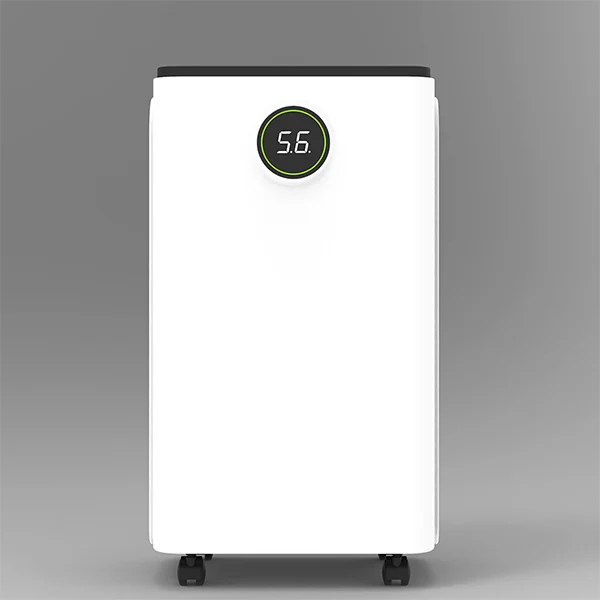
When coil temperatures and time- on are such that condensation can form, draining it from the AC unit permits cooling to remove moisture. A short run would likely drop temperature while leaving humidity high. Watch indoor relative humidity and the condensate drain instead of counting on a colder room to be dry. When moisture causes the problem you can find infiltration and outflow for external drainage, and if this does not work follow separate methods of dampness control well-dimensioned to courses.
Know When Outdoor Air Is Needed
Ventilation will bring in or exhaust air to dilute indoor pollutants — recirculation by itself does not perform this exchange. Outdoor air has humid and polluted so a ventilation plan needs to factor in climate, heater or filtration. This also applies to smoke, solvents and combustion products, as well as cleaning agents that are still controlled. It can be placed next to a ventilation system, but only where split units should never ever really be called an alternative unless the means specifically introduces outdoor fresh air.
Use the Filter and Maintenance Plan Correctly
Keep the Filter and Drain Clean
A removable or washable filter aids in the capturing of some airborne material before it reaches the indoor coil, but not all filters are created equal. Refer to the product manual for when and which parts need cleaning or replacement. A blocked filter can restrict airflow and impact comfort and system performance. Let the condensate line breathe; dry up locations all over the unit—standing h2o and neglected care can form different indoor-air issues.
Separate Ventilation from Filtration
Ventilation systems offset the air quality and are able to mitigate mold spores as well as cut down on excess grow space fumes. Any recirculating split air conditioner should not be assumed to provide outdoor-air ventilation unless its design includes and verifies that function; they can merely exchange the air (intake or exhaust it). With a split system, the washable filter is placed in the return-air path of your indoor unit. Maintaining filters provides airflow but does not provide outside air exchange; although, Clean it as instructed in the instruction handbook & keep ice condensation drive free!
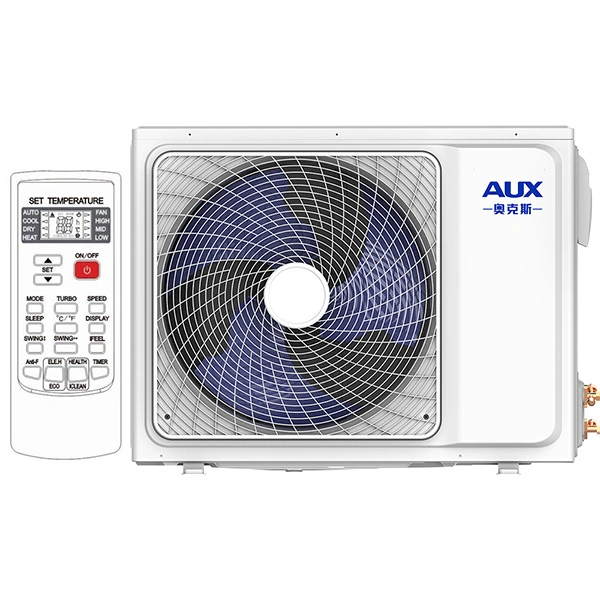
Check the Listed Split-System Features
Verify the Listed Model Features
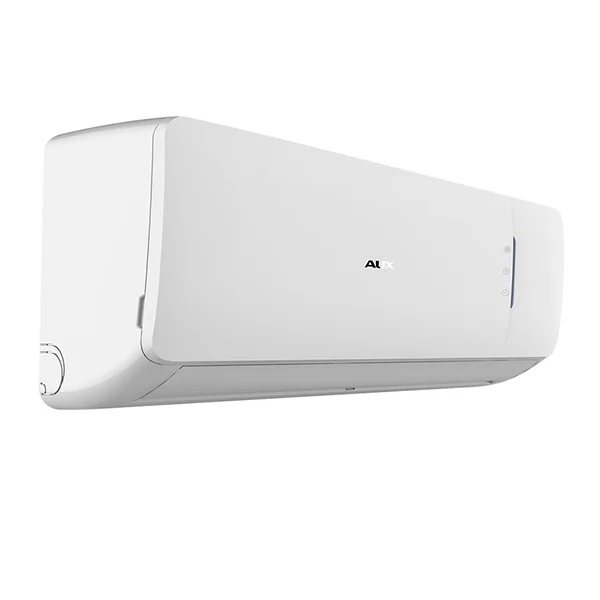
TIDESTAR lists a commercial AUX split wall air-conditioning product in 12,000, 18,000, and 24,000 BTU classes. It provides cooling and heating, remote control, a removable washable air filter, flexible placement, and installation without ductwork. These features do not establish particle-removal efficiency or fresh-air exchange; confirm the current model, filter, and installation requirements. See the AUX Commercial Split Wall Air Conditioning 12000–24000 BTU specifications.
Get Capacity and Installation Checked
Where ductwork is impractical, that helps with room-by-room temperature control. Actual capacity is still subject to room area, heat load, insulation level, occupancy levels and patterns in relation with window/door orientation & the local weather on a daily basis. An oversized unit can lead to cycling and moisture control issues, while an undersized one may leave the room uncomfortable. Have a qualified HVAC technician verify unit sizing, refrigerant-line requirements and drainage with the home owner for all electrical needs. This overview of wall air-conditioning units for modern homes also discusses installation and capacity considerations.
Keep the Product Scope Clear
TIDESTAR is a manufacturer and supplier of indoor plant-growth products like LED grow lights, hydroponic systems or other equipment for an indoor garden. We design, manufacture and provide after sale support for creamy delights with this talent of ours. This product and service scope offers choices of indoor-growing equipment; it is not a setting an indoor-air outcome per installation. This scope of products and services supports indoor-growing-equipment choices; it does not set an indoor-air outcome for each use.
Measure the Problem and Decide What Else Is Needed
Track the Condition That Matters
Record the temperature and moistness in rooms before, during or after any alteration with regards to run time/condition of MERVs/condenser-evidence leaks as well as when odors befall or partisanship events transpire. If your worry is of a particular pollutant, choose an appropriate particle or gas monitor. A thermostat reading by itself cannot prove scenarios of cleaner air. If the outcome does not improve, check source/ventilation rate/filter type/equipment maintenance before concluding.
Use same sampling interval and location of sensor to have similar readings. Do not place it within a supply-air jet, window of any kind (including garage windows), kitchen or shower unless that source is the condition under investigation. Capture outdoor weather and occupancy at the same time as indoor measurements so that a room-load change can not be confused with an equipment effect. The comparison should be in a similar room and under the same occupancy conditions.
Where readings are not the same across each room, sample data from more than 1 occupied area rather than a single hallway reading. If you are trying to monitor a suspected gas or particle, pick one designed for that pollutant and read on its placement and calibration; no thermostat, humidity sensor (or cheap metal-box general-purpose air:1 device) can ever answer every question about indoor climate.
Decide Whether Another System Is Needed
A split system is just one component of an indoor-air strategy. When temperature control is needed, do it in combination with source reduction, proper ventilation and filter maintenance; work out a separate moisture-control strategy too. If ongoing mold, water intrusion or unusual symptoms occur, contact a qualified building health professional and if combustion constituents are likely consider contacting an indoor environmental quality (IEQ) expert for assessment localized to your concerns. Clear measurement neither allows (nor encourages) inflated equipment claims and keeps upfront project costs in line with what the installation will actually accomplish.
Preguntas frecuentes
Q: Can a split unit HVAC system improve indoor air quality?
Q: How can it help? A: It can assist with comfort and, during appropriate cooling cycles, dehumidify settings. Without that design, there is no outdoor-air ventilation in a typical recirculating split unit. The same goes with its washable filter which also provides no assurance of high efficiency particle filtration. The contract is mainly maintained at higher particle filtration ratios, whereby the filter type also does not demonstrably qualify as highly efficient for contaminants up to a size of 2.5 μm (PM2.5).
Q: Does split unit HVAC bring in fresh outdoor air?
A: Usually not. Many wall-mounted split systems, recirculate internal air. Verify that the specific model is tested as such, verify its installation design, and separate out air-exchange strategy when outdoor air is required. Illustrate the specific model installation drawing before it is a ventilation solution and indicate an independent air-exchange strategy for fresh-air needs.
Q: Can an air conditioner reduce indoor humidity?
Q: Is there condensation coming from the AC? Relatively uncontrolled humidity at short cycles requires controlling factors such as checking relative humidity, condensate Trained on data until October 2023. Meanwhile, short cycles might cool a room without adequate humidity control; tCheck the range of relative humiditin and condensate
Q: Do washable filters remove fine particles?
A: A washable prefilter is capable of capturing some material but washability alone does not determine fine-particle efficiency. When the filtered media includes high particulate matter, make sure that you check in advance of the documented rating for your filter is well suited to remove fine particles. Refer to filtration stage with appropriate documented rating for fine-particle removal
Q: When is additional moisture control or ventilation needed?
A: Pair with insufficient moisture control if humidity is high even while properly cooled For odors, gases and other pollutant buildup you may need to rely on ventilation or source control; govern based solely on the specific condition any way but temperature. Odors, gases or pollutant buildup may require ventilation or source control; use the condition of concern instead of relying on temperature