
When looking for a “small” dehumidifier, look at the moisture removed and the room size, not just the case size. Measure the floor area and height, the initial humidity, sources of moisture, and how often a door is opened. A small bedroom with occasional wet spots is very different from a bathroom with daily steam and a grow room with frequent watering.
Choose Capacity for the Room and Moisture Load
Choose a Capacity for the Dampness
Match the room’s observed moisture load to the room’s capacity. A unit that fits under a desk, for example, may not be sufficient for a damp room, while a bigger unit than needed may be required for only short periods of higher humidity following activities such as bathing or laundry.
Compare Capacity Ratings Fairly
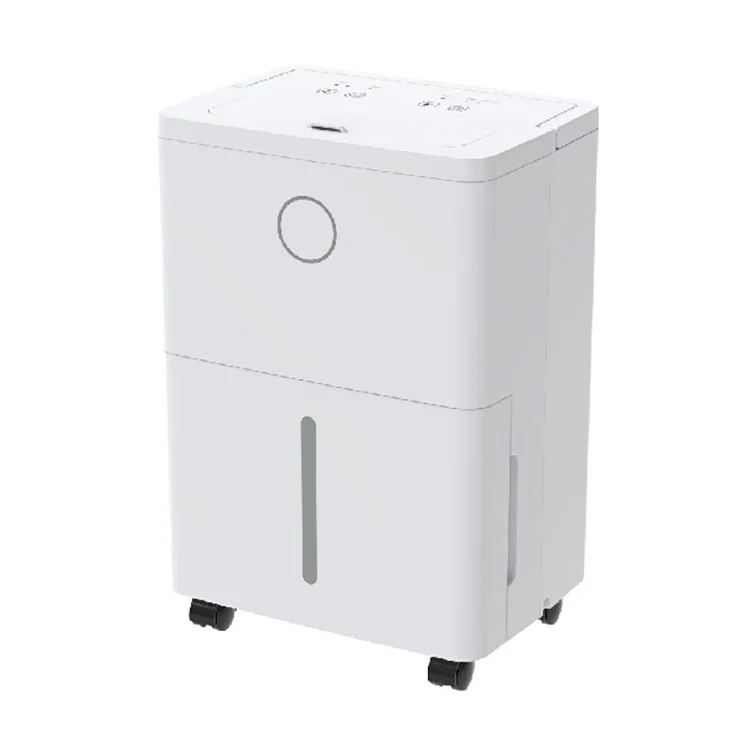
The published capacity of a dehumidifier must be related to specific test conditions. Capacity information must be compared for products tested under the same conditions for temperature and humidity, and some reserve must be allowed for very humid situations and for spikes of moisture in the air. Do not confuse the Marketing area for a model with the capacity for every floor plan in that area. Open doorways, poor air movement, and cool rooms all affect capacity. The best small dehumidifier for a particular situation is one that matches the true level of dampness in that situation, not the largest capacity in the smallest chassis. For example, a compact dehumidifier such as the Nuevo deshumidificador de aire portátil 6L para el hogar can be compared for similar test conditions and for moisture-removing capacity.
Prioritize Humidity Controls and Safe Operation
Pick Controls You Will Use
Many humidifiers come with an adjustable humidistat, which can be set to a certain level by the user. A timer can also be very useful for programming when the humidifier is to be turned on and off. Automatic shutoff and full-tank alert are also good features to look for to prevent overflow of the reservoir. Also check if the model can be used in a cooler room and if it has an automatic defrost function. Check the current specifications for minimum temperature.
Place the Unit Safely
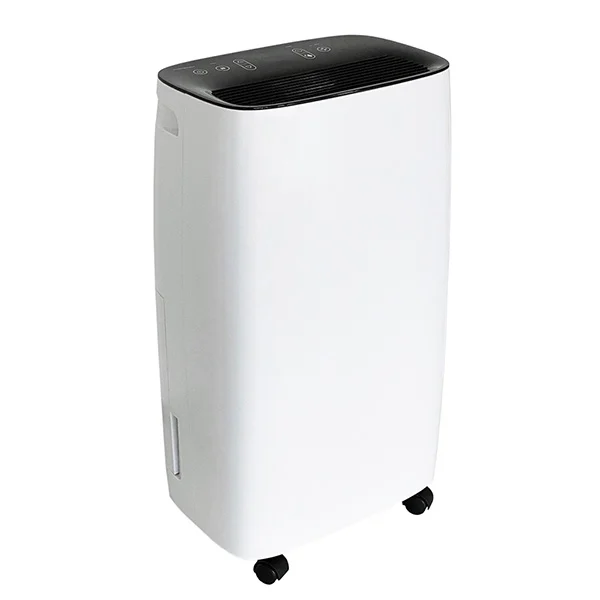
The noise rating, filter access, castors, and drain options of a dehumidifier are of most importance for use in daily life. A low-noise description is only useful if the operating conditions are described as well. Then compare the sound measurements in reality. In any case, keep sufficient space around the air intake and outlet, place the device on a firm, dry floor, and follow the instructions for the connection of electricity and drainage. As an electrical appliance, the dehumidifier must be placed away from splashes and standing water. Another version for testing in the same places, with the same drainage and operating conditions, is the Smart Mini 12 Liter Dehumidifier with Touch Screen Control Panel for Home.
Understand What Moisture Removal Can and Cannot Do
Treat Moisture at Its Source
While reducing excessive humidity can help to control condensation and prevent mold, it does not remove all contaminants from the air or fix a leak. Plumbing leaks, wet building materials, and persistent condensation need to be dealt with at their source. While ventilation can remove pollutants from the air, a filter has a different role to play. Don’t mistake high humidity readings, visible moisture and unpleasant odors for a problem that can be fixed by one appliance.
Measure Humidity in the Room
Place a separate hygrometer in the room, away from the dehumidifier outlet and exterior walls. Take readings of the humidity at the same time each day for several days before and after any change to the dehumidifier. If it is continually running but not achieving its set humidity, check the room temperature, airflow, doors and windows, filters, and drain setup. Persistent dampness may require a building or HVAC assessment rather than a larger model dehumidifier. We can compare the room’s moisture load to the coverage of the 12L Dehumidifier Up to 2000 Sq. Ft, but the coverage label alone is not the determining factor.
Compare Compact TIDESTAR Options with the Room
Compare the 6L and 12L Formats
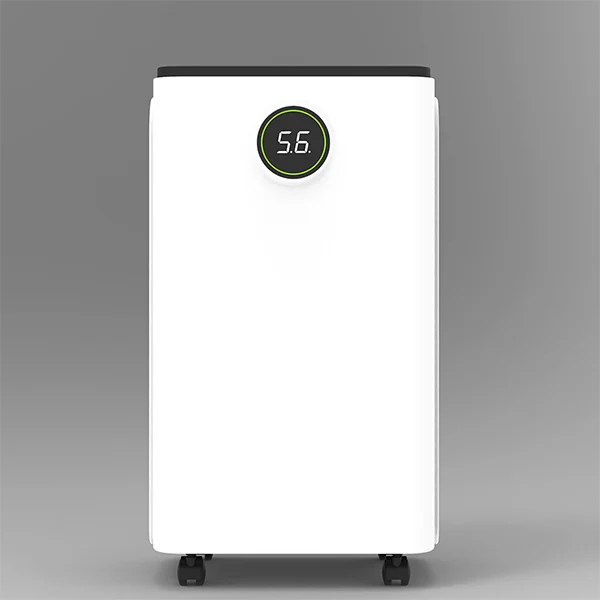
TIDESTAR offers a new 6L Portable Air Dehumidifier for Home and a Smart Mini 12 Liter Dehumidifier with Touch Screen Control Panel for Home. The source description for the 6L model covers a compact, movable design, features Dehumidifying and Fan modes, 2 Fan speeds, a 24-hour timer, an LED display, casters, full-bucket alarm, and an automatic defrost function. The mentioned features allow for comparison of locations and for control on a daily basis; however, they do not establish a room-specific moisture-removal result.
Match Features to Daily Use
The Smart Mini 12 Liter Dehumidifier uses refrigeration to extract moisture and is supplied with an adjustable humidistat, timer, auto defrost, and low-noise operation. The 6L and 12L formats can be compared in terms of capacity, tank/drain facility, operating temperature and the room moisture load – simply having a larger number does not necessarily make for a better dehumidifier.
Product facts relevant to this comparison
This is a small portable dehumidifier that can be easily moved from room to room. The listed model is a dehumidifier with a fan, and it has 2 speeds. It has a 24-hour timer, soft-touch controls, and an LED display. It has 360-degree casters, a retractable plug, a bucket-full alarm, and automatic defrosting. It has optional Wi-Fi control, but these features do not guarantee a certain humidity in every room.
TIDESTAR specializes in the production and sale of indoor plant-growth equipment such as LED grow lights, hydroponic systems, and other equipment for growing plants indoors. We support our products with development, production, and post-purchase service. The scope of our products does not extend to any medical benefits, and one single, compact appliance is not suitable for every residential room.
An activated-carbon filter can help to mitigate odors and other unsightly particles in a grow-room’s airflow. Note that these filters add resistance to airflow and thus must be taken into account when selecting airflow equipment.
Make a Shortlist and Verify It in Use
Build a Shortlist
To compare dehumidifiers for your particular room, list and compare the key features for several models you are considering by writing down details such as room size and volume, normal temperature, normal humidity, moisture sources, restrictions on where the dehumidifier can be placed, required noise level, and whether or not the dehumidifier can be connected to drain continuously. Compare the capacity, type of control, defrosting method, and access to the tank as well as the filter for each model, and check the manufacturer’s details in the manual for the actual operating range of the model as opposed to the single headline figure for a ‘whole room’ which is often given without further explanation.
Check the Setup Over Several Days
Run the dehumidifier with doors and windows in the same positions as they would be in normal use, measuring humidity, running time, and the amount of water collected over several days with similar conditions. Change the filter as described and check that the tank or hose empties correctly. High humidity after running the dehumidifier could be due to moisture getting into the unit, or there not being enough ventilation. Using a dehumidifier is more meaningful than just reading the star rating or the general health statements on the packaging.
Preguntas frecuentes
Q: How do I choose the best small dehumidifier?
A: Compare dehumidifiers based on the moisture load, temperature, and operating conditions of the room where they will be used. State water removal in lb/day at the test conditions and make an adjustment for open doors, cool weather, etc., and for moisture that returns to the room on a recurring basis, as opposed to a square-foot rate.
Q: Will a small dehumidifier remove all indoor pollutants?
No. Dehumidifiers remove moisture. They do not automatically filter out fine particles and gases for you. Use source control, make sure you have ventilation, and use a suitable filter for these problems.
Q: Where should a room dehumidifier be placed?
A: Place your dehumidifier on a firm, dry surface and leave enough space around the air intake and outlet. Position it away from wash areas and do not allow it to be splashed with water. Refer to the manufacturer’s instructions for details on drainage, safe distances from electrical sources, and access to filters.
Q: Does a 12L unit always outperform a 6L unit?
A: No. While a higher capacity dehumidifier will remove more moisture at the same set of test conditions than a lower capacity unit, it is often unnecessary for light loads. Compare the actual operating range, controls, tank or drain, and room-specific details.