
An LED grow-light spectrum is a description of the distribution of light of different wavelengths emitted by an LED grow-light. The way plants perceive light via their photoreceptors and the resulting influence on the plants’ morphology and development is something different again. The best color is not a fixed quantity; in practice, one has to consider the interactions of spectrum, intensity, photoperiod, distance to the grow lights, and the genetics of the crops for the respective growth stage.
What a Spectrum Tells a Grower
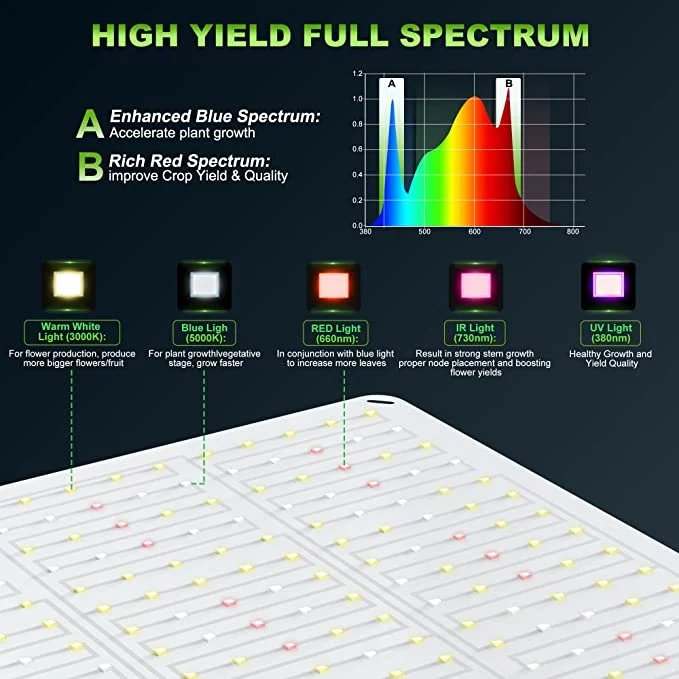
Read the Wavelength Distribution
While some crops may thrive under specific color spectra, there is no one ‘best’ color for all crops. First, select a spectrum that fits your plant and growth requirements, and then verify that your grow facility is delivering even, adequate light to the entire canopy at the distance required.
Compare Light at Canopy Height
A color label alone cannot predict photosynthetic performance. Human-visible brightness, photon output, and spectral distribution describe different things. A useful comparison includes a spectral graph and a photon metric such as PPFD at canopy height, together with the map area and measurement distance. Confirm the measurement instrument is suitable for horticultural light; a phone lux app is not a substitute for a calibrated quantum sensor. For example, Samsung 100W led crece la placa cuántica de luz para la floración vegetal can be evaluated using this same canopy-height measurement approach.
How Blue, Green, and Red Bands Relate to Growth
Think in Bands, Not Single Colors
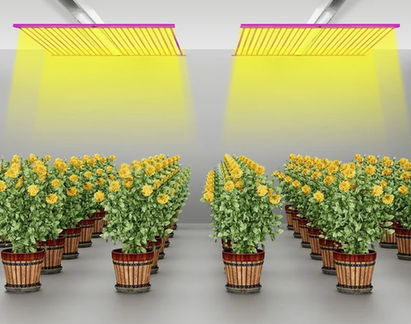
Blue light is used in many recipes to enhance compact leafy growth. Red light is used to promote photosynthesis as well as to trigger flowering. Green light can pass through the top leaves of a plant to illuminate lower leaves in the canopy. Again, these are trends and not absolute answers, as different species and varieties will respond differently to light of different intensities and with daily duration.
Keep Plant Inspection in View
White-based spectra provide growers with the ability to more clearly see the natural color of their plants and observe symptoms of nutrient deficiency as well as pest activity. There are certain applications for which red and blue lights are used, but these are typically controlled, and magenta light can often make plant inspection more difficult than necessary. When comparing grow lights, it is often easiest to inspect the spectrum of the light as well as actual canopy growth when comparing similar lights such as the Samsung 75W–480W LED Grow Lights Panel. Do not make the mistake of correlating a particular color with more produce or better quality – compare apples to apples.
What “Full Spectrum” and “Wide Spectrum” Mean
Interpret Full-Spectrum Language
TIDESTAR grow lights are wide-spectrum and typically cover all visible wavelengths. Some configurations also include UV-A and far-red light. The spectrum can be composed to support, for example, vegetative leaf growth or flowering, but a broad spectrum is not the same as a complete spectrum of sunlight.
Check the Actual Diode Mix
The term “full spectrum” is a descriptor, not a test. So look at the overall wavelength distribution and the absolute amount of light, uniformity, dimming ability, and most importantly, growth. Note that UV-A and far-red need to be treated as two separate bands with specific levels of exposure that are based on the particular crop or production scheme. “Sunlike” does not necessarily mean “identically biological to outdoor sunlight,” and “full spectrum” does not necessarily mean “better.” Look at the emitter layout and spectral distribution at the canopy of the Barra de luz LED Samsung para horticultura y cultivo as well.
Match the Light Recipe to the Growth Stage
Tune Light by Crop Stage
For seedlings and for promoting vegetative growth, start at medium intensity and measure internode length, leaf color, and leaf surface temperature. If seedlings stretch, first confirm that the measured intensity, distance, and photoperiod are all at their appointed levels before adding color to the schedule. For plants in flower or fruit, keep to the established schedule and change only one spectral or intensity setting at a time in order to be able to correlate any response with that change.
Change One Variable at a Time
A simple chart to fill out for each species and cultivar is to note: species, cultivar, fixture height, dimmer setting, photoperiod, PPFD map, visible plant effects. You can determine if bleaching, curling, or uneven growth is occurring in a small test area before you apply the same recipe to the rest of the room. Use crop-specific information on daily light intake. Note that Spectrum selection is to complement the necessary photon flux and uniformity, and should not be used as a ‘shortcut’.
Think of the recipe as a controllable set of inputs: spectrum shape, PPFD, daily light integral, fixture height, and photoperiod. If a color adjustment changes plant posture, compare the new growth with the previous log before changing intensity again. This helps separate a spectrum response from a change in light dose or distance.
Product facts relevant to this comparison
Our TIDESTAR grow lights are designed as wide-spectrum lights and cover all visible spectrums. Some of our models also include UV-A and far-red. The spectrum can be influenced to promote, for example, vegetative leaf growth or flowering. A broad spectrum does not necessarily mean that all components of the sunlight are replicated or that harvest is guaranteed.
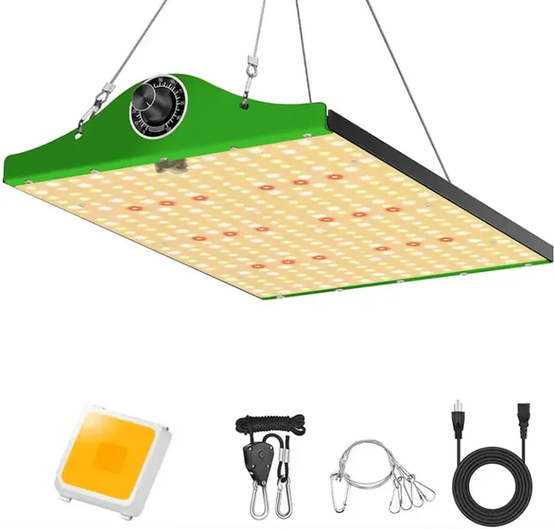
The Samsung 100W LED Grow Light Quantum Plate for Veg Bloom is a dimmable indoor plant growing light. The example growing area coverage for this model is 2.5ft x 2.5ft at 18″ for veg growth and 2ft x 2ft at 14″ for flower growth. These are setup examples for a specific model and would need to be verified against the exact model and setup to be used as a design target.
The Samsung LED Grow Lights Panel family is offered in 75W, 150W, 240W, 320W, and 480W versions. The 240W version has a PPF efficacy of 2.734 μmol/J, a light distribution of 120°, a manual dimmer, and a mix of LEDs of 3000K, 5000K, 660nm red and 460nm blue. These specifications apply to the 240W version only.
The TIDESTAR 35W/65W full-spectrum LED quantum panel is supplied with LM281B Samsung diodes and equipped with dimmer control. The diode combination consists of 3000K, 5000K, 660nm, and infrared/ultraviolet diodes. The listed complete kit consists of a fanless, passively cooled panel, a rope that can be adjusted, a power cord, a hanging kit, and an English manual. Note: not all grow lights are described with these details.
Compare Real Fixture Examples and Their Limits
Compare Fixture Form and Spectrum
TIDESTAR’s Samsung 100W LED Grow Light Quantum Plate for Veg Bloom is a small quantum-plate style grow light. The sample coverage for this model would be 2.5′ x 2.5′ at 18″ for vegetative growth and 2′ x 2′ at 14″ for bloom growth. Verify the installed model and grow space to set an appropriate design target.
Use Product Examples Within Their Limits
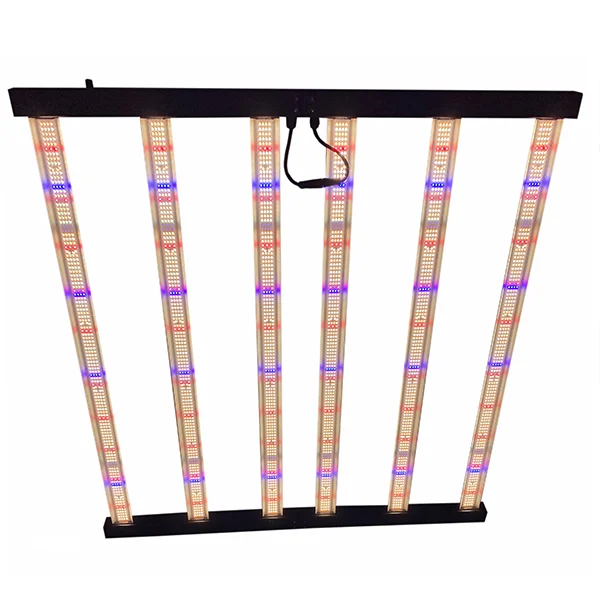
We also list information on our TIDESTAR bar for a 240W version with a 3000K / 5000K diode mix including 660nm red and 460nm blue diodes. The light distribution of this broader bar fixture is 120 degrees. The same spectrum is available in different forms and power classes. Depending on the canopy dimensions and the growth stage of the plants, the mounting height, the controls used, and the measured effect, the right spectrum has to be selected.
Preguntas frecuentes
Q: Which LED grow light spectrum is best for plant growth?
A: There is no single best spectrum for every crop. Select a spectrum with a suitable wavelength distribution for the respective crop and growth goal. Then compare the PPFD and uniformity at canopy level to ensure that the spectrum has sufficient light for useful growth.
Q: Do plants need both blue and red light?
A) The blue and red bands are common in horticultural recipes, but the green light also contributes. How far into the canopy it reaches depends on the species, the cultivar, the intensity of the light, and the daily dose of light.
Q: Does full spectrum mean the lamp duplicates sunlight?
A: No, Full-spectrum is a product descriptor for a fixed light distribution; it does not attempt to replicate all components of natural light or all of its changing circumstances.
Q: Should spectrum change between vegetative growth and flowering?
A. A specific Recipe is typically tailored to the various stages of a performance but does not necessarily need to change. The basic Recipe should remain constant while individually changing one setting at a time and measuring the resulting Canopy while applying the ‘new’ Recipe to the entire space.
Q: How should I compare two LED grow light spectra?
A: Compare the spectral graphs and the PPFD maps at the same height and area covered. This includes input power, dimming, measurement conditions, and effect on crop. A simple color label does not say enough about the performance.