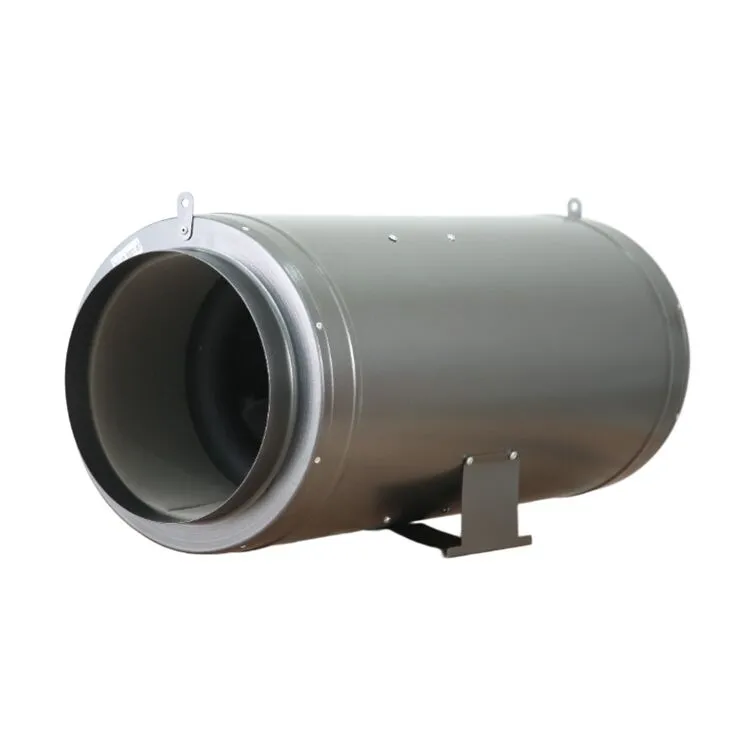

Design a grow room lighting layout from the canopy out, not the room walls in. The goal is even PPFD across the actual crop area, stable edge coverage, and a light footprint that matches plant height and growth stage. Wattage alone does not tell you whether a room will grow evenly. The examples below stay tied to real product families rather than abstract theory.
How Should You Plan a Grow Room Lighting Layout Before Installing LED Lights?
Start With Your Canopy Area Instead of Total Room Size
Do not size the layout from the full room footprint alone. A room can include walking lanes, service space, reservoirs, racks, and other equipment that do not need the same lighting treatment as the crop itself.
Start by separating the room into three zones:
- walking area
- equipment area
- actual growing canopy
Only the actual growing canopy needs even light coverage. Once that area is clear, fixture count, spacing, and hanging height become easier to judge.
We make indoor plant-growing products, including LED grow lights and hydroponic systems, so the fixture examples below come from real product families rather than abstract theory.
Define Your Lighting Goals Before Choosing Fixture Placement
Before you place the first light, decide what the room is trying to do. Crop type, growth stage, and desired light coverage should shape the layout.
Young plants usually need gentler placement and more flexibility. Dense canopies or higher-light crops usually need tighter spacing, stronger fixtures, or more overlap. A timer helps keep photoperiod consistent while you tune intensity with dimming instead of changing the whole schedule.
TIDESTAR source content also includes timed sockets, constant-power sockets, a mechanical timer, a digital timer with battery backup, and a timed relay box, so photoperiod consistency is a practical control issue, not an abstract one.
What Factors Affect Grow Room Lighting Coverage and Uniformity?
Fixture Position and Spacing Determine Light Distribution
Fixture position is the first layout variable that matters. A single bright center point can look good on paper and still leave weak corners, dim edges, or dark lanes between fixtures.
Spacing determines how much the beam patterns overlap before they reach the canopy. If fixtures are too close together, the center can become overly bright. If they are too far apart, the canopy can break into hot and cold zones. Good layout is about distribution, not just output.
Mounting Height Changes the Light Footprint
Height changes the size and shape of the light footprint. Too low often creates hotspots and uneven intensity because the footprint is too tight. Too high reduces intensity and wastes light because too much output spreads beyond the canopy.
Height also changes how much overlap occurs between fixtures. That is why hanging height and spacing should be checked together, not separately.
How Can You Arrange LED Grow Lights to Improve PPFD Uniformity?
Use Overlapping Light Coverage to Reduce Dark Areas
Overlapping coverage is the simplest way to reduce dark areas. When adjacent fixtures share part of the same footprint, peaks are easier to soften and valleys are easier to fill.
That is especially useful in layouts that use more than one light family. Our dimmable LED quantum panel family includes a dimmer knob and 120 degree light distribution, which makes it useful when a room needs controlled overlap instead of one hard center beam.
Create a Balanced Layout Across the Entire Canopy
A balanced layout covers the center, edges, and corners at the same time. The main question is not whether the middle is bright enough. The real question is whether the whole canopy gets a consistent usable level of light.
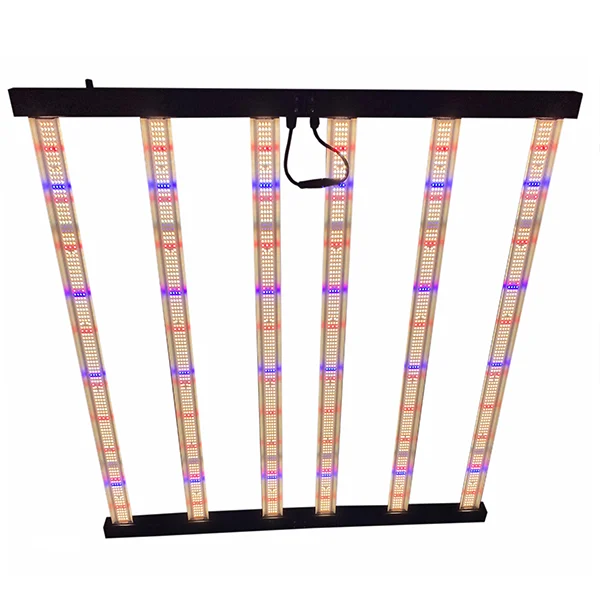
Bar-style fixtures are useful in this kind of planning because their distributed emitters spread light differently from a single-source panel. The Horticulture UV IR LED Grow Light Bar is a good example of a bar-style, dimmable fixture with a distributed emitter layout.
How Do You Choose the Right LED Fixtures for a Grow Room Layout?
Consider Light Distribution Instead of Only Power Output
Wattage does not equal coverage quality. Two fixtures with similar power can produce very different canopy results if their beam spread, emitter spacing, or mounting height differs.
For larger rooms, high-power fixtures are useful examples of why output still has to be matched to canopy shape. In practice, fixture design, beam spread, and distribution pattern matter more than the number printed on the label.
A compact example is the Samsung Quantum Plate for Veg Bloom, which is a dimmable quantum plate for indoor plant applications and includes vegetative coverage of 2.5 ft x 2.5 ft at 18 in and flowering coverage of 2 ft x 2 ft at 14 in.
Match Fixture Design With Your Growing Space
Grow tents, commercial rooms, and vertical racks do not want the same fixture shape.
- Grow tents usually benefit from compact, adjustable fixtures with predictable overlap.
- Commercial rooms often benefit from wider distributed layouts and easier maintenance access.
- Vertical racks may need flatter fixtures, tighter clearance, and better edge control.
Our products include both panel-style and bar-style options, so the room can be matched to the fixture instead of forcing one light family into every setup.
For smaller layouts, the compact full-spectrum LED quantum panel kit includes an adjustable rope, power cord, hanging kit, and dimmer control, which makes incremental height changes practical.
How Can You Measure and Adjust Your Grow Room Lighting Layout?
Use PPFD Mapping to Identify Weak and Strong Areas
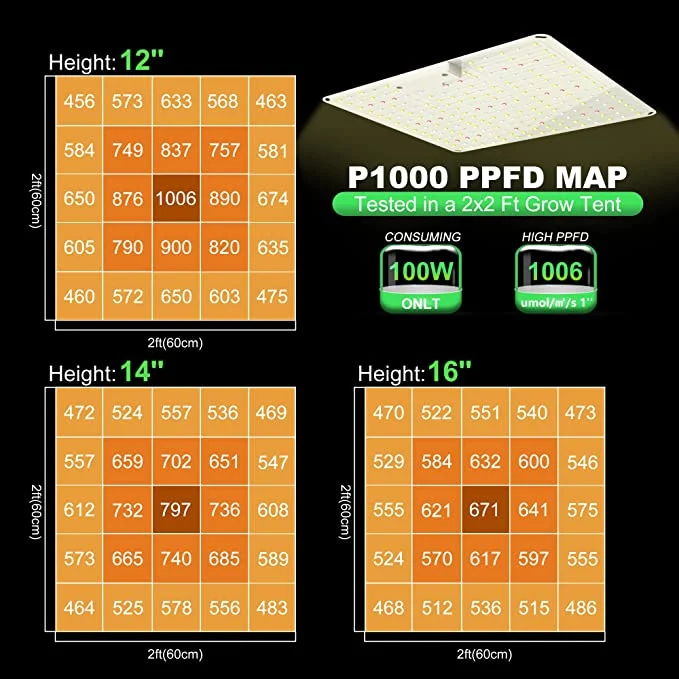
A PPFD map is the practical way to check whether the layout is working. Use a PAR meter, take measurement points across the canopy, and compare center readings with edge readings.
Plant-level readings matter more than a bright single point in the middle. PPFD describes plant-usable light reaching leaves and similar surfaces, and distance affects PPFD, so the map tells you where the canopy is actually receiving light.
If you want a more focused reading workflow, see How to Read a PPFD Map Before Choosing an LED Grow Light.
Adjust Fixture Height and Position Based on Results
Once the map shows the weak spots, adjust the room in small steps. Reposition lights, change height, and refine spacing until the map becomes more even.
Timers and sensors help keep the schedule and room conditions stable, but they do not replace the map. The useful pattern is simple: measure, adjust, recheck, and watch the plants.
What Common Grow Room Lighting Layout Mistakes Should You Avoid?
Installing Lights Based Only on Manufacturer Coverage Claims
Coverage claims are a starting point, not a final answer. A fixture can cover an area on paper and still fail to deliver uniform light at the canopy if the hanging height, spacing, or room shape is wrong.
That is why coverage and uniformity are different questions. Coverage says the light reaches the area. Uniformity says the area receives it evenly.
Ignoring Edge Areas and Plant Growth Changes
Edge coverage is easy to overlook because the center usually looks best first. Corners, side walls, and aisle edges often need extra attention when the room is first set up.
Plant height changes also matter. As the canopy expands, the old layout can stop working. A room that looked balanced at transplant can become uneven later if the fixtures are not checked again.
FAQ
Q: How should I design a grow room lighting layout for even coverage?
A: Begin with the shape of the canopy instead of the room. Position the fixtures so their footprints overlap across the entire crop area. Then check the results with a PPFD map; after that, adjust the height or spacing through minor changes.
Q: How far apart should grow lights be in a grow room lighting layout?
A: No single spacing distance works for every room. The proper distance depends on fixture design. It also depends on mounting height and canopy size. Consider the overlap needed at the edges and corners.
Q: How high should grow lights be placed in a grow room lighting layout?
A: The lights should sit high enough to prevent hotspots. They should also sit low enough to maintain useful intensity at the canopy. The best height produces the most even PPFD map. This comes after careful measurement and adjustments.
Q: How can I improve uniformity in a grow room lighting layout?
A: Choose fixtures with improved distribution. Tighten or widen the spacing where necessary. Check the corners and not just the center. Dimming helps smooth the intensity levels while the room receives final tuning.
Q: What should I consider when planning a grow room lighting layout?
A: Consider the canopy area along with crop type and growth stage. Fixture design matters too. The photoperiod, dimming features, and timer control need attention. Also plan how the room will be measured later. The best layout remains even as the canopy grows.