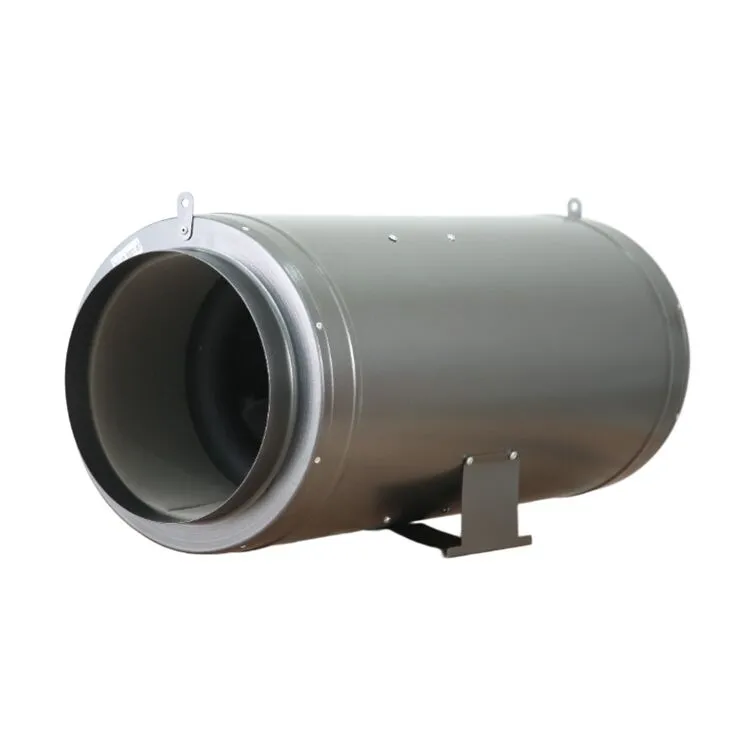

Built-in and remote driver grow lights differ first by driver placement, not by light output alone. The driver converts power for the LED fixture, but where it sits changes installation, heat location, service access, wiring, and fixture weight. Neither design is universally better. Built-in is usually simpler for compact installations, while remote becomes more attractive when driver heat can move outside the conditioned grow area, maintenance access matters, or fixture clearance is tight.
What Does an LED Grow Lights Driver Do, and What Changes When It Is Built In or Remote?
What Is a Built-In LED Grow Light Driver?
A built-in driver is integrated into the fixture body or mounted directly on the light. For the grower, that usually means fewer separate boxes to mount, shorter output wiring, and a clearer plug-and-play path. The LED Grow Light category shows why fixture format and driver placement should be evaluated as one package.
This layout suits smaller rooms, tents, and retrofits where the installer wants to hang the light, connect power, confirm dimming compatibility, and tune height and intensity. TIDESTAR manufactures and sells indoor plant-growing products, including LED grow lights and hydroponic systems for hobbyists and commercial growers, so we treat driver placement as part of the full grow-room equipment decision.
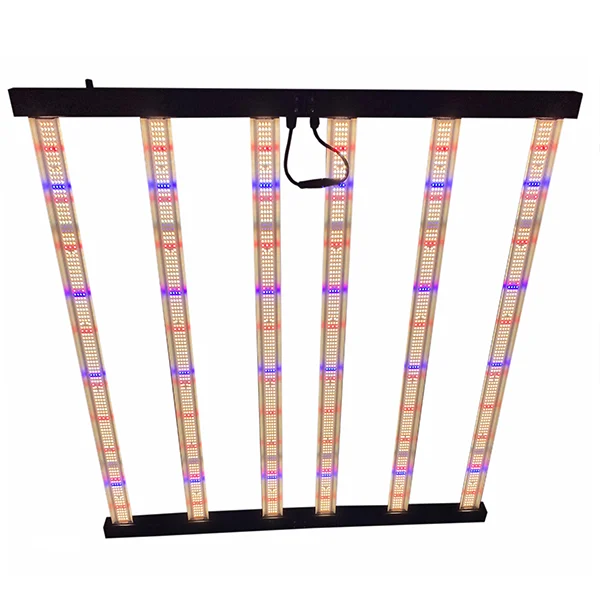
What Is a Remote LED Grow Light Driver?
A remote driver separates the driver from the fixture. One fixture may still have its own driver, mounted away from the canopy or outside the rack. In larger projects, remote power can become a centralized architecture where fixtures, branch circuits, controller wiring, and service zones are planned together.
Remote does not automatically mean better or cooler. It means the designer has more placement options and more installation responsibility. For projects comparing fixture styles and mounting layouts, TIDESTAR’s LED Grow Light Bar category is more useful than comparing driver placement alone.
How Does LED Grow Lights Driver Placement Affect Grow-Room Heat?
Where Does Heat From a Built-In LED Grow Light Driver Go?
Every driver has conversion losses, and those losses become sensible heat somewhere. With a built-in driver, that heat is released at or near the fixture, often above the canopy. In a sealed grow room, that can affect canopy-zone thermal management because the light source, heat source, plant transpiration zone, and airflow pattern are close together.
This does not mean a built-in driver is inefficient by definition. It means HVAC and airflow design must account for where heat appears. Plant-usable light is still measured at the crop surface; PPFD, fixture distance, coverage, species, and plant response remain separate questions.
When Does Remote LED Grow Light Driver Mounting Actually Reduce Grow-Room Heat?
When the Driver Is Mounted Outside the Conditioned Grow Area
The real thermal benefit appears when driver heat crosses a space boundary. If the driver is mounted in an electrical room, mechanical corridor, service chase, or another area outside the conditioned grow room, the room HVAC no longer has to remove that portion of heat from the cultivation space.
When the Driver Is Moved but Still Remains Inside the Same Sealed Room
If the driver moves off the fixture but stays inside the same sealed room, total room heat does not disappear. Heat moves to another point. That can still help if the driver is easier to cool, farther from sensitive crop zones, or less disruptive to canopy airflow.
Which LED Grow Lights Driver Design Is Easier to Install, Wire, and Control?
Why Built-In Drivers Suit Simple Plug-and-Play Grow Light Installations
Built-in drivers usually win when simplicity is the main goal. There is no separate driver board or remote box to mount, cable paths are short, and a grower can focus on hanging height, input power, timer setup, and dimming behavior. TIDESTAR’s product knowledge includes dimmable LED quantum panels and compact 35W/65W full-spectrum panel kit components with a power cord, hanging kit, adjustable rope, and dimmer control.
The installer still needs to check voltage, plug type, mounting load, controller compatibility, and wiring instructions. Built-in does not remove design responsibility; it reduces separate components.
What Changes When Installing a Remote LED Grow Light Driver?
Cable Length, Routing, and Voltage Drop
The common question “how far can a remote LED driver be from a grow light?” has no single universal answer. The distance depends on fixture design, driver output, current, voltage, cable type, connector rating, local code, electromagnetic interference limits, and manufacturer instructions. Longer runs can increase voltage drop and installation complexity.
Dimming, Controllers, and Multi-Light Wiring
Remote placement can make sense when dimming and control wiring are planned as a system. A room may use dimmer knobs, timed sockets, digital timers, relay boxes, or centralized controls. TIDESTAR’s knowledge base includes timer and controlled switching equipment, but no single protocol is the default for every grow light. For heat-load and dimming context, see TIDESTAR’s article on 720W vs 800W LED grow lights.
Which LED Grow Lights Driver Design Is Easier to Maintain and Keep Reliable?
How Do Humidity, Temperature, and Driver Location Affect Reliability?
The better question is not simply “which driver lasts longer?” It is “what environment will the electronics see?” Heat, humidity, dust, water spray, poor airflow, and difficult access can all affect electronics. A built-in driver may be protected by fixture design, but it also lives close to the grow-room environment. A remote driver can sit in a cleaner and cooler service area, but only if the installation provides that environment.
Which Design Makes Driver Service and Replacement Easier?
Remote drivers can be easier to inspect and replace when mounted at a reachable service panel or outside the canopy. Technicians may avoid working between plants, removing fixtures, or disturbing trellis and irrigation hardware. That benefit is strongest in commercial rooms with repeated fixtures.
Built-in drivers are not automatically unserviceable. Serviceability depends on fixture design, connector layout, parts availability, warranty procedure, and access. In small rooms, removing one integrated fixture may be easier than tracing remote cables.
Which LED Grow Lights Driver Design Fits Different Grow Room Setups?
Is a Built-In LED Grow Light Driver Better for Small Grow Rooms and Grow Tents?
For a small grow room or tent, a built-in LED grow light driver is often practical. Fixture count is low, there may be no good place outside the tent to mount a driver, and the grower may value a simple package over a flexible electrical layout. If driver heat is not the main environmental bottleneck, remote planning may not pay off.
TIDESTAR’s 100W LED grow light quantum plate knowledge includes indoor plant use and compact coverage context, with vegetative coverage of 2.5 ft x 2.5 ft at 18 in and flowering coverage of 2 ft x 2 ft at 14 in for that source entry. Small-space planning is usually more sensitive to hanging height, footprint, dimming range, and plant response than to remote power architecture.
Is a Remote LED Grow Light Driver Better for Commercial Multi-Light Grow Rooms?
Remote drivers become more attractive as fixture count rises. Commercial rooms may benefit from centralized electrical planning, accessible service zones, lower fixture weight, more clearance above the canopy, and the option to locate driver heat outside cultivation.
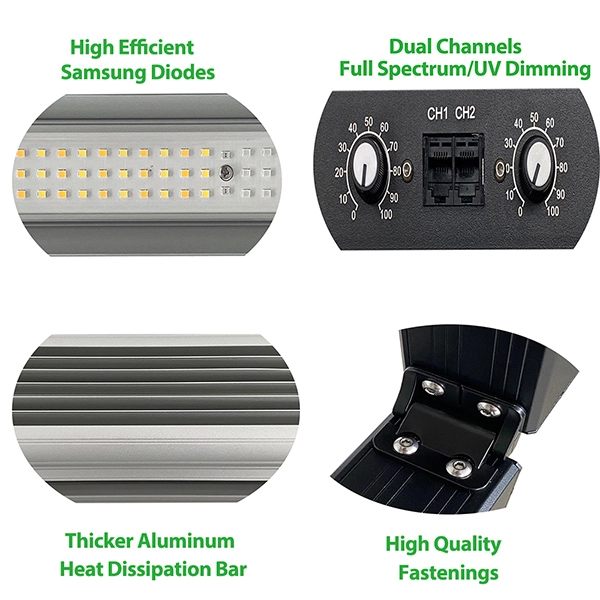
The Horticulture Samsung LED Grow Light Bar is a bar-style, dimmable horticulture fixture with a distributed emitter layout. The verified page identifies a 720W class product using Samsung LM281B, full-spectrum wording, dimming, UV/IR wording, and a distributed bar-style emitter layout. In rooms using many bar-style fixtures, the decision is how the fixture, driver, controls, HVAC, crop layout, and maintenance access work together.
Which Driver Design Works Better for Low-Clearance, Vertical, or Humid Grow Rooms?
Low-clearance rooms and vertical racks can favor remote drivers because extra fixture components compete with crop height, aisle access, and airflow. Removing driver mass may also make hanging and rack loading easier. In humid rooms, the question is where the driver can be mounted with better protection and inspection.
Built-in designs still make sense where simplicity, shorter wiring, compact packaging, and manufacturer integration matter more. The best LED grow light driver setup matches the room boundary: where heat is released, where technicians can work, how controls are wired, and how the fixture fits the crop.
FAQ
Q: Is a built-in LED grow light driver better for a small grow room?
A: Usually, yes. Built-in drivers keep installation simpler, reduce extra wiring, and suit small rooms or tents with only a few fixtures.
Q: Does a remote LED grow light driver reduce heat inside a grow room?
A: Only if the driver is mounted outside the conditioned grow area. If it stays in the same sealed room, total heat does not disappear.
Q: How far can a remote LED grow light driver be mounted from the light fixture?
A: There is no universal distance. It depends on driver output, cable size, voltage drop, connectors, code, and manufacturer limits.
Q: Does an LED grow light driver affect dimming and grow light control?
A: Yes. The driver must match the fixture’s dimming method, controller, timer, and wiring plan.
Q: Which LED grow light driver setup is easier to maintain in a commercial grow room?
A: Remote drivers are often easier to service when mounted in an accessible area, but built-in serviceability depends on fixture design