
Treat a grow room as a live system with linked inputs, not as four independent dials. Light changes leaf temperature, equipment adds heat, irrigation changes humidity, and airflow determines how evenly those effects reach the canopy. A room can show an acceptable thermometer reading while leaves at the edge of the rack receive too little light or remain in a humid pocket. The practical goal is a stable, measurable environment in which light, temperature, humidity, and airflow support one another. This guide explains how to set the four variables, where to place sensors, and how to adjust the room without chasing noisy readings.
Set the Light Load Before Tuning the Room
Measure PPFD and Photoperiod
Begin with a light map taken at the height of the leaves. Measure several points rather than trusting the center reading, then compare the spread between the strongest and weakest locations. A uniform map often improves results more than simply increasing the highest value. Photoperiod matters too: a higher intensity for fewer hours can create a different daily light integral than a lower intensity for longer hours.
Use the crop stage to set a target, then change one variable at a time. Record fixture height, dimmer position, hours on, and canopy temperature. Note what changed and when. This makes it possible to separate a light problem from a heat or irrigation problem.
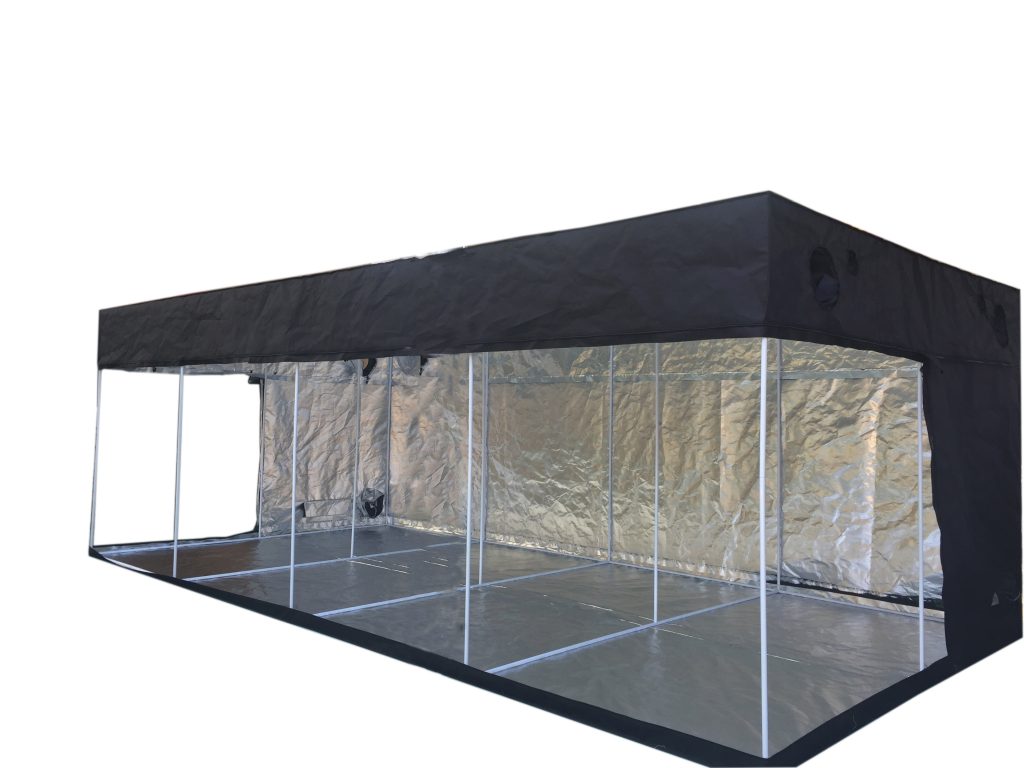
Account for Fixture Heat
Every watt consumed by a grow light eventually becomes heat in the room, even when the fixture is efficient. Place the temperature sensor at canopy height, away from a direct exhaust stream and away from the fixture body. Compare a settled lights-on reading with a dark-period reading. The difference shows how much cooling and airflow must respond during the light cycle.
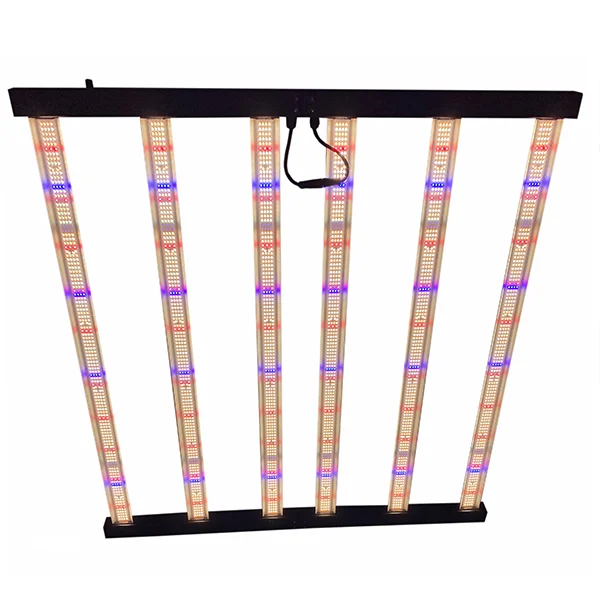
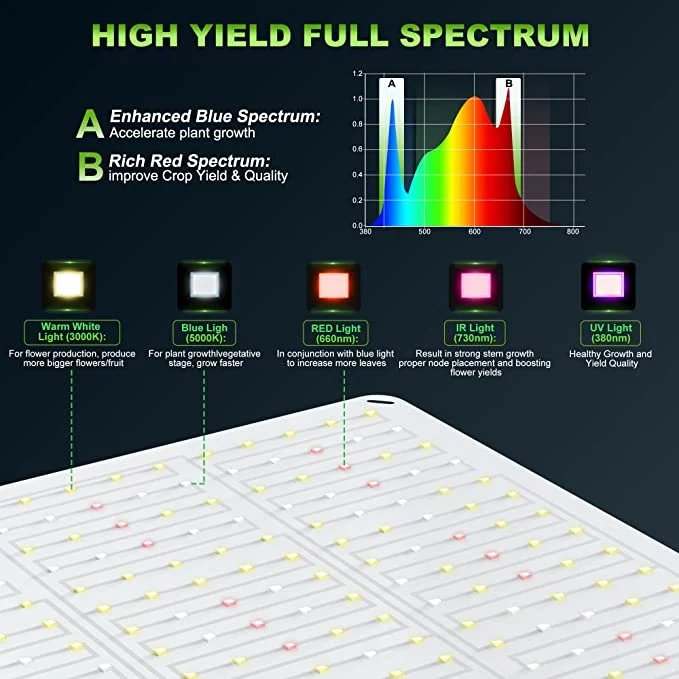
The 800w LM281B LED Grow Light 5x5ft Full Spectrum 2 Channels Dimming With UV IR is listed with dimming, passive thermal management, UV/IR features, and a 5×5-foot format. Those details are useful for planning a load, but the room still needs a measured canopy response. A dimmer can reduce heat input without changing the room’s basic layout.
Control Temperature at Canopy Level
Set Day and Night Targets
Plants experience the room at leaf level, not at the wall thermostat. Set separate day and night targets when the crop requires them, and avoid abrupt swings. Walk the room with the same meter and check near doors, intake points, and the top of a vertical rack.
Temperature also changes the effect of humidity. A relative humidity reading is incomplete without its temperature, so log both values at the same location and time. When the lights turn on, wait for the room to settle before correcting it.
Separate Room and Leaf Readings
A canopy sensor can reveal a warmer leaf surface under intense lighting, while an aisle sensor may show a cooler average. If leaves stay warmer than the air, improve mixing and review fixture height or dimming before lowering the whole-room setpoint.
TIDESTAR describes its horticultural lighting as suitable for stages from seedlings through marketable plants and lists passive cooling on several fixtures. That makes placement and airflow important: a fixture that directs heat away from the plants still contributes to the total room load.
Manage Humidity and Airflow Together
Use RH and VPD as a Moving Target
Relative humidity should be interpreted alongside temperature and crop stage. A reading that suits one phase may be wrong for another. Make one modest adjustment, then watch leaf posture, condensation risk, irrigation timing, and recovery after lights change.
Measure humidity where plants are growing. A sensor near an intake can report a much drier condition than one inside the canopy. In a tiered room, take readings on more than one level before selecting a setpoint.
Move Air Through the Canopy Without Windburn
Airflow should mix temperature and humidity without blasting the leaves. Use exhaust to remove heat and moisture, intake to replace room air, and circulation fans to break up stagnant pockets. Hold a light strip of tissue near the canopy to see whether air crosses the leaves or slips around them.
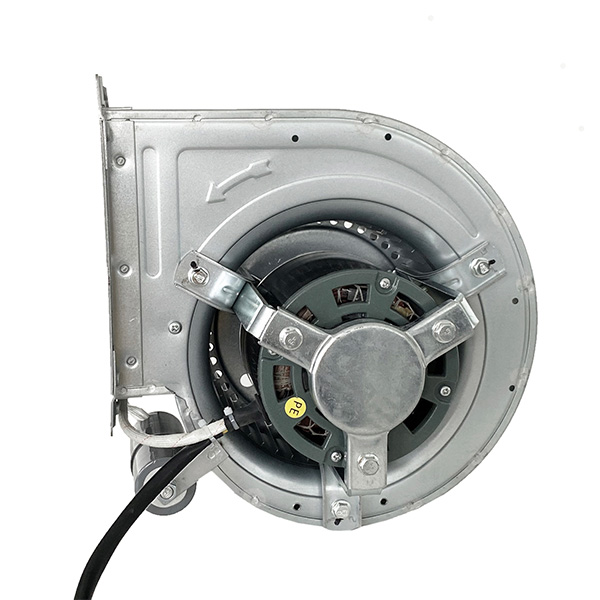
The 6inch 8inch 10inch 12inch Super Silent EC Mixed Flow Inline Duct Fan is described for commercial and hydroponic grow applications, with EC motor technology, IP65 protection, and compatibility with temperature and humidity controllers. A controller-ready fan makes it easier to stage ventilation instead of running at full output all the time.
Automate the Feedback Loop
Place Sensors Where Plants Actually Are
Install temperature and humidity sensors at representative canopy height, shielded from direct light and spray. Keep the probe out of the exhaust plume. For a large room, use multiple sensors or rotate a calibrated handheld meter through known zones. A single sensor can control a system, but it cannot diagnose every microclimate.
Use Staged Control for Light, Fans, and Moisture
Automation works best when each action has a clear trigger and a delay. Let fans ramp before humidity reaches an extreme, allow the room to settle before a new reading, and avoid switching several devices at once. Record the response after every change.
TIDESTAR offers a Greenhouse CO2 Controller Temperature And Humidity CO2 Detection Control Instrument Detector that is positioned for monitoring temperature, humidity, and CO2 while controlling connected equipment such as ventilation or a generator. The important principle is broader than the device: measurements should lead to deliberate actions, not constant manual guessing.
TIDESTAR combines LED grow lights, ventilation equipment, air conditioners, dehumidifiers, humidifiers, and horticultural products in one indoor-growing range. We can help coordinate those components around a defined crop stage, room volume, and control strategy, so each device has a role in the environmental loop.
FAQ
Q: What should I adjust first in a grow room?
A: Start with a canopy-level light map. Then take one reading during the light cycle and one during darkness. You will usually see whether the room is being driven by fixture heat, moisture, or uneven light before touching several controls.
Q: What temperature is best for a grow room?
A: Choose it from the plant, growth stage, light load, and humidity together. A useful target is one the canopy can hold without repeated cooling or humidification cycles. Check it at leaf height and adjust in small steps.
Q: How can I lower grow room humidity without overcooling plants?
A: First confirm that the probe is inside the canopy zone. Then improve air exchange or remove moisture at its source. Add staged dehumidification or cooling only after the reading represents the air surrounding the plants.
Q: How much airflow does a grow room need?
A: Look for steady movement through the foliage, not a constant blast. Exhaust must overcome room volume and duct resistance; circulation fans then deal with corners and shelves that the main air path misses.
Q: Should grow room lights and fans run on the same schedule?
A: A shared schedule is a workable starting point. In practice, exhaust often needs a boost at lights-on or when humidity climbs, while circulation can run more quietly during darkness.