
Choosing net pots for hydroponics is less about buying the largest basket available and more about matching the pot to the plant, growing method, and opening in the system. A pot that is too small can restrict root development and dry out quickly. One that is too large may leave a young plant unstable, waste media, or fail to sit securely in the lid. The right size gives roots room to breathe while keeping the stem, media, and irrigation zone aligned. This guide explains how to measure the system first, how to size the basket for different growth stages, and how to make a choice that remains useful as the crop develops.
Start With the System Opening, Not the Plant
Measure the Lid or Channel Hole
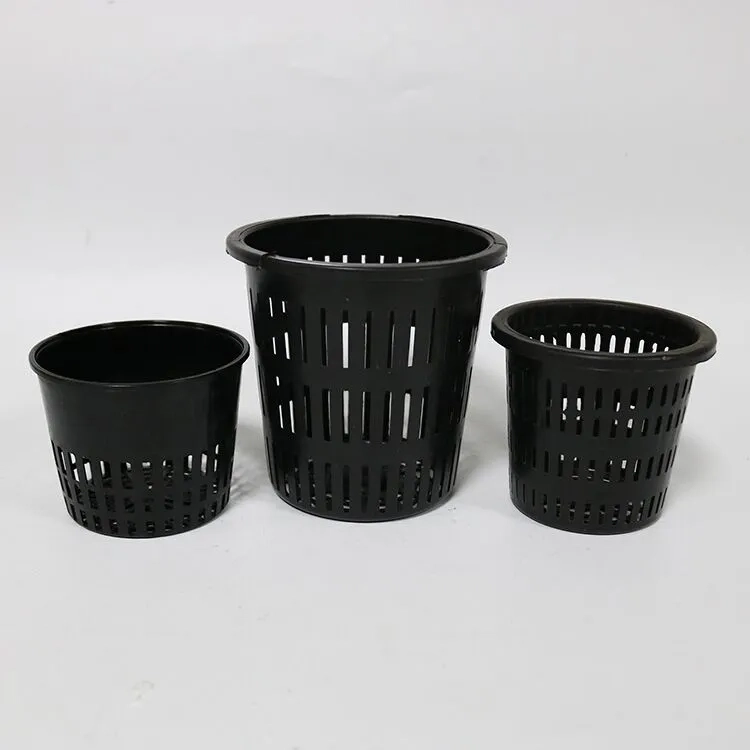
The first measurement is the hole that receives the pot. Measure the opening at its narrowest usable point, then compare it with the net pot’s outside rim diameter. The rim must overlap the lid enough to carry the load without dropping through. A nominal “2-inch” or “3-inch” label is only a starting point because manufacturers can vary slightly in rim diameter, taper, and lip shape.
For a replacement or retrofit, remove the old basket and measure both the hole and the basket. A pot that fits a deep-water culture lid may not fit a propagation tray, NFT channel, or a custom reservoir. TIDESTAR’s Plant Propagation Tray collection groups trays, nursery pots, and propagation accessories in one product family, which is useful when the basket is part of a broader propagation setup.
Check Lip, Depth, and Clearance
Diameter controls fit, but depth controls stability and usable root volume. Check whether the lower section can hang into the nutrient solution, whether the roots can reach moisture during establishment, and whether the basket clears an internal pump, float, or channel ridge. A shallow basket may be convenient for seedlings, while a deeper basket can hold more media around a longer root crown.
The rim should sit level. If one side is lifted, the plant can lean and the media may shift when irrigation starts. Leave enough clearance for stems and leaves around neighboring openings. In dense systems, a basket that technically fits may still create crowding at canopy level.
Match Net Pot Size to Plant Role
Small Net Pots for Seedlings and Greens
Small net pots work well when the plant has a modest root mass or when the system is designed for close spacing. Seedlings, herbs, leafy greens, cuttings, and small clones usually need support more than a large media reservoir. A smaller basket also helps the root zone reach water or mist quickly, reducing the establishment gap after transplanting.
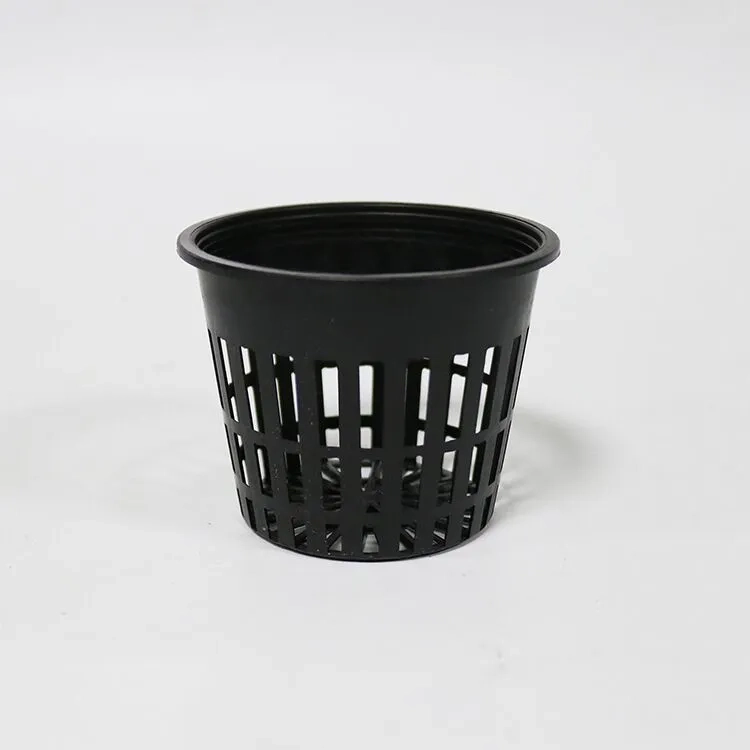
The Black Mini Rouns Cups Net Pot is positioned for indoor hydroponic and aquaponic growing, with PP plastic construction and openings intended to promote drainage and root access. For a small plant, prioritize a stable rim, open sides, and enough media to hold the stem upright rather than simply increasing diameter.
Durable PP planting baskets are useful when a crop must be lifted, cleaned, and returned to the system more than once. A wide lip gives the grower more surface area to grip during transplanting, while open sides give roots more room and make the basket easier to clean. Even drainage matters because the container should support healthy roots without holding stagnant water around the crown. For seedlings, a compact low-profile pot can support herbs, vegetables, cuttings, and starter plants while leaving more room for neighboring containers. These details are small, but they affect handling, root access, and the repeatability of a propagation workflow.
Larger Baskets for Fruiting Crops
Larger net pots make more sense when the mature plant will carry a large canopy, a heavy fruit load, or a substantial root system. They can hold more clay pebbles or another inert medium and provide a wider transition zone as roots leave the basket. The trade-off is slower saturation during early establishment and more space between plants.
Size should follow the whole system. A large basket in a shallow reservoir may leave the root crown too high above the solution. In a compact lid, it may also reduce the number of planting sites. Plan the mature spacing, reservoir depth, support structure, and expected harvest weight before moving up.
Choose the Basket and Media as a Pair
Slot Pattern and Root Access
The openings in a net pot determine how easily roots can exit and how much media remains in place. More open sides can improve water and air exchange, but very large openings may allow small media pieces to fall through. Match the slot pattern to the medium size and the irrigation pattern. A system with strong circulation needs a basket that resists media washout.
Media Volume and Stability
A pot should hold enough media to anchor the plant without creating a saturated, poorly aerated core. Use the plant’s stem thickness, transplant size, and expected time in the system to judge volume. Square nursery pots can be useful for compact propagation benches because their straight sides use space efficiently. TIDESTAR’s Mini Black Plastic Square Flower Pot uses recyclable polypropylene, drainage holes, and raised feet; its listed 2-inch format is aimed at seedlings and starter plants rather than a mature fruiting root zone.
TIDESTAR also lists the Black Mini Rouns Cups Net Pot for hydroponic applications and a range of propagation products, so the practical decision is not only round versus square. It is whether the container can keep the plant upright, let excess water leave, and leave enough room for roots to expand without blocking the system.
We can support OEM/ODM service and after-sales assistance when a buyer needs a repeatable pot, tray, or indoor growing package across multiple batches. The value of that support is consistency: the same opening, rim, material, and media behavior can be specified again instead of re-fitting every crop cycle.
Build a Sizing Decision You Can Reuse
Before ordering, write down five values: opening diameter, rim diameter, basket depth, plant type, and expected time in the container. Then test one filled pot in the real lid or tray. Confirm that it sits level, that the stem is centered, and that roots can reach the intended moisture zone. If those checks pass, order the remaining quantity.
A useful rule is to size for the plant’s next meaningful stage, not its first week. Use small baskets for rapid propagation and compact greens. Move to a larger basket when root volume, canopy weight, or crop duration justifies the extra media and spacing. The best net pot is the smallest one that securely supports the plant and gives the roots a clear path into a well-aerated growing zone.
FAQ
Q: What size net pots for hydroponics are best for seedlings?
A: Small net pots are usually the better starting point for seedlings, cuttings, herbs, and leafy greens because they stabilize the stem while allowing roots to reach moisture quickly. Confirm the actual rim diameter and system opening instead of relying only on the nominal inch size.
Q: Can net pots for hydroponics be too large?
A: Yes. An oversized basket can waste media, slow early root contact with moisture, reduce planting density, and make a young plant unstable. Choose a larger size when mature root volume, plant weight, or crop duration requires it.
Q: How do I measure a net pot for hydroponics?
A: Measure the system opening at its narrowest point, then measure the pot’s outside rim, depth, and lower clearance. The rim must overlap the opening securely, while the bottom must clear pumps, channels, and other internal parts.
Q: Are net pots for hydroponics reusable?
A: Many plastic baskets can be reused when they remain intact and are cleaned and sanitized between crops. Inspect the rim and slots for cracks, blocked openings, or warping before putting the pot back into service.
Q: Do net pots for hydroponics need clay pebbles?
A: No. Clay pebbles are common, but the suitable medium depends on irrigation, plant size, and the basket’s slot pattern. Choose a medium that anchors the stem, drains freely, and does not wash through the openings.