
Humidity in a grow room is a moving load, shaped by transpiration, irrigation, temperature, and ventilation. A unit selected from floor area alone may fall behind during the light cycle or switch on and off too often when conditions change. Begin with the room’s moisture pattern, then examine capacity, airflow, drainage, controls, heat, and service access. That approach works for a small tent room as well as a commercial cultivation bay.
Assess the Moisture Load First
Start with room size and plant density
Put the basic operating picture in writing: room dimensions, canopy area, plant count, crop stage, irrigation method, and any exposed water. A compact room with a dense canopy and active hydroponic channels may release more moisture than a larger room with sparse planting. Size from the busiest realistic condition, not from empty-room volume.
Also note target temperature, day and night RH, light schedule, and the way outdoor air enters. Lights, HVAC timing, door openings, and exhaust intervals can all change the moisture balance. Start with the highest credible load, then check that the chosen unit can run steadily instead of creating large RH swings.
Account for irrigation and ventilation
Open reservoirs, wet floors, drain pans, misting, and freshly watered media can add a substantial amount of moisture. Ventilation may help in a dry climate, but the same strategy can import humid air when outdoor conditions are poor. During a hot, wet weather pattern, exhaust alone may make the target difficult to hold.
Choose Capacity for the Real Operating Range
Match liters per day to peak load
Liters per day is useful only with the test conditions beside it. Capacity measured at warm, humid conditions may look much better than performance in a cool room. Ask for test temperature and RH, working range, airflow, and recommended room size. Those details make model-to-model comparisons meaningful.
With a modest canopy and limited irrigation, a small room may be served by a 12L/day or 20L/day model. A larger commercial bay may call for 50L/day, 60L/day, or several industrial units. Leave room for peak transpiration, but avoid such a large oversize that the compressor short-cycles and RH control becomes erratic.
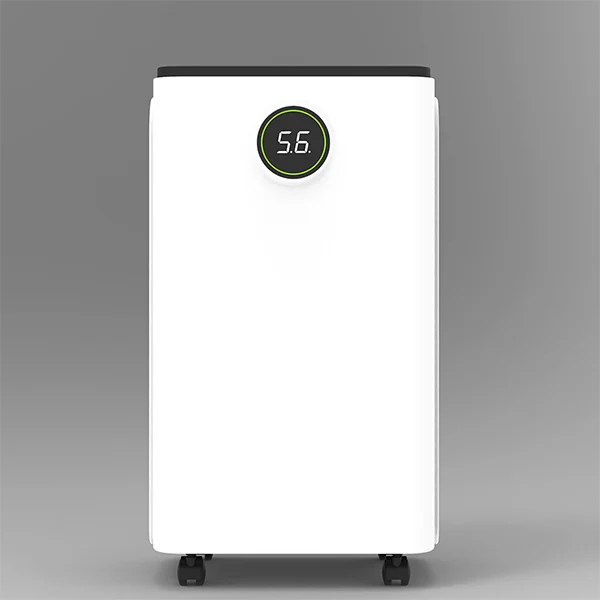
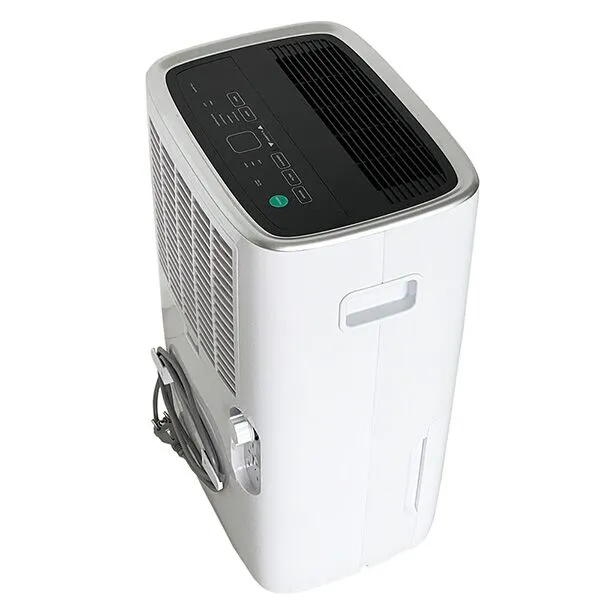
The TD-F12 is listed at 12L/day, 210W, 105 m3/h airflow, a 2.5L tank, and a recommended 20 m2 room. The TD-D22 is listed at 20L/day, 180 m3/h airflow, and a recommended room size of 50 m2. A 30L/day and 40L/day pair is listed for recommended room sizes of 25-30 m2 and 30-40 m2.
Confirm temperature and RH performance
Find out whether the unit can operate at the room’s lowest temperature and whether it has automatic defrost. Confirm the control range, sensor location, restart behavior after an outage, and compatibility with a separate humidity controller. A Dehumidifier that performs well only in a warm test room may disappoint during a cool dark period.
The product data in the knowledge base lists R290 refrigerant for several compact and commercial models, but the final purchasing specification should use the current model documentation and the destination market’s compliance requirements. Treat refrigerant, electrical input, and certification as selection checks, not assumptions.
Prioritize Airflow, Drainage, and Control
Plan continuous drainage
Portable units often include a tank, but continuous drainage is usually the better arrangement for a grow room. Check the drain fitting, available height, pump capacity if needed, and the route to the floor drain or collection system. A full tank can stop the unit at night, precisely when falling temperature may be pushing RH upward.
Use airflow to prevent wet zones
Capacity alone does not create even conditions. Put the unit where room air can return to the intake and keep both intake and discharge clear. Circulation fans can break up stagnant pockets behind foliage, but they should not dry one side of the canopy. Compare the stated airflow with the room layout, filters, and any duct pressure.
Several listed models include timers with settings from 0-24 hours, which can support staged operation when the room schedule is stable. TIDESTAR lists a 0-24 hour timer on several dehumidifier models.
Compare Grow-Room-Ready Dehumidifier Configurations
Use a 50L or 60L commercial unit for medium loads
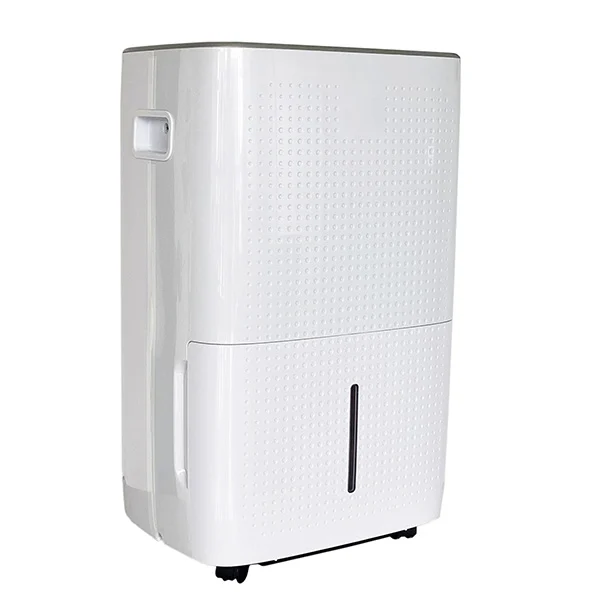
The Industrial 50L 60L 70L Commercial Dehumidifier is a candidate when a small portable unit cannot cover the room’s moisture load. The knowledge-base table lists 50L/day at 680W with 270 m3/h airflow, an 8L tank, and a recommended room size of 60 m2; a related 60L/day model is listed at 800W, 300 m3/h, and a recommended 70 m2. Confirm the selected capacity, test condition, and drainage arrangement before ordering.
Scale to industrial capacity when the moisture load is high
The Industrial 138L Air Dehumidifier Large Capacity belongs in the comparison when the moisture load is high or the room is part of a distributed system. One large unit can reduce the number of controls, but it also demands careful planning for power, heat rejection, service clearance, and condensate routing.
Consider a large-capacity drain-hose configuration
The Wholesale Industrial Dehumidifier Large Capacity Air Dehumidifier is relevant when the specification depends on both industrial capacity and a drain-hose arrangement. Compare the quotation with the calculated room load, rather than choosing by the maximum nameplate figure. If one large machine leaves dead zones, several smaller coordinated units may control the room more evenly.
Integrate the Unit Into Climate Control
Coordinate with lights and air movement
The lights-off transition deserves its own control sequence. Temperature can fall while the plants continue releasing moisture. Coordinate the Dehumidifier and HVAC before that change arrives. When outdoor air is humid, exhaust alone is unreliable; sensors and staged equipment can hold the target without throwing away conditioned air.
TIDESTAR’s product line includes dehumidifiers for moisture control and ventilation equipment for indoor air management. Our team can help compare capacity, airflow, operating conditions, and drainage requirements against the room plan. The result should be a coordinated climate specification rather than a single appliance chosen from a catalog.
Plan maintenance and service
Give the filters, coils, drain lines, sensors, pumps, and electrical connections named inspection intervals. Keep the likely replacement parts and service contacts with the room records. TIDESTAR provides warranty support for quality problems and continues to provide technical service after the warranty period when customers have questions.
Before purchase, request the current data sheet, wiring information, control interface, warranty terms, and installation requirements. Sample orders are welcome, and mixed samples are acceptable when a facility is testing several equipment types. A short pilot can expose noise, heat, drainage, and RH-control issues before the full room is equipped.
Create a Buying Specification
Write down the operating assumptions
Write down room volume, canopy area, crop stage, irrigation method, peak temperature, day and night RH targets, outdoor-air condition, ventilation schedule, expected liters per day, airflow, electrical supply, drainage route, control method, noise limit, and service clearances. Stating the assumptions gives every supplier the same brief and exposes missing information early.
Verify the delivered configuration
Check the nameplate, capacity, airflow, controls, drain fittings, and included accessories when the equipment arrives. Confirm that the delivered unit matches the approved specification.
FAQ
Q: How do I choose a Dehumidifier for a grow room?
A: Estimate peak moisture from plants, irrigation, and outdoor air. Then compare capacity and test conditions with airflow, drainage, controls, heat output, installation, and service support.
Q: What size Dehumidifier is suitable for indoor cultivation?
A: Peak moisture load and operating conditions matter more than floor area. Use liters per day as an initial reference, then verify the rating at the room’s temperature and RH.
Q: Should a grow-room Dehumidifier run during the dark period?
A: It may. Temperature often falls after lights-out while moisture release continues, so the schedule should respond to dependable RH and temperature readings.
Q: Is continuous drainage important for a grow-room Dehumidifier?
A: Yes. Without a drain, a full tank can stop the unit and leave the room unattended during a humidity spike.
Q: Can one Dehumidifier control a large commercial grow room?
A: It can, provided capacity, airflow distribution, heat rejection, and drainage are adequate. Several coordinated units may be the better arrangement when one machine cannot mix the room evenly.