
Choosing an LED Grow Light becomes simpler when you match the fixture to the plant stage. You should consider canopy size too. Growing environment matters as well. Seedlings need mild and even light. Vegetative plants need steady coverage. Flowering plants often need higher intensity and better penetration. The right choice also requires proper spectrum control. It needs good dimming, heat management, and coverage.
What Should You Consider Before Choosing an LED Grow Light?
Understand Your Plant Growth Stage and Lighting Needs
Start with the plant growth stages rather than the fixture’s wattage. Seedlings need lower intensity. They also need careful height adjustment. Vegetative plants need even coverage for foliage and structure. Flowering plants may need stronger output. They need better penetration through a denser canopy.
The crop also matters. Leafy greens, herbs, flowering ornamentals, and fruiting plants do not respond in the same way. Spectrum affects plant response. A balanced or full-spectrum design can be useful. This helps when one fixture must support indoor growing from propagation through harvest. TIDESTAR supplies LED grow lights and other indoor growing equipment for hobbyists and commercial growers. Our product range includes options for different growing scales and layouts.
Consider Growing Space, Plant Type, and Coverage Requirements
Measure the actual canopy area. Do not measure just the room or tent size. LED Grow Light coverage should match the leaf area that needs useful light. A fixture can be strong in the center. It may leave weak edges.
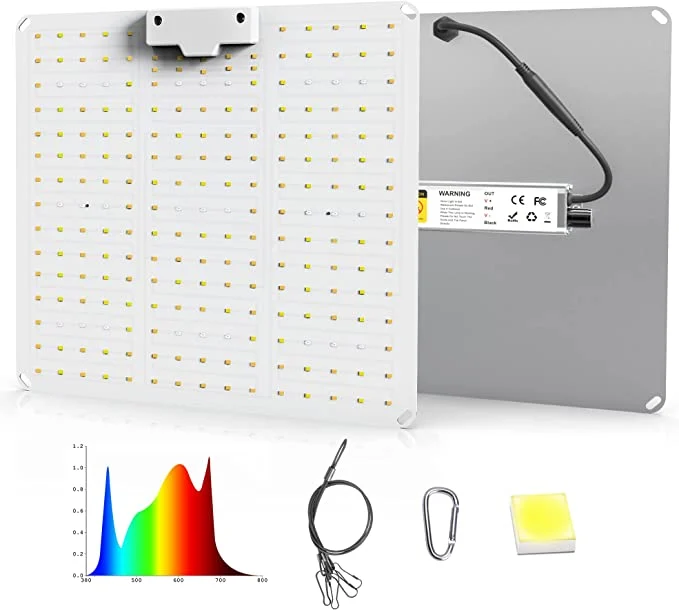
Compare the manufacturer’s coverage framing with the fixture’s distribution pattern. Check hanging height and dimming range too. A compact quantum panel may suit a small indoor grow space. A bar-style fixture can distribute emitters across a wider canopy. Use the stated coverage as a starting point. Then confirm results by observing plants. When possible, check leaf-level PPFD.
How Does an LED Grow Light Support Seedling Growth?
Why Seedlings Need Gentle and Consistent Light
Light that is too weak can contribute to stretching. It leads to long internodes and pale foliage. Light that is too intense or too close can cause bleaching. It can cause scorching or excessive heat around young leaves. The goal is gradual adjustment as plants develop.
A timer or controlled switching device can help maintain a repeatable photoperiod. The correct schedule still depends on the crop and growing conditions. Watch seedling response after every height or dimming change.
What Features Matter Most for Seedling LED Grow Lights?
Look for adjustable intensity. Seek balanced spectrum and manageable heat. Dimming lets you lower output near seedlings. It lets you raise output as the canopy expands.
For example, TIDESTAR’s 35W/65W full-spectrum quantum panel kit is associated with dimmer control. It comes with adjustable rope, a hanging kit, and passive fanless cooling. The Samsung LED Grow Lights Panel 75W–480W provides another quantum-panel reference for comparing dimming, distribution, and compact or mid-size grow room layouts.
What LED Grow Light Features Are Important During Vegetative Growth?
Choosing Light Output for Strong Leaf and Stem Development
For vegetative growth, compare usable light. Check canopy coverage and height flexibility. The fixture should deliver consistent light across the growing area. It should not create an intense center surrounded by weak edges.
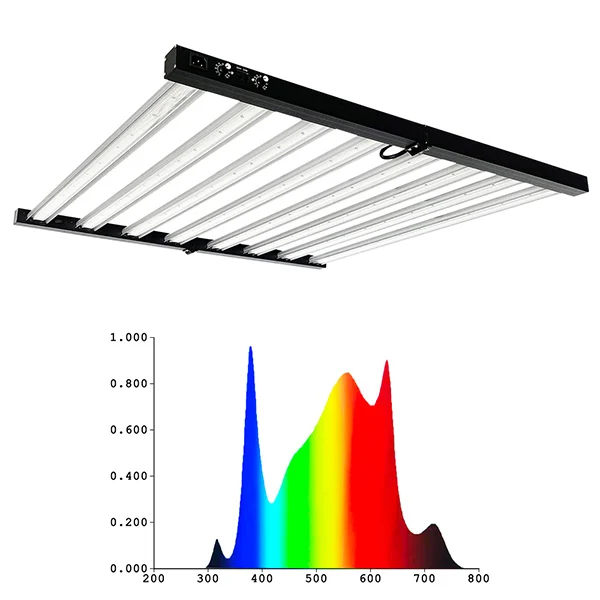
TIDESTAR’s Horticulture 720W LED Grow Light Bar is a bar-style example with distributed emitters and dimming. This type of layout can help spread light across a larger canopy. The final result still depends on spacing. It depends on hanging height, reflective surfaces, and plant arrangement.
Why Spectrum Balance Matters During Vegetative Growth
Blue wavelengths are commonly considered when growers want to support leafy growth. They help with plant structure. A broad spectrum gives more flexibility as the crop moves toward flowering. Spectrum still has to work with output. It works with distance, coverage, and heat.
Check whether the fixture is dimmable. Also check whether its spectrum is intended for one stage or a full cycle.
How Should You Choose an LED Grow Light for Flowering Plants?
Focus on Higher Light Requirements During Flowering
Flowering plants often need higher light. They need deeper canopy coverage than seedlings. Choose an LED grow light for flowering by considering output. Look at spread, hanging distance, and penetration. Do not focus on wattage alone.
TIDESTAR’s 800W class and 1000W class full-spectrum fixtures are examples of higher-output options. They are framed for larger growing areas. Actual PPFD, heat load, and plant response must be checked in the installed environment.
Choose an LED Grow Light That Supports Full-Cycle Growing
For many indoor growers, one fixture from seedling to flowering is simpler. It avoids replacing lights at every stage. The useful features are broad spectrum and adjustable intensity. Reliable hanging hardware helps. Enough mature-canopy coverage is important.
It still requires headroom for flowering. This must happen without overwhelming early plants. Full-cycle growing is a strategy. It is not a promise that one setting suits every plant at every age.
Should You Buy a Full Spectrum LED Grow Light for All Growth Stages?
Benefits of Using One LED Grow Light From Seedling to Harvest
A full spectrum LED grow light can simplify a multi-stage setup. The same fixture remains in place. Intensity, height, and photoperiod are adjusted. Dimming is especially useful. Seedlings can start gently. Vegetative plants can receive more output. Flowering plants can be managed at a higher level when the environment allows.
For small and medium indoor areas, a dimmable quantum panel or distributed bar fixture may provide a practical all-stage foundation.
When Separate Lighting Strategies May Be Needed
Separate fixtures or lighting zones may make sense for commercial growers. They can suit specialized crops. They work for rooms holding different stages at once. Propagation may prioritize low heat and fine dimming. Flowering may need higher output and deeper coverage.
The decision should follow the crop plan. It should consider room layout and environmental controls.
What Mistakes Should You Avoid When Choosing an LED Grow Light?
Choosing Based Only on Wattage Instead of Plant Requirements
Wattage measures electrical input. It does not show the complete growing result. It does not describe photon distribution by itself. It does not cover spectrum, coverage uniformity, heat, or plant-level PPFD. Compare wattage with canopy size. Check hanging height and dimming range. Review fixture design and stage-specific needs.
Ignoring Coverage and Growing Environment
Insufficient coverage can leave edge plants behind. This happens even when the center looks bright. Poor installation can create heat. It can block airflow or cause poor access. It may lead to unstable hanging height. Check the whole canopy. Revisit the setup as plants grow.
For a starting point, compare the LED grow light category with your growing plan. Match product form, coverage, and adjustment range to stage, canopy, and environment.
FAQ
Q: What LED grow light is best for seedlings?
A: Choose a dimmable LED grow light with balanced spectrum, manageable heat, and flexible hanging height. Start gently and adjust gradually.
Q: Can one LED grow light support all plant growth stages?
A: Yes, if coverage is extensive enough for the mature canopy. Intensity, height, and photoperiod still need adjustment.
Q: How do I choose an LED grow light for flowering plants?
A: Compare mature-canopy coverage, usable light, penetration, dimming range, and heat management. Confirm with plant response and PPFD readings when available.
Q: What size LED grow light do I need for indoor growing?
A: Size it for canopy area, plant type, growth stage, and hanging height. Do not use room dimensions or wattage alone.
Q: Is a full spectrum LED grow light good for every growth stage?
A: It can be practical when dimmable. Specialized crops or multi-stage rooms may need separate zones.