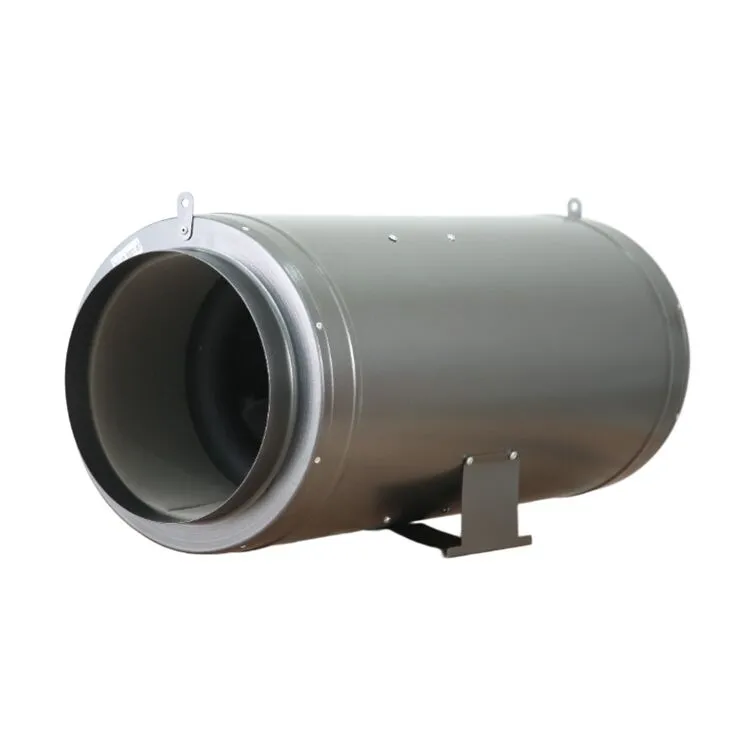

You plan to buy a dehumidifier for a large space. The right pick is not the unit with the largest coverage claim. The good choice fits room size, moisture load, drainage access, controls, noise tolerance, and daily running time for the equipment.
How Do You Choose the Right Dehumidifier for a Large Space?
Start With Space Size and Moisture Conditions
Square footage is only the first filter. A dry storage room, a damp basement, a greenhouse, and a warehouse with open doors can need very different moisture removal. This holds even when the floor area looks similar. Check the actual humidity level. Look at the source of moisture, room temperature, airflow, and whether the space has new moisture entering every day.
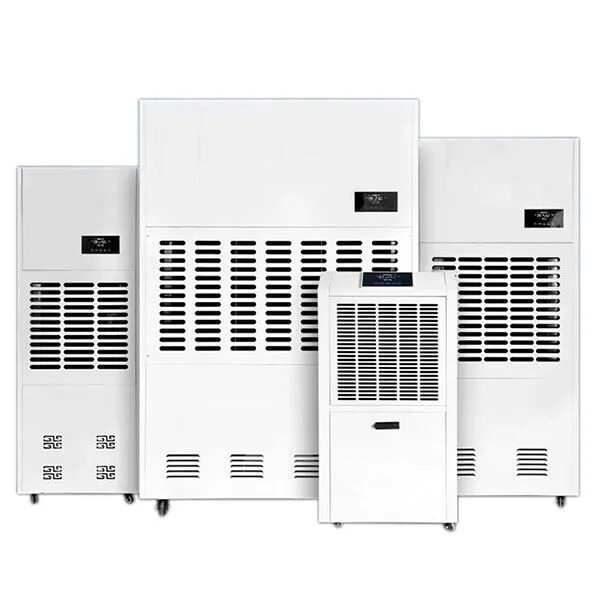
TIDESTAR offers large space dehumidifier options for home, portable, commercial, and industrial use. Our selection approach starts with the environment. The unit must fit the real moisture load. It should not fit only the room label.
Match Dehumidifier Capacity With Daily Moisture Removal Needs
Capacity tells you how much water a dehumidifier can remove in a rated period. This is usually shown as pint/day or L/day. In a large area, capacity matters. An undersized unit may run continuously. It can still fail to bring relative humidity down to a stable range.
For large spaces, look beyond a single number. A higher capacity unit may be necessary. This is true when the space has wet floors, frequent door opening, plant cultivation, stored wet materials, or poor ventilation. A lower capacity unit can still work when moisture is occasional, and drainage is easy.
What Capacity Should You Look for When You Buy a Dehumidifier for Large Areas?
Understand Pint Capacity and Coverage Area Ratings
Pint capacity and L/day capacity are comparison tools. They are not unconditional guarantees. A listing may show a coverage area. Real performance changes with temperature, starting humidity, air circulation, ceiling height, and the amount of new moisture entering the space.
Use capacity as a decision range:
| Moisture situation | What to check before buying |
| Mild dampness in a large room | Room size, target humidity, tank size, and noise level |
| Persistent humidity or basement moisture | Higher L/day or pint/day capacity, continuous drain hose access, and auto defrost |
| Warehouse, greenhouse, or commercial moisture load | Industrial build, stronger airflow, pump or drain options, and easier filter access |
TIDESTAR’s range includes compact and higher-capacity examples, including 12L/day, 20L/day, 30/40L/day, 50L/day, and 60L/day models. The 50L dehumidifier with a digital control panel is one example for buyers comparing capacity, tank size, noise level, airflow, and recommended room size together.
Consider High-Humidity Environments Before Choosing Capacity
Basements, warehouses, greenhouses, and commercial spaces often need more than a room-size calculation. A basement may have wall seepage or cool surfaces. A greenhouse can generate moisture from plants and irrigation. A warehouse may exchange humid outdoor air through loading doors. In these settings, select capacity with a margin for ongoing moisture. Then confirm drainage and maintenance access.
Which Features Matter Most in a Large Space Dehumidifier?
Continuous Drainage Helps Reduce Daily Maintenance
Large-space units can collect water quickly. If the tank is small or difficult to remove, daily use becomes inconvenient. Continuous drainage helps. An accessible drain hose, a washable tank, and front or side access reduce the labor required to keep the unit running.
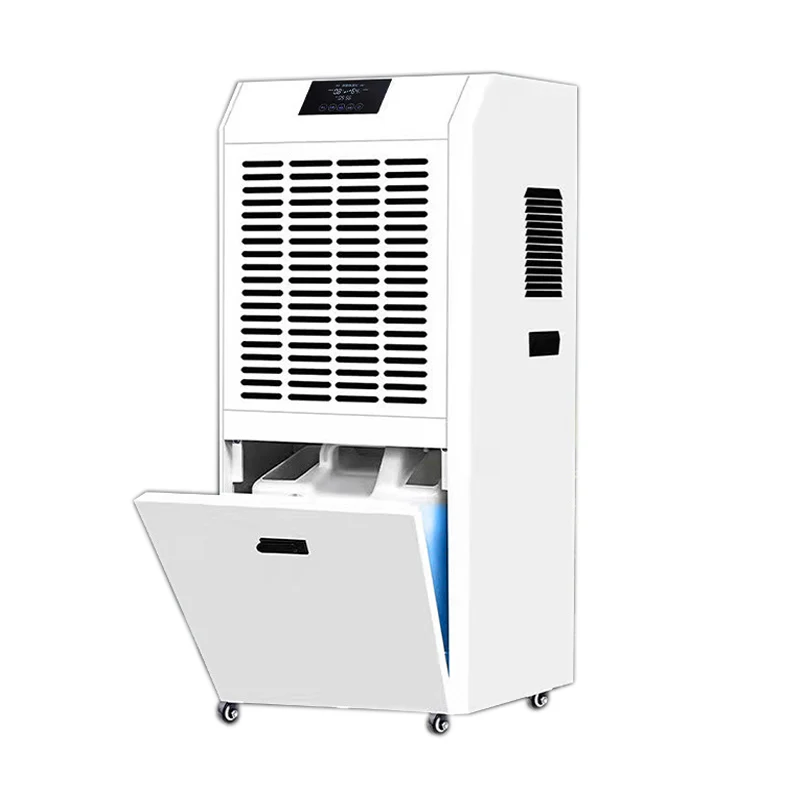
TIDESTAR industrial dehumidifier content supports internal drain-hose access, a removable and washable 42-pint tank, on-board filter access, and quick maintenance design. Buyers comparing a pump dehumidifier, self-draining dehumidifier, or continuous drain hose setup should confirm where collected water will go before choosing capacity. Those details matter when the equipment is used in a high-volume setting instead of an occasional room.
Smart Controls and Humidity Monitoring Improve Convenience
A humidistat lets the unit respond to room conditions. It does not run blindly. Digital controls, RH readings, timers, auto restart, auto defrost, water-full alarms, filter-clean reminders, optional WiFi, and pump options can reduce manual checks.
These features are especially useful in large rooms. Humidity may change slowly in such spaces. Automatic operation helps maintain a target range. It avoids unnecessary runtime when the space is already dry enough.
Mobility and Installation Options Matter for Large Spaces
Large spaces rarely have one perfect location. You may need to move the dehumidifier between zones. You can place it near a drain. You must avoid blocking aisles and stored goods. Casters, handles, a space-saving footprint, longer power cables, and flexible placement help the unit work with the building layout.
How Important Are Energy Efficiency and Operating Performance?
Choose a Dehumidifier Designed for Extended Operation
Large areas often require extended operation. Look for a stable compressor system. Seek automatic defrost for lower-temperature operation. Check for adequate airflow, easy filter access, and controls that can restart correctly after power interruption. A unit that is hard to clean or empty will not perform well in daily use.
Energy efficiency should be judged together with capacity. Public efficiency metrics such as integrated energy factor compare water removal with energy use. Controlled capacity ratings are tested under defined conditions. The practical result still depends on whether the unit is sized correctly for the moisture load. It also depends on whether the unit can drain without frequent shutdowns.
Balance Moisture Removal Performance With Noise Levels
Noise expectations differ by setting. A warehouse or plant room can tolerate more operating sound than a bedroom, office, or occupied basement. TIDESTAR listed models include examples below 46 dB, 47 dB, and below or equal to 53 dB. These depend on capacity and model. Use those figures as model-specific references. They are not one noise level for every product.
Should You Buy a Portable or Commercial Dehumidifier for Large Spaces?
When Portable Large-Capacity Units Are a Better Choice
Portable high-capacity units are often suitable for homes, basements, garages, and small commercial rooms. They are easier to position. They are easier to relocate. They are usually simpler to maintain. A 60L/day portable unit can make sense. This holds when the space is large but still needs flexible placement and routine tank or drain access.
When Commercial Dehumidifiers Are More Suitable
Commercial and industrial dehumidifiers are more suitable when the moisture source is constant. The room is very large in these cases. The duty cycle is long. Drainage must be handled with less daily attention. TIDESTAR’s industrial dehumidifier for high-volume moisture control supports heavy-duty casters, digital RH readings, drain-hose access, a removable tank, and large-capacity operation for demanding spaces.
What Mistakes Should You Avoid When You Buy a Dehumidifier?
Choosing Based Only on Room Size
Room size alone can mislead buyers. A 5000 sq. ft. rating does not mean the same result in a cool basement, a warm greenhouse, and a warehouse with loading doors. Always pair floor area with humidity level. Include moisture source, room temperature, and how quickly air can circulate through the space.
Ignoring Drainage and Maintenance Requirements
Maintenance is where many large-space purchases fail. If the tank fills too often, the filter is hard to reach, or no drain point is available, the unit may be turned off. It may be turned off before it solves the problem. Before buying, confirm where the water will go. Check how the filter will be cleaned. See how the unit will move. Know who will check the controls.
Before selecting a model, list five facts. These include the room area, current humidity, moisture source, available drain point, and acceptable noise level. That short checklist turns a broad buying question into a practical capacity and feature comparison.
FAQ
Q: What size dehumidifier should I buy for a large space?
A: Start with the area. You then adjust for how severe the humidity is. Consider the moisture source as well. Air movement is another factor. Drainage options also matter. A large room with mild dampness may need less capacity. This differs from a smaller room that has ongoing moisture.
Q: How many pints should I buy for a large space dehumidifier?
A: Choose pint/day or L/day capacity based on the moisture load. Do not base the choice only on floor area. The space may stay wet. The unit may run without stopping. In such cases, move to a higher-capacity model.
Q: What features should I look for when I buy a dehumidifier?
A: Put continuous drainage first. Tank capacity is important too. Humidistat control should be included. An RH display helps. A timer is useful. Look for auto defrost. Auto restart matters as well. The noise level needs attention. Filter access must be easy. Casters add value. Placement flexibility is good.
Q: Can I buy a dehumidifier for a warehouse or commercial space?
A: Yes. Warehouses and commercial rooms require careful review. Compare commercial or industrial units in these settings. Higher capacity is often necessary. Stronger airflow makes a difference. Easier maintenance helps daily work. Durable casters support movement. Reliable drainage options reduce effort.
Q: How do I know if I need a high-capacity dehumidifier?
A: You probably need high capacity under certain conditions. Humidity may return fast. Condensation can appear often. The space could be large. Moisture might remain constant. A smaller unit may fail to reduce relative humidity. This can happen even after extended operation.