
DLI helps growers understand the total amount of plant-usable light received each day. Instead of adjusting LED intensity or lighting hours separately, combining PPFD and photoperiod creates a more balanced lighting strategy. Better LED grow light management is not always about increasing intensity. It is about delivering the right amount of light over the entire day.
What Is DLI and Why Does It Matter for LED Grow Lights?
At TIDESTAR, we treat DLI planning as a measurement and scheduling decision, not a race to the highest output.
How Is DLI Different from PPFD and Light Intensity?
PPFD describes the instantaneous amount of plant-usable light reaching a leaf. It is a snapshot at a particular height and location. DLI, or daily light integral, describes the accumulated amount received across the light-on period. Photoperiod is how long plants receive light each day.
These terms answer different questions: PPFD measures strength now, DLI measures the day’s total, and photoperiod measures operating time. A grower needs all three when setting an LED grow light schedule.
Why Does Daily Light Exposure Matter More Than Maximum Brightness?
An LED grow light does not necessarily outperform another due to being too intense and operating for too little time. High PPFD for a short time and low PPFD for a long time can generate similar DLI, but different results will be obtained because temperature, water utilization, acclimation, darkness, and uniformity are still relevant.
Wattage and room brightness are therefore incomplete. PPFD changes with distance, while response depends on coverage, species, growth stage, and symptoms. Aim for an appropriate DLI rather than the highest single-point reading.
How Do You Calculate DLI for LED Grow Lights?
What Information Do You Need to Calculate DLI?
You need two practical inputs: PPFD at the canopy and light-on hours. DLI rises when either light is stronger or the photoperiod is longer. A common calculation combines average PPFD, seconds of light, and a unit conversion, but measurement strategy matters more than memorizing the formula.
Measure PPFD at several canopy points, including the edges, not only under the fixture. Use an average for the actual growing area and multiply it by daily operating time. If natural light reaches the leaves, include that contribution instead of treating the LED grow light as the only source.
How Can Growers Adjust DLI by Changing Intensity or Photoperiod?
There are two main adjustment directions:
- Increase LED intensity while keeping the schedule stable.
- Extend the photoperiod while maintaining moderate intensity.
Higher intensity raises delivery without extending the day; longer hours spread the target over more time. Neither is universally better. Dense canopies may need stronger light, while young plants may prefer moderate intensity and a steady schedule. Compare average PPFD with plant stage and dark period.
How Should You Balance LED Grow Light Intensity and Photoperiod?
When Should You Increase LED Intensity Instead of Extending Light Hours?
Increase intensity when plants are acclimated, the canopy needs more light, and the existing photoperiod is practical. Flowering plants often need more daily light than seedlings, while dense canopies may need stronger delivery to lower leaves.
This is where dimmable LED quantum panels are useful as a planning example. A dimmer lets growers increase output in measured steps and observe plant response rather than switching immediately from low to maximum power. The listed product family includes multiple wattage options and a dimmer knob, but its specifications should not be treated as a universal DLI target.
When Is a Longer Photoperiod Better Than Higher Light Intensity?
A longer photoperiod can suit moderate intensity, young plants, or a canopy that is evenly covered but below its practical daily target. Keep a consistent dark period because extra hours can increase water demand and complicate temperature control. Extend gradually and check new growth, leaf edges, posture, and moisture use.
How Does Dimming Control Help Manage Daily Light Levels?
Dimming separates output changes from fixture height and makes DLI adjustments repeatable. The fixture can stay in a useful coverage position while intensity changes with plant stage. Adjustable LED grow lights also help respond to seasonal window light or a changing canopy.
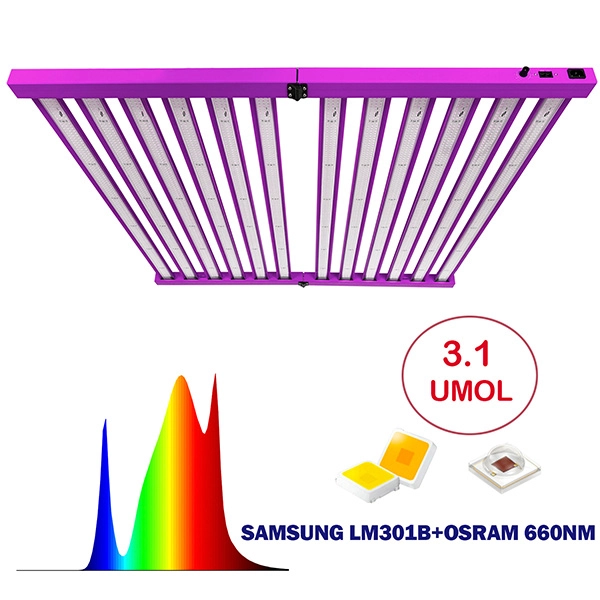
TIDESTAR offers dimmable quantum panels and a bar-style, distributed-emitter fixture. The Horticulture Samsung LED Grow Light Bar illustrates why fixture form and dimming belong with intensity. Actual DLI still depends on height, coverage, measurement, and plant response.
How Much DLI Do Different Plants Need Under LED Grow Lights?
What DLI Levels Are Suitable for Seedlings and Young Plants?
Seedlings and young plants generally need a lower starting DLI than mature flowering plants. Sudden exposure to a strong LED grow light can cause stress even when the daily total looks attractive. Begin with moderate PPFD, a stable photoperiod, and enough darkness, then increase only after new growth looks healthy.
How Does DLI Change During Vegetative Growth?
During vegetative growth, increase DLI in measured stages as the canopy expands. Check the full plant width, not only top leaves. Stretching and pale growth can indicate low light; bleaching, curling, or dry patches near the fixture call for lower intensity or more distance.
Why Do Flowering Plants Usually Need Higher Daily Light Levels?
Flowering plants often have higher light demand, but every crop does not need the same DLI. Species, environment, nutrition, root health, and canopy structure change the appropriate level. Treat higher flowering DLI as a stage-based direction, not permission to use maximum output.
How Can Growers Optimize DLI with Modern LED Grow Lights?
Why Should PPFD Maps Be Checked Before Increasing Light Output?
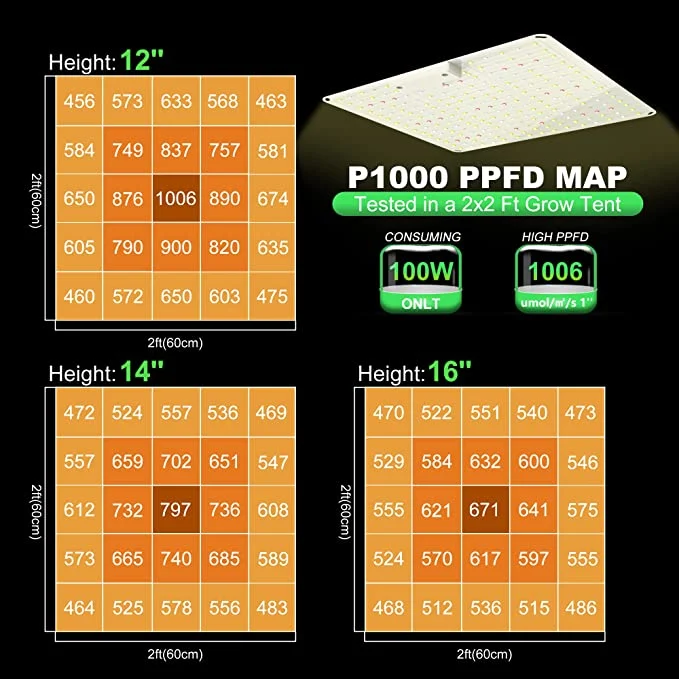
A PPFD map shows distribution across a tested footprint. Check test height, grid, average, minimum, maximum, and edge falloff. A high center reading can hide weak corners, so use the map as a starting reference and measure the installed canopy.
How Do Canopy Coverage and Plant Distance Affect DLI?
Distance changes PPFD, and canopy height changes the distance experienced by each leaf. Upper leaves may receive much more light than lower growth. A broad bar-style fixture, multiple smaller fixtures, or adjusted hanging height may improve coverage, but only measurements confirm it. The TIDESTAR product center shows why fixture format and output range should match the growing area, not wattage alone.
How Can Timers and Sensors Improve Lighting Consistency?
An LED grow light timer keeps the photoperiod repeatable, making DLI changes easier to compare. Timed sockets, digital timers, and relay equipment can coordinate multiple luminaires. Sensors add temperature, humidity, or light information, but do not replace canopy-level PPFD checks.
What Are Common DLI Mistakes When Using LED Grow Lights?
Why Can Too Much DLI Stress Indoor Plants?
Too much DLI can increase leaf stress, bleaching, scorch, water use, or heat-management demands. A short period of intense light can affect leaves differently from longer moderate light. Watch the closest leaves and newest growth after each meaningful change.
Why Can Low DLI Cause Weak Plant Growth?
Low DLI can contribute to weak stems, long internodes, pale growth, smaller leaves, leaning, or slow development. Causes include low intensity, short photoperiod, excessive distance, poor edge coverage, or an overgrown footprint. Check average PPFD and uniformity before buying higher wattage.
Why Should Growers Adjust DLI Gradually?
Gradual adjustment protects plants and makes troubleshooting possible. Change one variable at a time, record the schedule and PPFD, and observe for several days. Optimal DLI is not maximum DLI; it supports the current stage without creating stress symptoms.
FAQ
Q: What is DLI for LED Grow Lights?
A: DLI, or daily light integral, is the total plant-usable light received by a canopy during one day. It combines average PPFD with photoperiod and is more informative than wattage alone.
Q: How do LED Grow Lights affect DLI?
A: LED Grow Lights affect DLI through PPFD, coverage, distance, intensity, and schedule. A dimmer changes intensity and a timer changes photoperiod, but final DLI depends on light reaching the canopy.
Q: Is higher DLI always better for plants under LED Grow Lights?
A: No. Too much daily light can stress plants and too little can cause weak growth. The suitable level depends on stage, plant type, canopy, environment, and response.
Q: Can dimmable LED Grow Lights help control DLI?
A: Yes. Dimmable LED Grow Lights adjust intensity while fixture position and coverage stay more stable. Pair the dimmer with a PPFD map, canopy measurements, a reliable timer, and plant observations.