

Yes. A properly selected and correctly used LED grow light can replace natural sunlight for many houseplants. Complete replacement works only when the setup supplies a useful spectrum, sufficient intensity at leaf level, even canopy coverage, a consistent photoperiod, and a daily period of darkness. The real test is not whether the room looks bright, but whether the plant keeps producing healthy new growth.
Can an LED Grow Light Replace Natural Sunlight Completely?
What Does “Completely Replace Sunlight” Mean for a Houseplant?
Survival is the minimum criterion. A plant may be alive but experience reduction in leaf size, color, variegation, and compactness. Real replacement involves continued growth; new leaves will have the proper size, appropriate internode length, consistent color, and no leaning towards the light source.
At TIDESTAR, our indoor-growing range includes LED grow lights for hobby and commercial cultivation. That experience also shows why “replacement” describes a complete lighting setup, not a bulb label alone.
When Can Houseplants Live with Only an LED Grow Light?
In a windowless room, basement, office, or dark apartment, many foliage plants can live without window light if artificial light supplies their daily requirement. A timer keeps the schedule repeatable, while canopy-sized coverage prevents shaded leaves from declining. Watering and other care may need adjustment as light increases.
When Is Artificial Light Alone Less Practical?
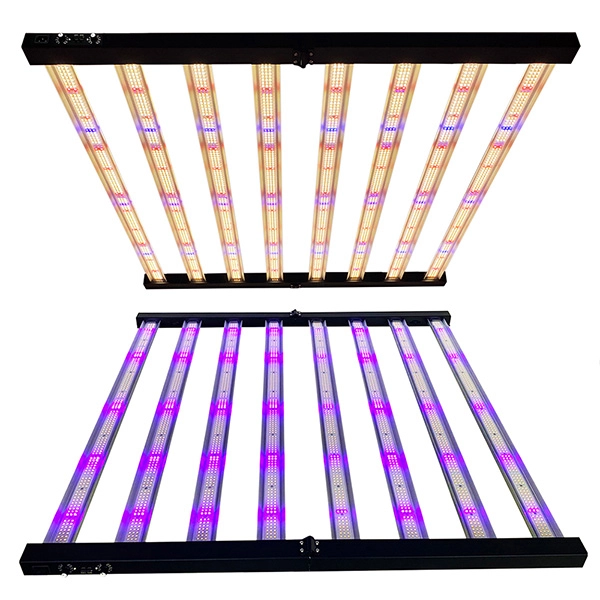
Artificial light is less convenient for tall plants, dense canopies, and very high-light species. They may need several fixtures or side lighting to avoid a bright top and dark lower growth. A 720W full-spectrum LED grow light illustrates output for larger cultivation areas, but it is excessive for one desk plant. No single lamp suits every plant and space.
What Must an LED Grow Light Reproduce from Natural Sunlight?
Does a Full-Spectrum LED Grow Light Need to Copy Every Part of Sunlight?
No. Sunlight contains broad radiation and changes through the day. Plants need adequate usable light with a wavelength balance suited to growth. Photoreceptors respond to light information that affects morphology, while spectrum composition can influence leafy growth or flowering. TIDESTAR describes a wide spectrum that commonly covers visible light, with UV-A and far-red in some spectra. A full-spectrum grow light therefore supplies useful wavelengths without being physically identical to sunlight.
Why Does Light Intensity at Leaf Level Matter More Than Room Brightness?
Human vision adapts to dim rooms, so perceived brightness can be weak for photosynthesis. Lumens describe brightness for people; PPFD describes plant-usable photons reaching a leaf and falls as distance increases. Compare output, coverage, hanging height, and plant response rather than eyesight or wattage alone. The LED grow light product range shows why different formats serve different canopies.
Why Do Houseplants Still Need a Day-and-Night Cycle?
Complete replacement does not mean 24-hour lighting. Plants use photoperiod as biological information and need a dark interval. For many foliage houseplants, 12–14 total hours is a practical starting range; flowering plants may differ. Use a timer and count meaningful window light in the total.
Which Houseplants Can Grow with Only an LED Grow Light?
Can Low-Light Houseplants Live Without Window Light?
Pothos, snake plants, and ZZ plants are easier candidates because they tolerate lower intensity. “Low light” still means measurable light, not darkness. Thin stems, longer gaps between leaves, or fading variegation indicate that the setup remains too weak.
Can Medium-Light Tropical Houseplants Thrive Under Grow Lights Alone?
Monstera, philodendron, and peace lily may develop with artificial lighting alone provided the lighting unit encompasses the whole of the plant continuously. Large leaves tend to overshadow the lower leaves, so increase the lighting unit’s coverage whenever necessary. More lighting may lead to more watering.
Can Succulents and Other High-Light Houseplants Grow Without Sunlight?
Yes, but they usually need stronger, more concentrated, or closer light than foliage plants. Inadequately lit succulents stretch and lose compact form. A decorative lamp may suit a snake plant but fail an echeveria. Choose output for the species, then increase exposure gradually.
How Should You Use an LED Grow Light as the Only Light Source?
How Do You Match Grow Light Coverage to the Plant Canopy?
Light the leaves, not merely the pot. Cover the canopy edges and avoid leaving most lower growth permanently dark. Multiple small panels may light a shelf more evenly than one intense point source. Compare the tested footprint with actual canopy width.
TIDESTAR’s listed quantum-panel family spans 75W, 150W, 240W, 320W, and 480W. The 240W entry uses a 120-degree light distribution and a dimmer, illustrating how fixture format and controllability help match output to a wider or smaller canopy without relying only on nominal wattage.
How Far Should an LED Grow Light Be from Houseplants?
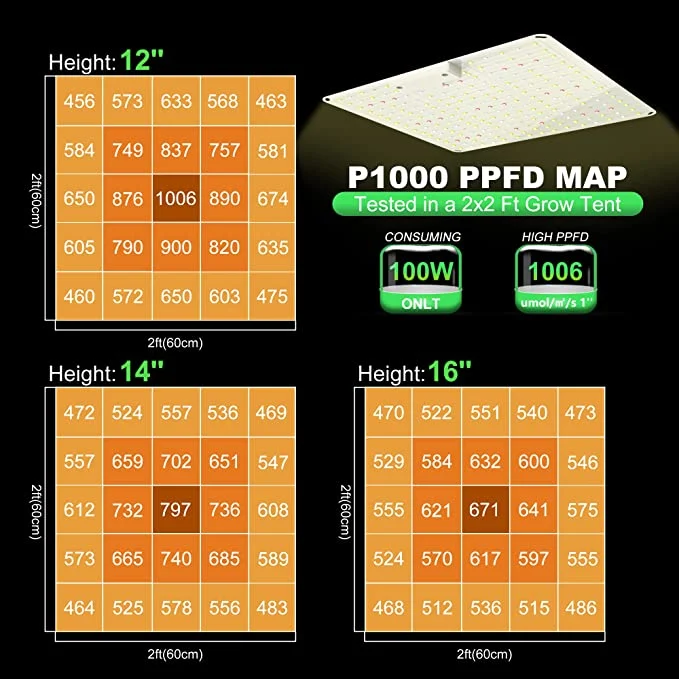
There is no universal distance. Output, optics, heat, dimming, canopy size, and plant tolerance all matter. The Samsung LED Grow Lights Panel 75W–480W for Indoor Plants is dimmable, showing why brightness and height should be adjusted together. Its source lists coverage examples at 18 inches for vegetative growth and 14 inches for flowering; those figures do not apply to every fixture.
How Long Should Grow Lights Stay On Without Natural Sunlight?
Start many foliage houseplants at 12–14 hours daily, followed by darkness. Keep consistent on/off times. When window light also reaches the leaves, reduce artificial duration or intensity. Extra hours cannot fully compensate for weak intensity or poor coverage.
How Should Plants Be Acclimated to a New Grow Light?
Begin with lower output, greater distance, or a shorter schedule. Increase one variable every several days while watching new growth and the nearest leaves. Acclimation matters most when moving a plant from weak window light to concentrated artificial light.
How Can You Tell Whether the LED Grow Light Is Really Replacing Sunlight?
What Are the Signs That a Houseplant Needs More Grow Light?
The signs include thin stalks, elongated internodes, small leaves, stem drooping, variegation loss, yellow growth, and lack of development. Multiple symptoms should be considered as other problems like watering issues or root problems may be responsible for the symptoms.
What Are the Signs That an LED Grow Light Is Too Strong?
Leaves nearest the fixture may bleach, scorch, curl, or develop dry patches while shaded leaves remain normal. Increase distance or reduce output. Do not diagnose every yellow leaf as low light; watering stress and normal leaf turnover are alternatives.
How Can New Growth Confirm That the Lighting Setup Works?
Track the next two or three leaves instead of judging old foliage alone. Compare their size, color, spacing, and direction with earlier growth. Species-appropriate leaves, stable color, balanced orientation, and steady development show that the new setup works.
Is a Grow-Light-and-Window Combination Better Than Complete Replacement?
When Does Supplemental Grow Lighting Make More Sense?
Supplemental light is simpler when a plant receives useful window light but weakens in winter, sits far from the glass, or is shaded by buildings. The fixture fills the shortfall, so a smaller lamp may be sufficient.
When Is an LED Grow Light Better Than Inconsistent Window Light?
A stable artificial schedule can be easier to manage than a north-facing window, short winter days, building shade, or deep-room placement. Consistency also helps separate lighting problems from other care issues.
How Should Natural and Artificial Light Be Combined Without Overlighting Plants?
Count both sources together. A winter timer setting may be excessive beside a bright summer window. Reduce artificial hours or dim the fixture as daylight strengthens, and check leaves nearest both sources. Aim for sufficient daily light plus reliable darkness, not maximum exposure.
FAQ
Q: Can an LED grow light replace sunlight for houseplants completely?
A: Yes, when spectrum, leaf-level intensity, coverage, photoperiod, and darkness are suitable. Healthy new growth confirms the setup.
Q: How many hours should an LED grow light stay on for houseplants?
A: Start many foliage houseplants at 12–14 hours. Adjust for species, intensity, window light, and plant response, and include darkness.
Q: How far should an LED grow light be from indoor plants?
A: Follow the fixture’s tested range, then adjust for canopy coverage and leaf response. No distance fits every light and plant.
Q: Is a full-spectrum LED grow light as good as natural sunlight?
A: It can maintain many indoor plants when it supplies appropriate usable light. It is not physically identical to sunlight, and results depend on intensity, coverage, timing, and placement.


