

Choosing between LM281B and LM301B grow lights is less about declaring one diode universally better and more about matching a fixture to its job. LM281B-based lights can reduce the entry cost of a room, while LM301B-based lights usually convert electricity into photons more efficiently. The practical decision depends on operating hours, electricity price, target PPFD, cooling limits, and how long the equipment will remain in service.
The chip name is only one line on a specification sheet. Diode count, drive current, bar spacing, spectrum, driver efficiency, and thermal design can change the performance of the finished grow light. A careful buyer, therefore, compares complete fixtures under the same conditions before assigning value to either Samsung diode family.
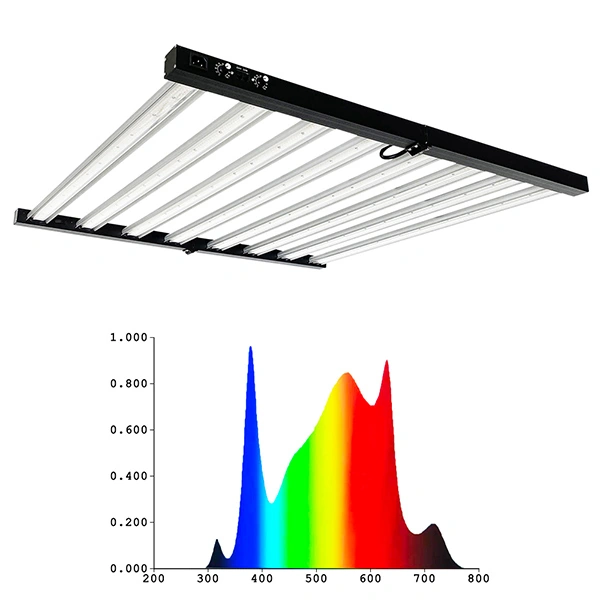
What the LM281B and LM301B Names Actually Tell You
Package Design Influences Cost and Electrical Performance
LM281B Uses a Cost-Oriented 2835 Platform
The LM281B family uses a 2835-style mid-power package. It is widely used where manufacturers need a large number of white diodes at a controlled component cost. A designer can spread many LM281B diodes across boards or bars and operate them gently, improving uniformity while keeping the fixture accessible to budget-conscious growers.
LM301B Uses a High-Efficacy 3030 Platform
The LM301B uses a compact 3030 package and is known for strong efficacy at suitable operating currents. That advantage can let a fixture reach a given PPF with fewer diodes or reduce input power for the same photon target. It does not eliminate the need for good heat transfer, a capable driver, and sensible current density.
Spectrum Comes From the Complete Grow Light
White Diodes Are Only Part of the Recipe
Both families can appear in full-spectrum grow lights. Their white output may be combined with 660 nm red, blue, ultraviolet, or far-red diodes. The crop sees the resulting spectrum of the entire fixture, not the model number printed on the white chips. Buyers should compare spectral charts and channel controls rather than assuming LM301B automatically creates a different growth spectrum.
A Diode Label Cannot Replace a PPFD Map
Fixture geometry determines where photons land. Two grow lights with the same diode family can produce different center readings, edge falloff, and uniformity. Check the PPFD map at the intended hanging height, the measured footprint, and the dimmer setting. Those details reveal whether the light actually fits the canopy.
LM281B vs LM301B Cost and Efficacy in Real Fixtures
Upfront Price and Operating Cost Reward Different Choices
LM281B Can Lower the Initial Equipment Budget
LM281B is attractive when acquisition cost limits how quickly a room can be equipped. A lower-cost fixture may allow a grower to cover more benches immediately or reserve capital for ventilation, irrigation, and environmental controls. The savings are meaningful only if the fixture still meets the required PPFD and uniformity targets.
LM301B Can Reduce Electricity per Delivered Photon
LM301B becomes more valuable as daily operating hours, photon demand, and electricity prices rise. A small efficacy improvement compounds over thousands of hours. The benefit can also reduce the amount of heat that must be removed when two fixtures deliver the same PPF, although total room heat still tracks actual electrical input.
Comparable TIDESTAR Fixtures Show Why System Data Matters
An LM281B Fixture Can Trade Diode Count for Value
Our 800w LM281B LED Grow Light 5x5ft Full Spectrum 2 Channels Dimming With UV IR is an eight-bar fixture with 3,104 LEDs and a published efficacy of 2.6 µmol/J. Its dual-channel control and LM281B-based full-spectrum arrangement make it a practical example of using more diodes to balance cost, output, and broad 5×5-foot coverage.
An LM301B Fixture Prioritizes Higher System Efficacy
The 800w UV IR Samsung lm301B LED Grow Light Full Spectrum 2 Channels Dimming uses the same eight-bar format and published unfolded dimensions, but lists 2,680 LEDs and efficacy of 3.18 µmol/J. This is a fixture-level comparison, not a universal promise for every LM301B product, yet it illustrates why higher-efficacy diodes can justify a premium in energy-intensive rooms.
Ideal Applications for Each Grow Light Platform
Where LM281B Grow Lights Make Sense
Budget-Limited Expansions and Multi-Zone Rooms
LM281B can be the sensible choice when the project must cover many square feet with a fixed capital budget. It also suits modular rooms where fixtures are divided among propagation, vegetative, and maintenance zones. In those spaces, maximum photon efficacy may matter less than reliable coverage, dimming, and a reasonable purchase price.
Moderate PPFD Targets and Shorter Photoperiods
Seedlings, clones, leafy crops, and some vegetative stages often operate below the intensity used for dense flowering canopies. If an LM281B fixture reaches the required PPFD without running at its thermal limit, the energy penalty may be too small to recover a large purchase premium during the planned ownership period.
Where LM301B Grow Lights Earn Their Premium
High-DLI Crops and Long Daily Runtime
LM301B is a strong candidate for rooms with high daily light integral targets or long photoperiods. More hours make each watt of avoided input more valuable. Commercial operators should calculate annual kilowatt-hours at the intended dimmer setting instead of comparing only rated maximum wattage.
Facilities Constrained by Power or Cooling
Electrical service and HVAC capacity can restrict expansion before floor space does. Higher-efficacy grow lights can deliver more photons within an existing power envelope and may reduce cooling demand when fixtures are compared at equal PPF. This makes LM301B particularly useful where utility charges or cooling upgrades dominate the operating budget.
How to Evaluate a Grow Light Beyond the Diode Model
Verify the Numbers That Describe Plant-Level Performance
Compare PPF, PPE, PPFD, and Uniformity Together
PPF describes total photon output, while PPE relates that output to input power. PPFD shows how photons are distributed over the canopy. None of these metrics is sufficient alone. Request a full grid measured at a stated height and footprint, then compare the average, minimum, maximum, and edge readings.
Check Drive Current and Thermal Management
Diodes generally become less efficient as they are driven harder. A fixture with more chips operated gently can outperform expectations, while an aggressively driven premium diode can surrender part of its theoretical advantage. Review heat-sink area, airflow requirements, driver placement, and maximum ambient temperature along with the diode family.
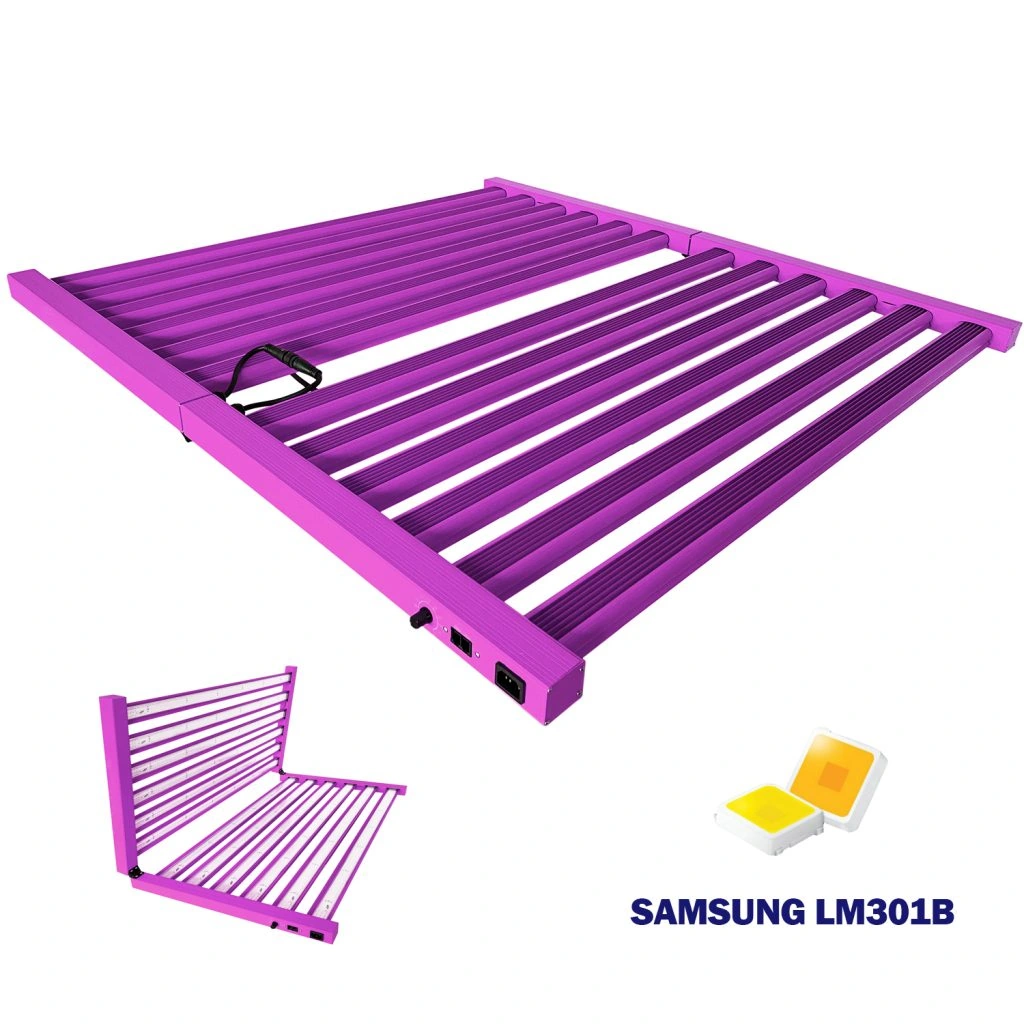
Verify the Procurement Details That Protect the Investment
Confirm Product Identity and Test Conditions
Ask for the precise diode designation, not simply “Samsung LEDs.” Confirm input voltage, actual power, dimmer range, spectrum, certifications, and the conditions behind performance claims. TIDESTAR’s broader LED grow light range provides examples across bar and panel formats, allowing buyers to compare the complete system rather than a chip name in isolation.
Calculate Payback With Your Own Electricity Rate
Estimate annual energy use as input kilowatts multiplied by operating hours per day and days per year. Multiply the result by the local electricity rate, then add any measurable cooling cost. Divide the LM301B price premium by the annual savings. If the payback period is shorter than the expected service life, higher efficacy has a clear financial case.
A Practical Decision Framework for Growers
Choose LM281B When Capital Efficiency Leads
Prioritize Coverage per Dollar
Select LM281B when the fixture meets the crop’s PPFD target, the room has adequate electrical and cooling capacity, and a lower purchase cost enables better total-room coverage. Do not accept weak edge performance merely to obtain a cheaper diode package.
Keep the Ownership Horizon in View
A short project, seasonal installation, or lower-use propagation room may not run enough hours to recover a large efficiency premium. In that situation, a well-designed LM281B grow light can be a more economical asset.
Choose LM301B When Operating Efficiency Leads
Prioritize Photons per Watt
Select LM301B when the room operates heavily, electricity is expensive, or service capacity is limited. Compare fixtures at equal delivered PPF so the efficiency advantage is not hidden by different power ratings.
Protect the Result With Whole-Fixture Quality
Premium diodes cannot compensate for an inefficient driver, poor thermal contact, or an unsuitable PPFD pattern. The best LM301B purchase is a verified system whose spectrum, controls, mechanical design, and coverage match the crop plan.
FAQ
Q: Is LM301B always better than LM281B for grow lights?
A: No. LM301B usually offers higher potential efficacy, but an LM281B fixture may be the better value when purchase price matters more, intensity targets are moderate, or annual operating hours are low. Compare complete-fixture PPF, PPE, PPFD distribution, and cost.
Q: How much more efficient are LM301B grow lights than LM281B grow lights?
A: There is no single percentage for every fixture because diode bin, quantity, current, driver, spectrum, and temperature all affect system efficacy. Use published or independently measured PPE values under comparable test conditions rather than applying a generic chip-level gap.
Q: Do LM281B and LM301B grow lights produce different spectra?
A: The diode families can be offered in different white-light configurations, but the final spectrum depends on the complete fixture. Supplemental red, blue, UV, and far-red diodes can create a larger difference than the white diode model alone.


