

Choosing the right LED grow light is not only about buying the top wattage you can find. Indoor growers have a main question. They ask if the fixture can cover the plant canopy in an even way. It must support each growth stage. It also needs to fit the heat and height limits of the tent. A 2×2 tent has its needs. A 4×4 tent has different ones. A 5×5 tent needs its own plan. When LED grow light wattage matches the grow tent size, plants receive more stable light. Leaves develop in a more even pattern. Flowering or fruiting plants face less risk from weak corners or light stress.
Why Does Led Grow Light Wattage Need To Match Grow Tent Size?
A grow tent is a controlled space. Every watt of light affects plant response. If the wattage is too low, plants may stretch toward the fixture. They grow thin stems. They produce smaller leaves. If the wattage is too high, the canopy may show curled leaves. It can develop pale tips or dry top growth. This happens especially when airflow is limited.
The better approach is to think in terms of usable canopy coverage. A compact tent needs focused, even output. A larger tent needs enough spread. This keeps the center from getting too much light while the edges stay weak. This is why grow tent lighting should be planned around square footage. It should consider hanging height, plant type, and growth stage rather than wattage alone.
How Many Watts Per Square Foot Do LED Grow Lights Need?
For many indoor plants, a practical starting point is about 20–40 watts per square foot. This depends on the crop and stage. Seedlings and clones usually need softer light. Flowering or fruiting plants need stronger intensity across the canopy.
LED grow light wattage for seedlings and clones
Seedlings do not need aggressive light. A lower setting helps young roots and leaves develop without stress. This is where dimmable LED grow lights are useful. Growers can start low. They raise intensity as plants mature.
LED grow light wattage for vegetative growth
During vegetative growth, plants need stronger light. They use it to build leaves, branches, and structure. Even coverage matters more than a hot center. A balanced full-spectrum LED grow light can support compact, healthy growth. It avoids forcing plants to stretch.
LED grow light wattage for flowering and fruiting plants
Flowering and fruiting plants usually need the highest light intensity. At this stage, weak corners can lead to uneven buds. They cause uneven flowers or fruits. Growers should check whether the fixture can cover the full canopy. They should not look only at the middle of the tent.
What LED Grow Light Fits Common Grow Tent Sizes?
A simple grow tent wattage chart can help beginners make decisions. It should be used as a guide, not a rule. Plant type, reflectivity, ventilation, and fixture efficiency can all change the final choice.
For a 2×2 tent, a lower-wattage LED grow light is usually enough for herb seedlings and compact plants. For a 3×3 or 4×4 tent, growers often need more power. They need wider coverage to avoid weak edges. For a 5×5 tent, a high-output fixture becomes more important. The canopy area is much larger.
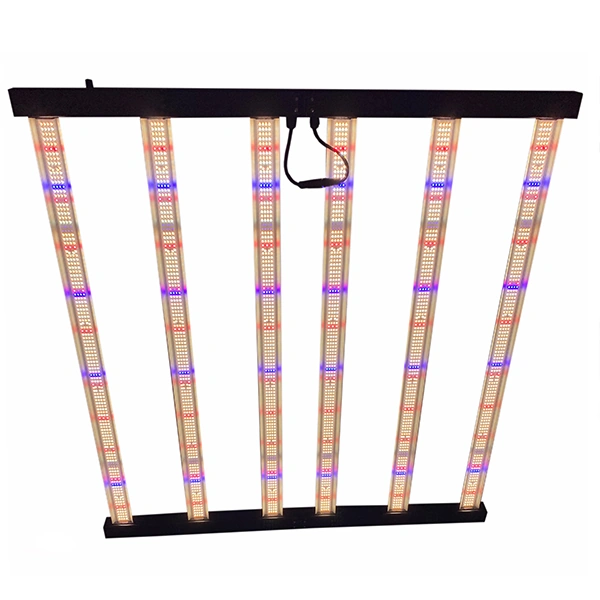
For larger indoor setups, our 800W LM281B LED Grow Light 5x5ft Full Spectrum 2 Channels Dimming With UV IR is a strong fit. It is designed for 5x5ft coverage and full-cycle growing. Its two-channel dimming helps growers adjust intensity. They avoid using one fixed power level from seedling to harvest.
Why Are Ppfd, Par Map, And Efficiency More Important Than Wattage Alone?
Wattage tells you how much power a fixture uses. It does not fully explain how much usable light reaches the plants. This is why experienced growers also look at the PPFD PAR map and light distribution.
How PPFD helps check usable canopy light
PPFD shows how much plant-usable light reaches a specific area. A good fixture should deliver stable intensity across the canopy. It should not deliver it only at the center of the light.
Why does actual wattage matter more than advertised wattage
Some lights use large equivalent wattage claims. These claims do not show real power draw. Growers should check the actual wattage coverage area spectrum and dimming control before choosing a fixture.
How does full-spectrum supports full-cycle growing
A full-spectrum LED grow light gives plants a wider light range for different stages. This is useful for growers who want one fixture for seedlings, vegetative growth, and flowering. They avoid changing lights during the cycle.
How To Avoid Common LED Grow Light Sizing Mistakes
One common mistake is choosing by plant count instead of canopy spread. Four small plants may need less space than one trained plant with a wide canopy. Another mistake is ignoring hanging height. If the tent is short, an overly powerful fixture may be difficult to manage. This holds even with good airflow.
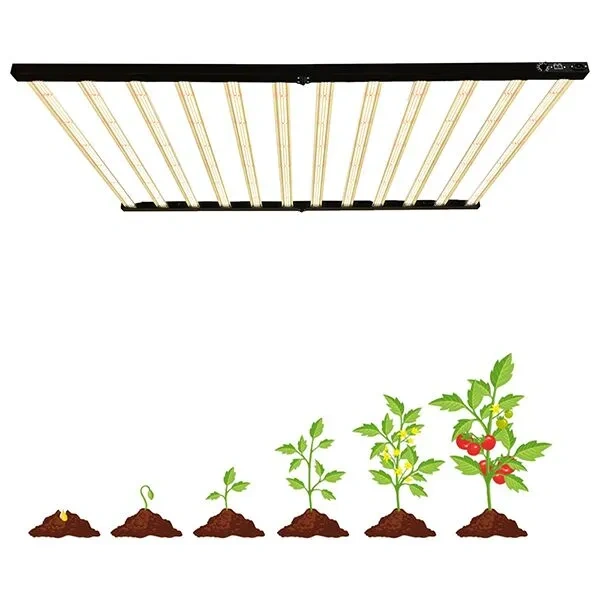
Growers should also avoid using flowering-level intensity at every stage. Plants need a light curve, not one constant setting. This is why we recommend matching wattage with dimming spectrum and tent size together. Our Samsung LM281B LED Grow Lights 720W Grow Light Full Spectrum supports dimming in 25% increments. This makes it easier to adapt light intensity as plants move from early growth to a fuller canopy.
Which LED Grow Light Type Works Best For a Grow Tent?
For flat compact canopies, an LED quantum panel can provide efficient coverage in a simple layout. This type of fixture is often practical for vegetables, herbs, and smaller indoor gardens. The canopy is relatively even in these gardens.
For wider or larger canopies, a bar-style LED grow light can help spread light more evenly across the tent. Bar layouts often make sense in larger grow tents. The light sources are distributed across the fixture. This reduces the risk of an overly intense center.
At TIDESTAR, we design our LED grow lights for growers who want practical control. They seek more than high numbers on a specification sheet. When the fixture matches the tent, plants are easier to manage. The growing environment becomes more predictable.
FAQ
Q: What size LED grow light do I need for a 4×4 grow tent?
A: The 4 x 4 grow tent should use a light that covers an area of 16 square feet efficiently. You should consider the wattage, PPFD, distance from the light to the plant, and coverage of all four corners of the tent.
Q: How many watts per square foot should an LED grow light provide?
A: Many indoor growers use about 20–40 watts per square foot as a practical starting range. Seedlings need less intensity. Flowering and fruiting plants usually need stronger light.
Q: Is a higher-watt LED grow light always better for indoor plants?
A: No. A higher-watt LED grow light can cause heat or light stress if the tent is too small. The better choice is a fixture that matches the canopy size, plant stage, and available hanging height.
Q: Why does LED grow light wattage differ from advertised wattage?
A: Advertised wattage may refer to a comparison number. Actual wattage shows real power draw. Growers should use actual wattage, coverage area, and PPFD to judge performance.
Q: Can one full-spectrum LED grow light support seedlings, vegetative growth, and flowering?
A: Yes, but only if the light fixture has the appropriate spectrum, coverage, and dimming capabilities. The TIDESTAR full-spectrum grow light models like the 720W and 800W fixtures could help growers manage intensity at different growth stages.


