
A light that works over one pot may leave the next plant in shade. That is why the choice between LED grow light panels and bars starts with the plants’ layout, not the fixture’s advertised wattage. A panel can be a practical fit above a compact group. Bars put space between the emitters. Imagine each lamp over the pots. Where does its light land within the available space?
LED Grow Light Panels vs Bars: What Changes in Practice?
Compare the lit area, not just the fixture outline
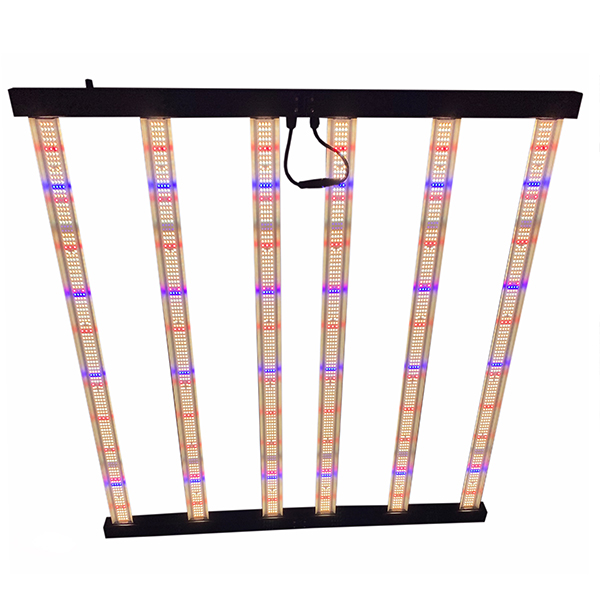
The panel board holds the LEDs in one group. Bars carry them on arms, leaving gaps between emitters. Measure across the leaves to see where either layout would end. Where would the outer leaves fall beneath each lamp? Find those positions on the PPFD maps, at the same hanging height and measurement footprint. A high center reading leaves an unanswered question about a pot at the edge. Space between bars cannot establish suitable light across the bench. The map has to show that.
Check what reaches the leaves
PPFD concerns the plant-usable light received by a leaf. Lumens concern the light as seen by human eyes. Greater distance between lamp and canopy means lower PPFD. A reading without its measurement distance is therefore incomplete; retain the dimmer setting and measured area too. Put any gaps in the specifications to the seller. Until they arrive, leave the coverage comparison open.
Which LED Grow Light Fits a Few Indoor Plants?
A compact panel for a small, grouped arrangement
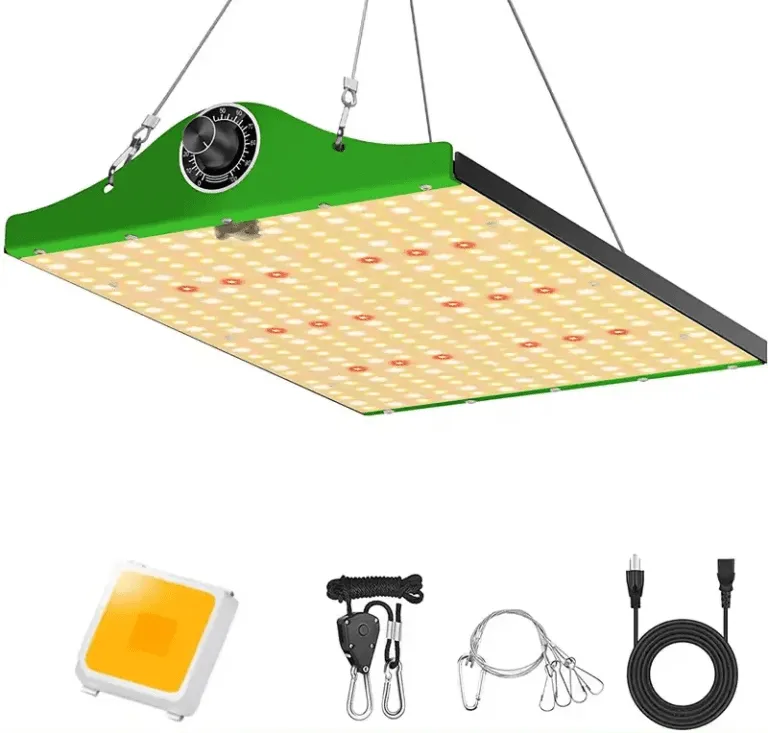
Stand two or three pots together. Match their foliage outline against the lighting footprint, independently of shelf width. Look upwards: the panel needs its specified clearance once the hanging hardware is in place. Within our range at TIDESTAR, dimmable LED quantum panels for indoor plants extend from 75W to 480W. Return to the pot arrangement. Its footprint and recommended hanging position must fit that arrangement. Watts describe the power going into the lamp, leaving the light at each pot to be established. A different board requires its own coverage assessment.
When a bar fixture would be excessive
Look between the uprights: this is the usable shelf width. Overhead, the tallest leaves set the lower boundary for installation. Take both measurements to the bar fixture specifications before deciding whether it fits. Compare both dimensions with installation requirements. Bars extending beyond the plants may illuminate bare shelving or floor; that extra width does not help the collection. A smaller panel over the leaves deserves consideration in this situation. Record unused shelf space. Reconsider the wider fixture once plants occupy that space.
When Do LED Grow Light Bars Make More Sense?
A wider row or larger canopy
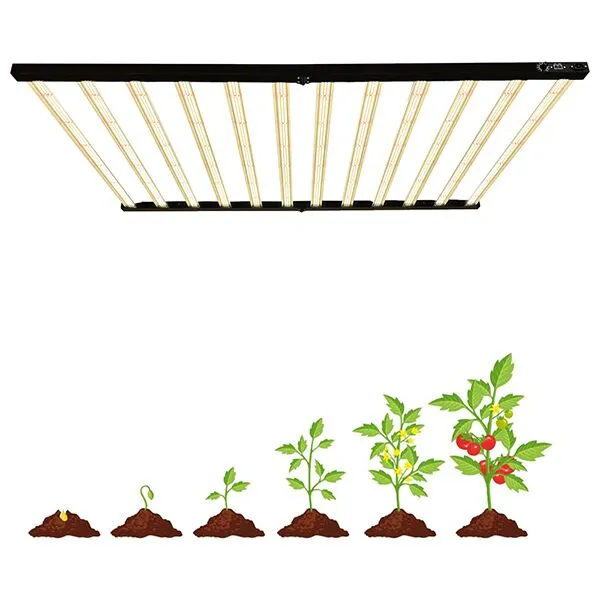
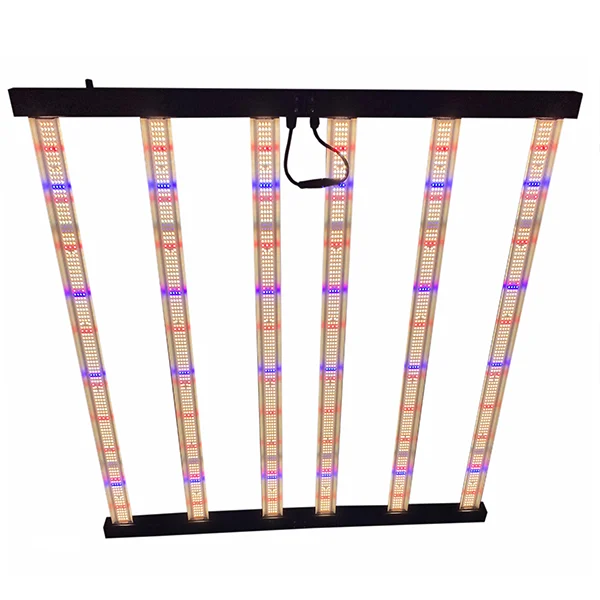
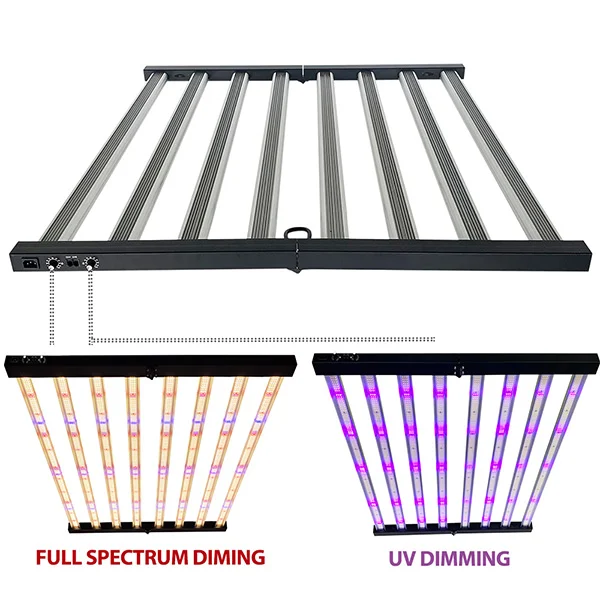
A broad bench can place outer plants far from a central hanging point, particularly in a row. Distributed emitters offer a layout that can span that footprint, but coverage still has to be checked against a measured PPFD map. The arms of our dimmable LED grow light bar distribute the emitters across the frame. This fixture is 720W-class. Locate the bench plants on its light map. Read those positions at the hanging height and dimmer setting planned for the installation.
Height and layout constraints
Include the hanging hardware when measuring a bar fixture’s fit. A side sketch can expose a fit problem hidden by the bench plan. Sketch the tallest plant. Above its leaves, allow the manufacturer’s required clearance before drawing the fixture. Does one tall plant force the lamp away from all the shorter plants? Raising it changes their PPFD too. Read the map for that distance. The bench width may fit perfectly while the required hanging height remains unavailable. That prevents installation. Settle this installation question before ordering.
How to Choose Between Panels and Bars Before Buying
Make a like-for-like comparison
Record these entries for each candidate:
• Space: planted length, width, plant heights, and overhead room.
• Fixture: dimensions, mounting requirements, controls, and power draw.
• Light: PPFD readings at the center, edge, and corner positions occupied by plants.
Complete both candidate columns. Add measurement height and dimmer setting. These details keep the readings comparable. A map extending past the plants includes readings you may not need. Draw around the positions occupied by plants; compare the readings inside that boundary.
Start with a manageable setting and observe
Start from the manufacturer’s distance guidance, then assess this position against the light requirements of the plants. Record the setting before assessing new growth. New growth provides clues. Stems stretching between long internodes, or foliage becoming pale and losing variegation, can point towards insufficient light. Scorching or bleaching warrants a check for excessive light. Before buying another fixture shape, use the intensity, duration, and distance records to investigate what changed. Count daylight within the 12 to 14 hours reference period for foliage houseplants. The supplemental lighting schedule fills the remaining hours, subject to the species’ requirements. Set the timer to that schedule so observations are made under a consistent daily light period.
Is a Panel or Bar Better for Your Indoor Setup?
Choose from the planting footprint
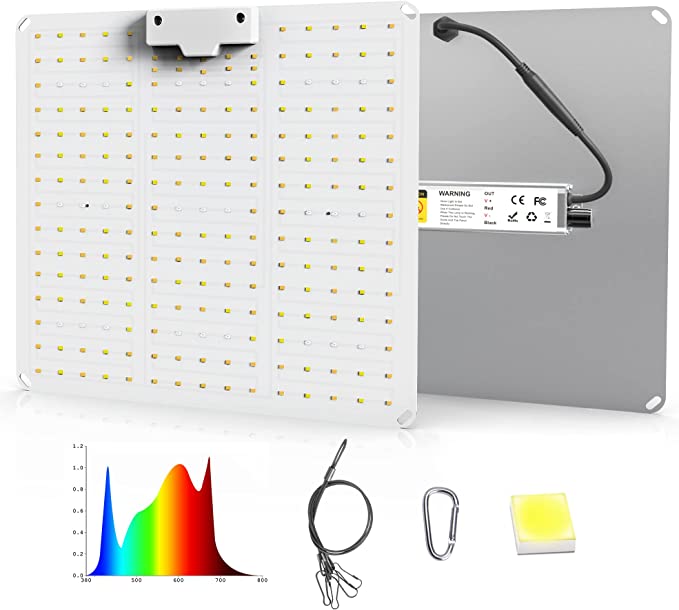
With one mounting point above a cluster, assess a compact panel first. As the occupied area spreads, consider whether bars would span it more usefully. That choice still requires enough mounting room and suitable measured coverage. Account for output before crediting a difference to shape. Shelving divides the installation vertically. Draw the occupied area and overhead space for each level, then consider its lighting separately. An output figure for the lamp above the unit does not tell you what arrives at foliage beneath the shelves.
Recheck the decision as plants grow
Keep the planting plan with the light map. Moving pots changes which readings on the map matter for the leaves. Dimming changes intensity while the fixture remains in position. It is less useful with leaves outside the suitably lit footprint: those edges may still receive inadequate light. TIDESTAR’s 100W LED quantum plate is one compact, dimmable example. Use its coverage figures with the mounting distances specified for that entry. Another panel, or a bar fixture, needs its own measurements. If adjustment leaves the outer foliage beyond the suitably lit area, the changed collection may have outgrown the lamp. Replacement is worth considering at that point.
FAQ
Q: Are LED grow light bars better than panels for indoor plants?
A: Measure the foliage outline, including the outermost leaves. A broad layout may justify bars; a compact group may fit beneath a panel. Use leaf-level light measurements taken at a height that fits the intended installation.
Q: Do LED grow light panels use less electricity than bars?
A: Check input power at the intended dimmer setting. Put that figure beside PPFD readings for the planted footprint. The frame may be different while electricity use remains a separate measurement.
Q: Can an LED grow light panel cover a shelf of houseplants?
A: Mark the outermost leaves on the panel’s PPFD map. Check those readings against the center, using the intended mounting height. Use leaf positions rather than shelf width for that outline.
Q: How high should LED grow light bars hang above indoor plants?
A: Follow the selected fixture’s guidance and check plant response. Output, canopy height, dimmer setting, and plant needs belong with any suggested distance. Take those details from the setup being evaluated.
Q: Should seedlings use an LED grow light panel or a bar?
A: Locate tray edges on each candidate fixture’s light map. Check whether suitable light reaches its edges at the available hanging distance. Both formats need to pass that test.