

An inline duct fan operates as the respiratory system of any commercial grow space or hydroponic facility. When a ventilation system suddenly stops pulling air or starts grinding loudly, the immediate drop in air exchange can severely compromise plant morphology and environmental stability. Rather than immediately purchasing a replacement, understanding the mechanical and aerodynamic principles behind the failure often reveals a simple, cost-effective solution.
Why Is My Inline Duct Fan Failing? Recognizing the Early Warning Signs
The most effective way to handle a motor failure is to catch the environmental and acoustic warnings before the fan seizes entirely. Identifying the root cause quickly prevents cascading damage across your climate control system.
Identifying Unusual Noises and Vibrations
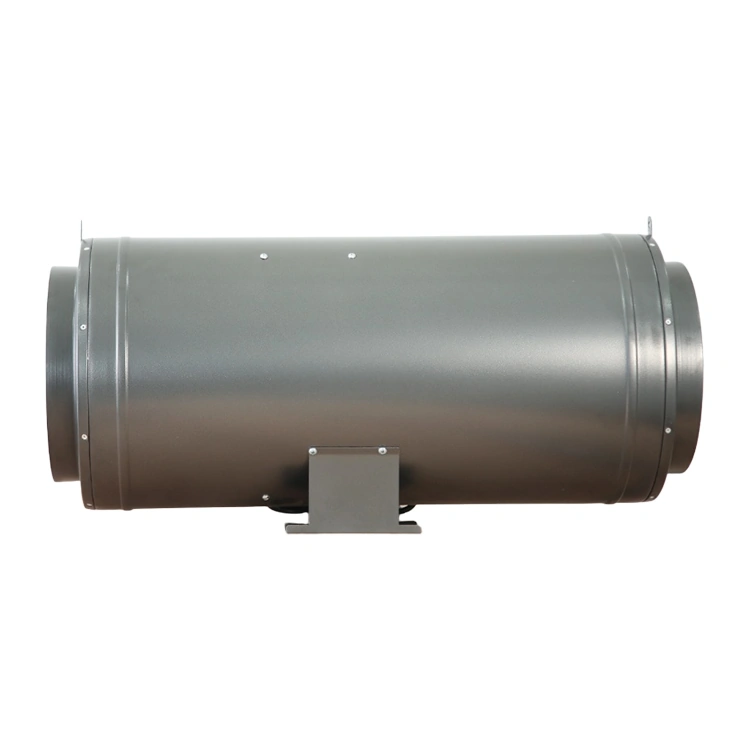
A well-balanced ventilation system should operate with a consistent, low-decibel hum. If you notice a high-pitched squealing, it usually indicates the breakdown of internal motor bearings. Alternatively, excessive vibration typically suggests that the impeller has become misaligned or the mounting structure has loosened over time, causing the kinetic energy to rattle the ductwork instead of pushing air.
Spotting Weak Airflow and Poor Ventilation
If your environmental sensors record sudden spikes in ambient temperature and humidity despite the fan running, the unit is experiencing diminished static pressure. This symptom occurs when the motor is forced to work against a severely restricted aerodynamic path. If the air feels stagnant, your inline duct fan is likely losing its battle against severe resistance in the exhaust route.
Fix 1: How to Troubleshoot Power and Electrical Connection Issues?
Before dismantling the hardware, it is vital to perform a systematic check of the electrical path. Many perceived mechanical failures are actually simple power delivery interruptions.
Checking the Power Supply and Cords
Start at the source by verifying the wall outlet is providing the correct operational voltage. Inspect the power cord for signs of heat damage, fraying, or loose terminal connections. A minor short circuit can cause the motor to trip internal thermal overload protectors, abruptly halting operation to prevent a fire hazard.
Testing the Speed Controller and Thermostat
Modern setups rely heavily on external intelligence to regulate the climate. If you are using an automated thermostat, ensure the temperature probe is placed out of direct light for accurate readings. Sometimes, the problem lies with a speed dial set below the minimum voltage required to overcome the impeller’s initial starting torque. Using a reliable device like our Single PLUG-IN Fan Speed CONTROLLER & TEMPERATURE unit, which features a 3m temperature sensor, ensures precise speed changes and prevents stalling.
Fix 2: Clearing Airflow Blockages in Your Ducting System
A fan can only exhaust the air it can successfully pull. Aerodynamic blockages are the silent killers of motor efficiency, leading to rapid overheating.
Inspecting Carbon Filters and Pre-Filters
Odor control setups depend heavily on filtration. However, if a pre-filter is not replaced every 6 months, dust will completely choke the main filter. A severely clogged filter forces the inline duct fan to exert maximum effort with zero airflow, vastly increasing internal motor heat and stripping away years of operational life.
Straightening Bent or Crushed Flexible Ducts
The shape of your air pipes greatly affects air push. A tight 90-degree turn or smashed spot in your Aluminum PVC Combined Flexible Air Ducting can cut air flow sharply. Make sure your pipe lines pull tight, stay straight, and get good support. This removes spots of air fight.
Fix 3: Silencing a Noisy Inline Duct Fan and Reducing Vibration
Acoustic pollution is essentially kinetic energy being wasted. Dampening this noise improves both the working environment and the hardware’s structural integrity.
Securing Loose Mounting Hardware
Shaking often starts from hard touch spots between the fan body and the build frame. A fan fixed to wood beams acts like a noise spreader. Tighten all weak holds. Think about hanging the unit with stretch cords or special tie straps. This cuts the link to the firm base.
Adding Acoustic Ducting or Padded Fast Clamps
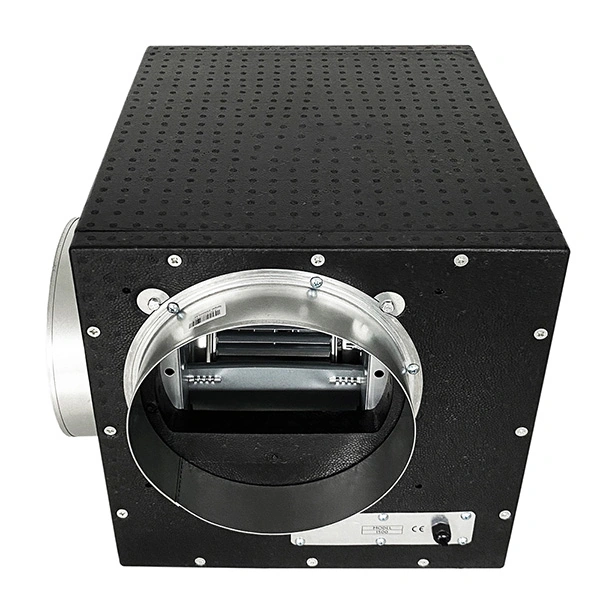
To achieve a truly professional installation, avoid standard duct tape. At TIDESTAR, we recommend utilizing Padded Fast Clamps to secure your connections. The metal band features a foam lining that significantly reduces fan vibration at the joints. For extreme noise reduction, integrating a Hydroponics Foam Box Acoustic Centrifugal Duct Fan Lower Noise can effectively isolate motor noise.
Fix 4: Cleaning the Impeller to Restore Balance
Dust accumulation is the primary enemy of impeller balance. Even microscopic particles can disrupt a high-speed rotation over time.
Removing Dust Buildup from the Fan Blades
The fast spin of wheel parts picks up a coat of sticky, wet leftover. This uneven layer makes the air pull and puts uneven weight on the turn parts. From time to time, take off the cover to wipe the parts gently with a wet cloth. This brings back the first air move rate and stops shakes.
Checking for Physical Damage to the Impeller
If debris bypasses your filters, it can chip or crack the plastic blades. Inspect the impeller thoroughly. An uneven or broken blade cannot be cleaned back into balance; it will continue to cause severe vibration and eventually shatter the motor housing, requiring a complete replacement.
Fix 5: Re-evaluating Your Ventilation Setup and Fan Sizing
Sometimes the equipment isn’t malfunctioning; it was simply undersized for the specific environmental demands of the facility.
Matching Fan Capacity (CFM) to Your Grow Space or Facility
Frequent airflow drops often indicate an underpowered system attempting to pull air through dense carbon filters and long, complicated duct runs. Upgrading your capacity is crucial for maintaining negative pressure. We engineer solutions like the 6inch 8inch 10inch 12inch Super Silent EC Mixed Flow Inline Duct Fan in multiple sizes to guarantee adequate static pressure for complex horticultural layouts.
Managing High Humidity and Extreme Temperatures
Basic air units rust fast in rough, wet spots. Make sure your gear fits the space weather. Our Super Silent EC Mixed Flow Inline Duct Fan has an IP65 cover and NMB double ball bearings. It runs in tough spots with heat from -20ºC to 60ºC.
When to Repair vs. When to Upgrade Your Inline Duct Fan?
Every mechanical component has a finite life cycle. Recognizing when to stop repairing and invest in modern technology is critical for operational efficiency.
Assessing the Hidden Costs of Continued Repairs
Keeping to swap power holds or clean a worn motor uses up work time and power. An old fan with a power wear draws much more power from the plug. Yet it gives far less air movement than it first did. This raises your bill costs a lot.
Exploring Energy-Efficient EC Motor Upgrades
Transitioning to EC (Electronically Commutated) technology offers unparalleled efficiency. Upgrading to a TIDESTAR Super Silent EC Mixed Flow Inline Duct Fan provides multi-phase EC motor performance, resulting in massive energy savings, zero humming at low speeds, and a typical lifespan of up to 50,000 hours.
FAQ
Q: Why is my inline duct fan vibrating and making a loud humming noise?
A: Vibration and humming usually indicate a mechanical imbalance or poor mounting. If the impeller blades have accumulated uneven dust, the rotation will wobble. Alternatively, rigid mounting amplifies sound. We recommend regularly cleaning the blades and using TIDESTAR Padded Fast Clamps, which have a foam lining specifically designed to reduce fan vibration.
Q: What causes an inline duct fan to suddenly stop spinning?
A: A sudden stop is typically an electrical safety response. It could be a tripped circuit breaker, a blown internal fuse, or a thermal overload switch activating because the motor overheated. Check for severe blockages in your ducting that might have caused the motor to overwork, and ensure your power supply is stable.
Q: How can I fix a blocked inline duct fan system that has no airflow?
A: If the motor runs but no air moves, there is a total restriction. Check your carbon filter first; pre-filters should be replaced every 6 months to prevent clogging. Next, inspect your flexible ducting for sharp 90-degree bends, crushed sections, or collapsed interior walls that are choking the aerodynamic path.
Q: How do I know if my inline duct fan is the right size for my ventilation needs?
A: If your grow space suffers from constant heat spikes or high humidity despite the fan running at 100%, it is likely undersized. A properly sized fan must account for the volume of the room plus the “drag” (static pressure loss) caused by carbon filters, bends, and the total length of the ducting.
Q: Does high humidity cause inline duct fan failures?
A: Yes, if the fan lacks the proper ingress protection. Standard fans can suffer from internal rust and electrical shorts when exposed to constant moisture. For high-humidity horticultural environments, it is essential to use a unit with an IP65 rating, like our TIDESTAR Super Silent EC Mixed Flow Inline Duct Fan, to ensure safe and continuous operation.


