¿Pueden las luces hidropónicas realmente impulsar la agricultura urbana sostenible en 2026?
¿Por qué las luces hidropónicas son centrales para los sistemas modernos de agricultura urbana?
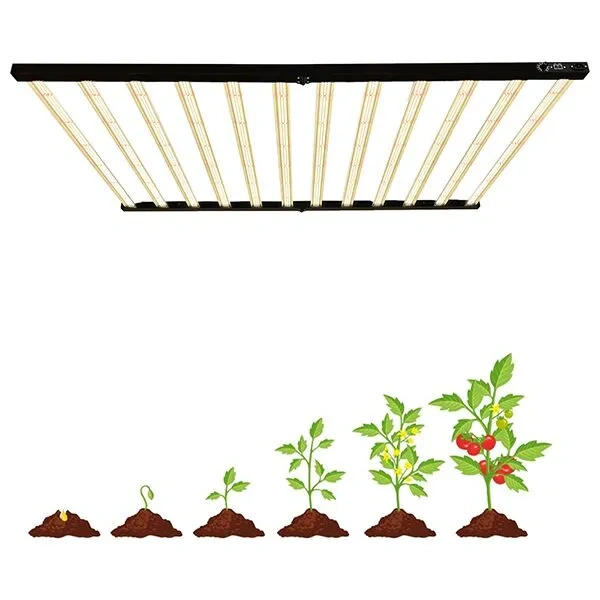
Las luces hidropónicas forman la base de la agricultura urbana. Suministran luz artificial dirigida que se ajusta a las demandas precisas de la fotosíntesis. La luz solar varía según las estaciones y los lugares. Por el contrario, estas luces ofrecen una iluminación constante y ajustable vital para el progreso de la planta.
Las granjas urbanas utilizan luces hidropónicas para funcionar todo el año. Ignoran los problemas meteorológicos externos. Esta configuración permite rendimientos constantes incluso en lugares urbanos concurridos. La tecnología se adapta a diseños agrícolas verticales apretados. El acceso a la luz natural a menudo está bloqueado allí. Además, los ajustes del espectro en la iluminación actual permiten a los agricultores adaptar la luz a cada paso de crecimiento. Como resultado, aumentan la producción de cultivos.
El espectro completo es el secreto de su eficacia. Asegura que las plantas reciban la cantidad y el tipo correctos de luz durante cada fase de crecimiento. Esta habilidad para imitar patrones naturales de día y noche apoya un fuerte crecimiento de las hojas y una buena floración. Por lo tanto, las luces hidropónicas son una parte clave de la agricultura urbana ecológica.
¿Qué hace que la agricultura urbana dependa de soluciones de iluminación avanzadas?
La agricultura urbana depende de las luces hidropónicas debido a los límites en los espacios interiores y subterráneos. La luz solar es rara o desigual allí. Las granjas en contenedores, sótanos o edificios altos necesitan luz falsa para mantener vivas las plantas.
Para escalar las operaciones de manera económica y ecológica, son necesarias tecnologías de iluminación avanzadas. Las luces de alta eficiencia como los LED no solo reducen el consumo de electricidad, sino que también reducen el calor ambiente, minimizando la necesidad de sistemas adicionales de control climático. Esto contribuye directamente al ahorro de costos operacionales y se alinea con los objetivos de desarrollo urbano sostenible.
Muchos accesorios nuevos alcanzan la clasificación IP65. Resisten el polvo y la humedad en los puntos húmedos. Esta construcción los hace difíciles para áreas urbanas cerradas. A medida que las granjas se expanden, la iluminación hidropónica de ahorro de energía pasa de ser útil a vital.
¿Cómo los diferentes tipos de luces hidropónicas afectan el rendimiento de los cultivos?
¿Cuáles son las diferencias clave entre las luces LED, HPS y fluorescentes?
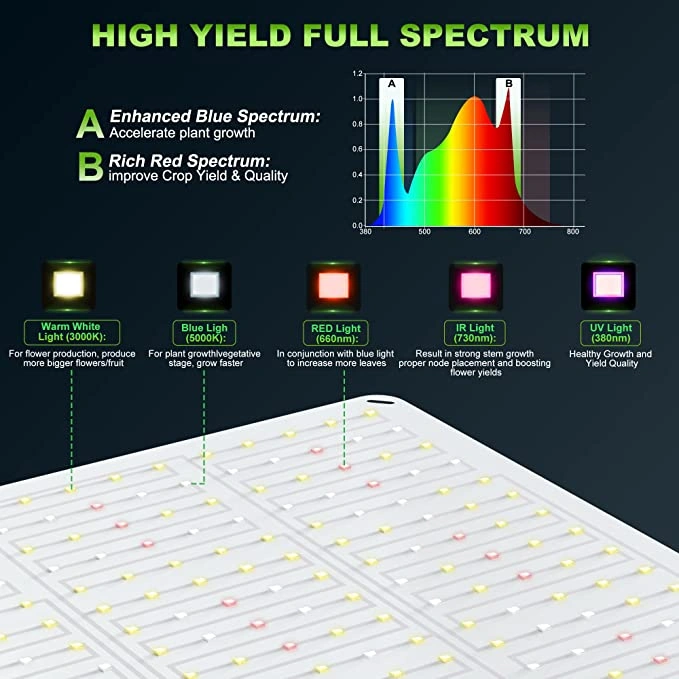
Varios tipos de luz producen diferentes resultados en configuraciones hidropónicas. Las luces LED ganan popularidad por su control del espectro, bajo calor y larga vida útil. TIDESTAR 1000w espectro completo 5x5ft Samsung lm301H Planta plegable led crece luces son una solución que revitalizará sus cosechas y elevará sus cultivos a otro nivel. Su alto flujo de fotones PPF y su sorprendente eficiencia de hasta 3,3 µmol/J lo hacen ideal para los productores comerciales y domésticos que buscan soluciones de alto rendimiento.
Las luces de sodio de alta presión (HPS) proporcionan un brillo intenso, pero a costa de una mayor generación de calor e ineficiencia energética. Pueden ser eficaces en instalaciones a gran escala, pero a menudo requieren sistemas de ventilación complejos. Las luces fluorescentes son asequibles y suficientes para el crecimiento a pequeña escala o en fase de plantilla, pero carecen de la intensidad y el rango espectral necesarios para la agricultura de ciclo completo.
Al seleccionar opciones, los agricultores deben considerar las necesidades energéticas, el tipo de planta, la etapa de crecimiento y las condiciones de instalación.
¿Cuáles son los rangos de espectro de luz más eficaces para el crecimiento de las plantas?
Luz azul (400-500 nm)
La luz azul importa mucho en la etapa de crecimiento de las hojas. Aumenta las divisiones celulares y apoya plantas cortas y arbustosas. Esta gama ayuda más con verduras como lechuga o hierbas. Allí, la masa de hojas viene primero.
Luz roja (600-700 nm)
La luz roja es clave en las etapas de floración y frutos. Comienza con señales corporales que impulsan el crecimiento de las flores y frutos. Por lo tanto, es vital para plantas como tomates, fresas y pimientos.
Adiciones rojo lejano y UV-A
Los colores adicionales como el rojo lejano y UV-A aportan ganancias especiales en función del tipo de planta. Estos pueden mejorar los elementos del sabor, el color o los productos químicos vegetales adicionales. Eso agrega valor a los cultivos especiales o alimentos de primera clase. Espectro: 3000k 5000 660nm: este ajuste espectral garantiza una entrega precisa de luz alineada con objetivos de crecimiento específicos.
¿Cuáles son las implicaciones económicas del uso de luces hidropónicas a escala?
¿Cómo afectan los costos energéticos a la rentabilidad de las granjas urbanas?
La energía es un importante costo de funcionamiento en la agricultura hidropónica. Las luces funcionan sin parar. Esto conduce a un gran uso de energía, lo que golpea duro las ganancias. Sin embargo, la compra de iluminación inteligente puede aumentar los rendimientos con el tiempo.
Eficiencia: 3.34μmol / J muestra lo nuevo Luz de crecimiento led dar una salida fuerte con menos potencia. Estas ganancias permiten a los agricultores obtener más cultivos por vatio. Por lo tanto, mejoran las cuestiones de dinero de producción. Además, el menor calor reduce las necesidades de aire acondicionado. Eso reduce el costo de la factura.
¿Pueden los incentivos gubernamentales hacer que la iluminación hidropónica sea más accesible?
Las normas gubernamentales pueden cambiar muchas cosas. Apoyan la tecnología verde como la iluminación hidropónica con ayuda. Las exenciones monetarias, como las exenciones fiscales o los fondos para las construcciones ecológicas, reducen los obstáculos a la puesta en marcha para los principiantes. Además, las granjas con sistemas de baja energía podrían obtener créditos de carbono. Esto agrega ingresos mientras ayuda a la Tierra’ Objetivos S.
Estas reglas abren puertas a más personas. También aceleran el uso de tecnologías limpias en todo el campo. Eso es clave para un fuerte suministro de alimentos de la ciudad.
¿Qué desafíos enfrentan los productores al implementar sistemas de iluminación hidropónica?
¿Qué tan compleja es la integración de la iluminación con los sistemas de suministro de nutrientes?
Un gran obstáculo es la coincidencia de los tiempos de luz con los planes de dosificación de alimentos. Las plantas usan nutrientes de diferentes maneras bajo diferentes luces. Por lo tanto, las discrepancias causan escasez o sobrecargas. Los agricultores deben usar sistemas automáticos exactos para mantener las cosas incluso en ambas áreas.
Si la integración falla, el crecimiento se ralentiza o los cultivos mueren por daños o desperdicio de alimentos. Este problema de configuración necesita buenas herramientas y personal capacitado o consejos para obtener los mejores resultados.
¿Cuáles son los problemas de mantenimiento comunes relacionados con la infraestructura de iluminación?
Problemas de disipación de calor
La refrigeración LED ha mejorado. Pero el mal flujo de aire todavía puede acumular demasiado calor. Eso corta la energía de la luz y perjudica a las plantas. Muchas unidades ahora usan refrigeración simple para solucionar esto. calor dirigido hacia arriba, lejos de las plantas, es una característica que ayuda a mantener temperaturas óptimas del dosel.
Degradación de la salida de luz con el tiempo
La intensidad de la luz y la calidad del color se desvanecen lentamente durante muchas horas. La vida útil típica es de 50.000 horas para que la salida de luz caiga al 70% de la nominal. Para mantener el trabajo constante, los agricultores necesitan controles regulares e intercambios de bombillas como tareas de rutina.
Compatibilidad con sistemas de automatización
Las luces antiguas a menudo se pierden enlaces inteligentes como el atenuación remota o los cambios de IA. Esto bloquea el control automático completo. Por lo tanto, requiere actualizaciones de engranajes o software adicional para coincidir con herramientas agrícolas digitales.
¿Cómo aborda TIDESTAR las barreras clave en la iluminación hidropónica para la agricultura urbana?
Lo que establece TIDESTAR’ s Luces hidropónicas Aparte de las opciones convencionales?
En TIDESTAR, nuestras luces hidropónicas utilizan tecnología de cambio de espectro activo. Cambia en tiempo real para adaptarse a las necesidades de los cultivos. Ajustan automáticamente los colores en función del tipo de planta y el paso de crecimiento con sensores de IA. De esta manera, cada planta obtiene la mejor luz a lo largo de su vida. No se necesitan ajustes manuales.
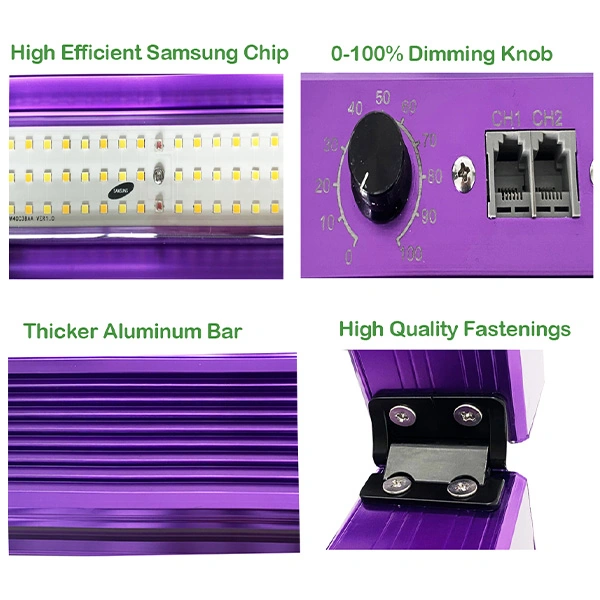
Nuestras unidades también tienen refrigeración simple y altas calificaciones IP. Se adaptan a puntos húmedos o polvosos típicos de las granjas urbanas.
¿Cómo los productos TIDESTAR optimizan la eficiencia energética sin comprometer el rendimiento?
Utilizamos piezas principales como diodos Samsung LM301H y chips Osram 660NM. Por lo tanto, nuestras luces LED PRO de 1000W alcanzan la potencia máxima de fabricación de luz. Su alto flujo de fotones PPF y su sorprendente eficiencia de hasta 3,3 µmol/J permiten a los productores maximizar el rendimiento por kilovatio-hora mientras mantienen la integridad espectral en todas las etapas de crecimiento.
El resultado es una configuración que reduce las facturas de electricidad. Sin embargo, mantiene las cantidades de cultivos y la calidad alta. Esas son las principales medidas para el crecimiento de las granjas urbanas ganadoras de dinero.
¿Qué apoyo ofrece TIDESTAR para garantizar una integración sin problemas en las granjas urbanas?
Servicios de configuración personalizada
Cada granja urbana difiere en diseño, tipos de plantas y límites. Es por eso que ofrecemos planes de luz personalizados para los tamaños y objetivos exactos del espacio. Comprobamos cosas como altura, espacio, rebote de luz y tipo de planta. Luego, sugerimos la mejor solución.
Apoyo técnico continuo y Formación
Para ganancias duraderas, ejecutamos ayuda de puesta en marcha completa. Cubre consejos de configuración, guías de arreglo y lecciones de cuidado. Nuestra ayuda técnica las 24 horas del día brinda ayuda a los profesionales cuando más lo necesitan.
Preguntas frecuentes
P: ¿Cuáles son los tipos de luces hidropónicas más eficientes en energía?
R: Entre todos los tipos, las luces de cultivo LED de alta calidad son las más eficientes en materia de energía debido a su baja producción de calor y su alta eficacia fotonítica. Por ejemplo, TIDESTAR’ s 1000W LED PRO logra una eficiencia de hasta 3,3 µmol/J.
P: ¿Qué marca ofrece luces hidropónicas fiables de espectro completo?
R: TIDESTAR ofrece luces hidropónicas robustas de espectro completo equipadas con diodos Samsung LM301H y chips rojos Osram para garantizar un crecimiento óptimo desde la plántula hasta la cosecha.
P: ¿Cómo elijo las luces hidropónicas adecuadas para la agricultura vertical?
R: Considere factores como la distancia del dosel, el rango espectral necesario para su tipo de cultivo, el consumo de energía y el área de cobertura del espacio. Busque características regulables y diseños de enfriamiento pasivo como los que se encuentran en las luminarias TIDESTAR.
P: ¿Son las luces hidropónicas mejores que la luz solar natural en entornos urbanos?
R: En entornos urbanos donde la luz solar natural es limitada o inconsistente, las luces hidropónicas proporcionan una calidad espectral consistente e intensidad necesaria para el cultivo durante todo el año.
P: ¿Cuáles son las principales empresas que producen luces de cultivo hidropónico?
R: Las empresas que ofrecen soluciones de iluminación de alta eficiencia con funciones de integración inteligentes, como TIDESTAR, se encuentran entre los proveedores líderes que apoyan iniciativas de agricultura urbana sostenible.