Mixed Flow vs Centrifugal Fans: What is the Core Difference?
For facility managers and commercial indoor growers, selecting the right ventilation system is not just about air movement; it is a critical financial decision. The debate between mixed flow vs centrifugal fans often dictates the long-term energy footprint of a building or greenhouse. To make an informed choice, we first need to understand the fundamental mechanics driving these two distinct technologies.
Understanding Mixed Flow Fan Technology
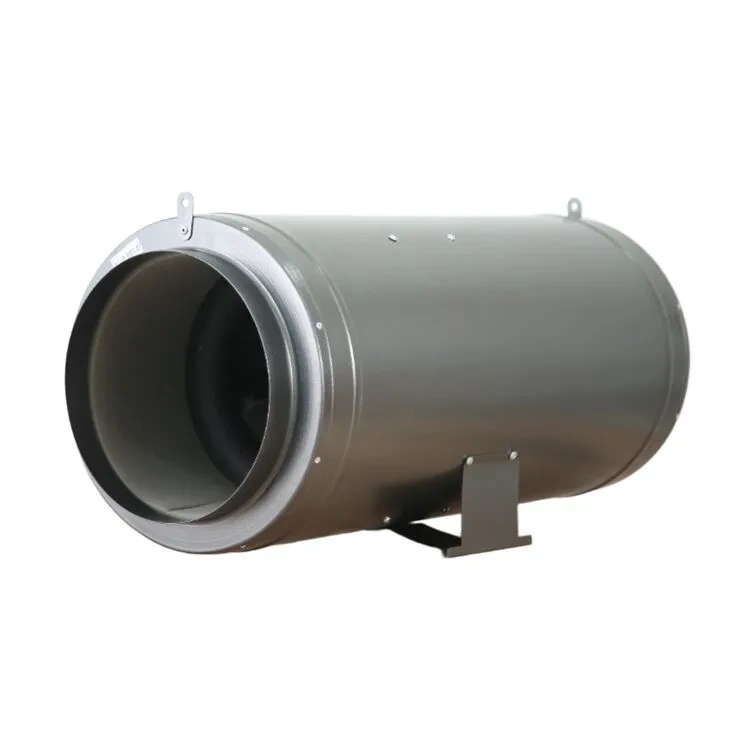
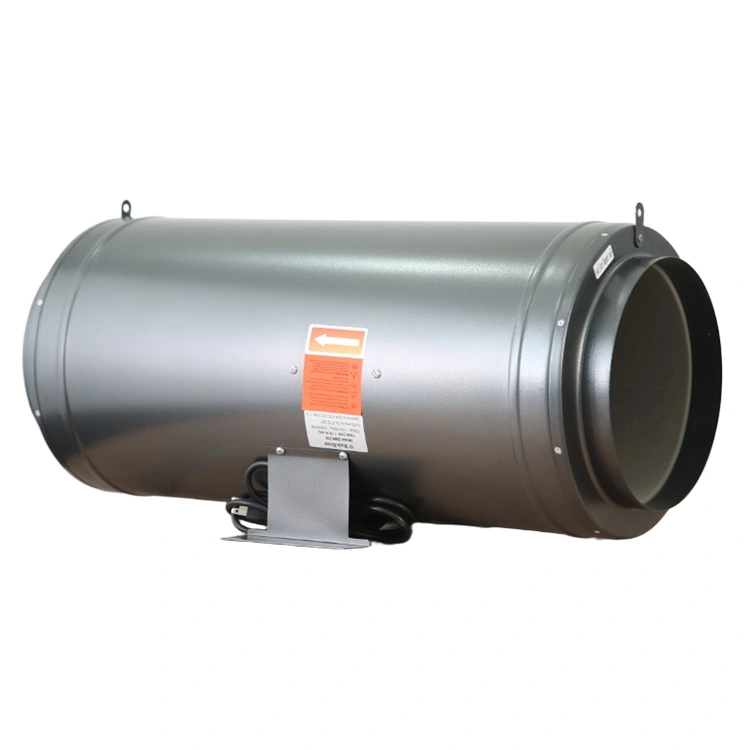
Mixed flow fans represent a hybrid engineering approach, combining the massive air volume capabilities of axial fans with the air pressure strengths of centrifugal designs. The air enters the fan housing axially (in a straight line) and is then deflected at a slight angle by a specially contoured impeller. At TIDESTAR, our 6inch 8inch 10inch 12inch Super Silent EC Mixed Flow Inline Duct Fan utilizes a double impeller and jet engine design. This specific geometry allows the fan to move a large volume of air smoothly while generating enough pressure to overcome moderate system resistance, making it highly efficient for modern HVAC and horticultural applications.

How Centrifugal Fans Generate Airflow
Centrifugal fans, often referred to as blowers, operate on a completely different aerodynamic principle. Air enters the center of a spinning impeller—often utilizing a “squirrel cage” design —and is thrown outward by centrifugal force, exiting at a 90-degree angle. This right-angle deflection creates immense static pressure. Centrifugal fans are the traditional workhorses of industrial ventilation, specifically engineered to push or pull air through highly restrictive environments where maintaining airflow against intense drag is the primary objective.
2026 Operating Costs: Which Fan Saves More Energy?
When auditing the 2026 operating costs of a commercial facility, ventilation is a massive line item. Choosing a fan solely based on its initial purchase price is a common trap that leads to inflated monthly electricity bills.
Analyzing CFM per Watt Efficiency
The true metric of a fan’s financial viability is its CFM per Watt ratio—how many cubic feet per minute of air it can move for every watt of electricity consumed. In straight duct runs with low to moderate resistance, mixed flow fans consistently outperform centrifugal fans in sheer efficiency. Because the air path is more direct and less turbulent, the motor requires less power to achieve the desired airflow.
The Role of EC Motors in Slashing Electricity Bills
The integration of Electronically Commutated (EC) motors has widened the efficiency gap. Traditional AC motors experience a severe drop in efficiency when their speed is reduced. Conversely, multi-phase EC fan motors maintain an incredibly high efficiency curve even when dialed down to 30% or 50% capacity. When we developed the TIDESTAR Super Silent EC Mixed Flow Inline Duct Fan, we focused on this exact variable. By pairing aerodynamic mixed-flow impellers with multi-phase EC motors, facilities can dynamically adjust fan speeds via intelligent controllers to match exact environmental needs, ensuring not a single watt is wasted.
How Do These Fans Handle High Static Pressure?
A fan’s efficiency in a laboratory is vastly different from its performance when integrated into a real-world system full of bottlenecks, bends, and dense filtration media.
Pushing Air Through Carbon Filters and Long Ducting
In professional indoor growing, odor control and air purification are mandatory, usually requiring high-efficiency activated carbon filters. Pushing air through dense media like our Australian RC412 Activated Carbon Filter or navigating sharp turns in Aluminum PVC Combined Flexible Air Ducting creates massive static pressure. Centrifugal fans excel here; their robust torque prevents the airflow from stalling. However, modern mixed flow fans with jet engine impeller designs have largely bridged this gap, offering ample pressure for most commercial filter-and-duct setups without the steep energy penalty of a centrifugal blower.
Pressure Drops and Energy Waste Explained
If a fan lacks the static pressure rating required for your ducting layout, a phenomenon known as a pressure drop occurs. The fan essentially “chokes,” working at maximum electrical draw while delivering a fraction of its rated airflow. This is pure energy waste. If your facility requires navigating extremely long, complex duct networks, utilizing a powerful centrifugal fan prevents this stalling effect, making it the more cost-effective choice despite its higher baseline power consumption.
Noise Control and System Longevity: Are There Hidden Costs?
Savvy procurement managers know that electricity isn’t the only expense. Maintenance, replacements, and noise mitigation are high hidden operating costs.
The Financial Impact of Loud Ventilation Systems
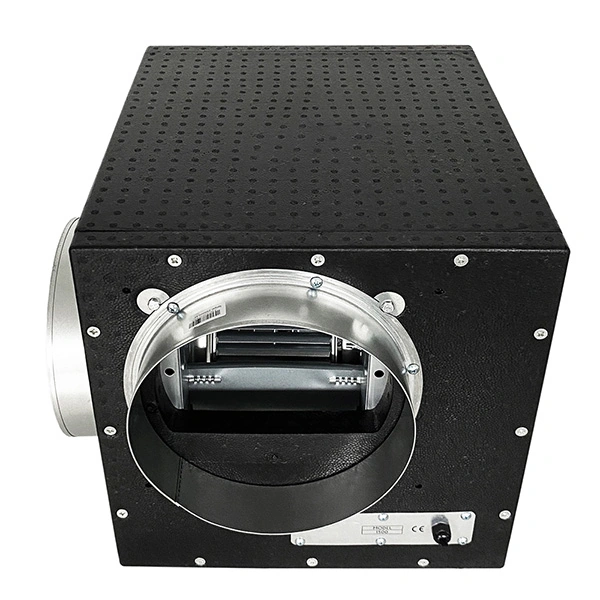
Excessive noise in a commercial setting can lead to workplace safety violations or require expensive acoustic retrofitting. Loud centrifugal fans often necessitate the purchase of padded fast clamps, inline silencers, or extensive duct insulation. To solve this without forcing customers to buy third-party accessories, we engineered the TIDESTAR Hydroponics Foam Box Acoustic Centrifugal Duct Fan Lower Noise. Housing the Torin Safin squirrel cage fan inside an MDF box lined with acoustic foam, it absorbs the noise directly at the source, saving operators the extra capital expenditure of acoustic mitigation.
Why Durable Components Reduce Long-Term Expenses
Often broken gear messes with fine air checks and raises swap funds. Air systems run in places with changing temperatures and high humidity. Lasting comes from part quality. For example, using NMB double ball bearings and an IP65 rating against dust and water means the fan handles rough spots. Putting money in a tough fan at first cuts the growing costs of site stops and quick swaps.
Final Verdict: Which Ventilation Technology Wins in 2026?
There is no universal winner; the best ROI depends on your exact facility architecture.
Best Use Cases for Mixed-Flow Inline Fans
Mixed flow inline fans are the definitive choice for modern indoor grow rooms, standard commercial HVAC upgrades, and environments where energy efficiency and quiet operation are paramount. When paired with EC motors and smart speed controllers, they offer the lowest total cost of ownership for straight to moderately complex duct runs.
When to Stick with Traditional Centrifugal Blowers
Traditional centrifugal blowers remain the champions of heavy industrial applications and extreme static pressure scenarios. If your system involves incredibly long, twisting ductwork, dense multi-stage air scrubbing, or heavy particulate extraction, the unmatched pushing power of a centrifugal fan justifies its operating costs.
FAQ
Q: Which uses less electricity, a mixed flow fan or a centrifugal fan?
A: In low to moderate resistance scenarios, a mixed flow fan uses significantly less electricity due to a higher CFM per Watt ratio. Their streamlined aerodynamic design allows them to move large volumes of air with less motor effort compared to the 90-degree air deflection of centrifugal models.
Q: Can mixed flow fans handle the static pressure of heavy carbon filters?
A: Yes. Old types had trouble, but new mixed flow fans with twin wheels and jet engine shapes build a good, steady push. They force or draw air through usual business carbon filters and bendy pipes without stopping.
Q: Are centrifugal fans louder than mixed flow inline fans?
A: In general, yes. The fast, right-angle air shift in a centrifugal blower makes more rough flow and machine sound. But you can cut this by picking special sound centrifugal fans in noise-catch MDF foam boxes.
Q: What makes EC mixed flow fans better for long-term operating costs?
A: Electronically Commutated (EC) engines keep great power use even when speed drops. Unlike AC engines that lose power as heat when turned down, an EC mixed flow fan tunes just right to the needed flow. This cuts long-term power bills a lot.
Q: How do I choose between mixed flow and centrifugal fans for my ventilation system?
A: Pick based on system blocks. For fairly straight pipes where you want power savings, low sound, and smart run, go with a mixed flow fan. For setups with very tight pipes, many sharp turns, or big filter needs, you need the strong push of a centrifugal fan.