Why Is the Samsung LED Grow Light Quantum Panel a Top Choice in 2026?
As commercial cultivation changes quickly in 2026, growers keep looking for lighting options that boost crop weight. At the same time, these options cut running expenses. The Samsung LED grow light quantum panel stands out as the main choice for current farming. It spreads efficient diodes over a broad, even surface. This setup avoids hot areas and power loss from old lighting. As a result, every part of your plant cover gets the right amount of light particles needed for strong growth.
Quantum Panel vs Traditional Grow Lights: Key Differences
Energy Efficiency and Heat Output: LED vs HPS
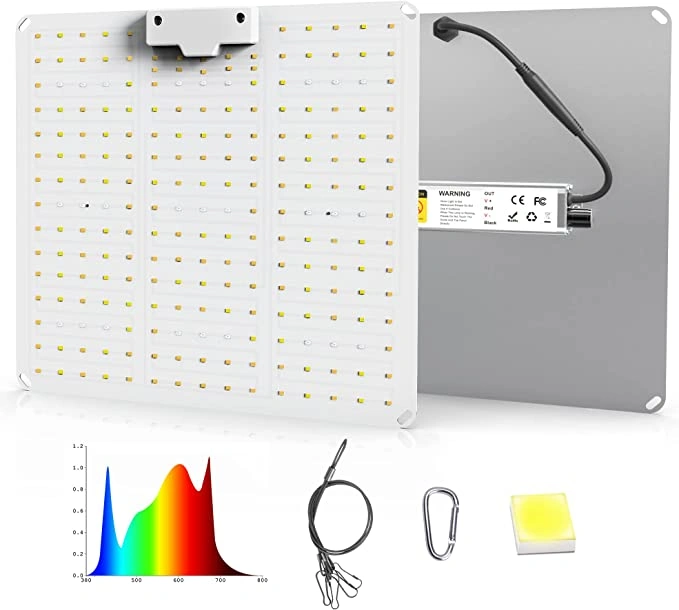
When comparing modern quantum boards to High-Pressure Sodium (HPS) or Metal Halide (MH) lamps, the difference in energy consumption is staggering. A well-engineered 100W Samsung LED grow light quantum panel can deliver the same, if not better, vegetative and flowering coverage as a traditional 250W HPS/MH fixture. Furthermore, traditional bulbs emit immense radiant heat downward. In contrast, quantum panels are designed with passive cooling, where heat is directed upwards and away from the plants.
Yield Performance and Canopy Penetration
Traditional fixtures act as single-point light sources, creating intense heat directly beneath the bulb while leaving the edges in shadows. The flat design of a quantum panel distributes light uniformly across the footprint. This means lower branches receive adequate Photosynthetic Photon Flux Density (PPFD), resulting in denser, heavier buds and uniform crop development across the entire growing area.
Key Features to Evaluate in a Samsung LED Grow Light Quantum Panel
Diode Efficiency: Choosing Between LM301B and LM281B
The engine of any top-tier quantum board is its diode. Samsung LM301B diodes are renowned for their market-leading efficiency, delivering up to 3.1 μmol/J. For growers seeking a highly cost-effective solution without compromising too much on output, panels equipped with high-efficiency white light LM281B Samsung diodes offer incredible value and robust PAR output.
Thermal Management and IP65 Durability
Business setups face high humidity and regular watering. A good Samsung LED grow light quantum panel needs an IP65 level. This makes it safe from dust and moisture in wet spots. Also, dependable simple-cooled builds skip cooling fans. Thus, they run quietly with no moving parts that could break.
Full Spectrum Capabilities for Maximum Yield
Full-Spectrum Grow Lights for All Growth Stages
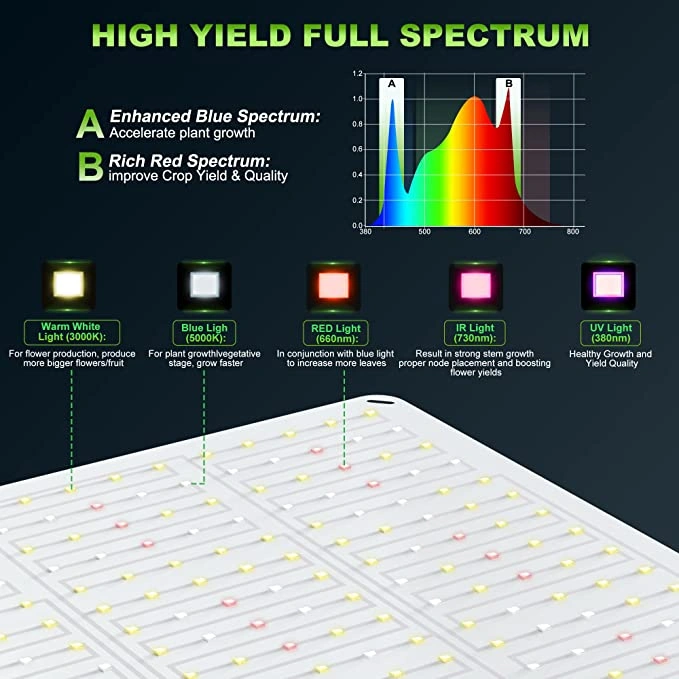
A true full-spectrum profile typically incorporates 3000K and 5000K white light. This combination closely mimics natural sunlight, providing plants with everything they need from the early vegetative stage straight through to the final flower harvest.
660nm Deep Red LEDs for Flowering and Yield
Adding 660nm deep red light to the white light spectrum is critical for commercial success. This specific wavelength drives rapid biomass development, increases nutrient uptake, and stimulates robust flowering, directly increasing the final yield.
UV and IR Spectrum for Plant Health and Quality
Advanced panels often include IR and UV diodes. The inclusion of UV (395nm) and IR (730nm) helps trigger natural defense mechanisms in plants, leading to increased resin production, enhanced flavor profiles, and overall higher crop quality.
Best Applications for Samsung LED Grow Lights
Indoor Home Growing
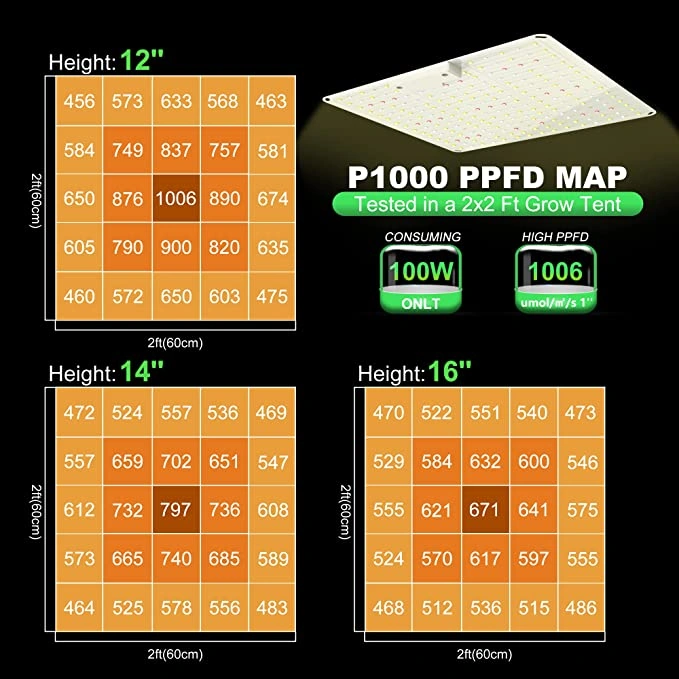
For home users with grow tents, room size and sound matter most. Quantum panels fit well here. Their no-fan cooling keeps things calm and quiet. A 100W panel suits a 2.5’x2.5′ growth area or a 2’x2′ bloom space just right.
Commercial Greenhouse Production
In greenhouses, sunlight changes often. Quantum boards serve as ideal extra lights. Their IP65 waterproof levels and thin shapes avoid big shadows. So, plants gain the most from both sun and added light.
Vertical Farming Systems
Vertical racks demand ultra-thin lighting with virtually zero downward heat. Because quantum panels direct heat upwards and utilize passive aluminum cooling, they can be mounted mere inches above the plant canopy without causing light burn or heat stress.
Why Samsung Quantum Panel Grow Lights Improve Grower ROI
Drastically Reducing Your Electricity and HVAC Costs
The real money gain from a Samsung LED grow light quantum panel comes from daily savings. They use far less power to make strong PAR levels. So, your power costs fall each month. At the same time, with less heat, your air systems and dampness controls run more easily. This cuts high costs on weather upkeep.
Long-Term Reliability and 50,000-Hour Lifespan
Swapping out failed HPS bulbs after each round hurts earnings. Our quantum panels have a tough build with over 50,000 hours of use. This long life lets the gear work round after round. It locks in strong returns for many years.
Best Samsung Quantum Panel Grow Lights for Commercial Growing
35W-100W Quantum Panels for Seedlings and Veg Stages
At TIDESTAR, we build fixes for each step. For early stages, our 35w 65w Full Spectrum LED Quantum Grow Light Panel, and 100W LED Quantum Plates lead the way. They use LM281B diodes. These pull low power but give bright light. They plug in easily, need no hard setup, and lower costs in the growth phase.
150W-480W Dimmable Quantum Panels for Maximum Yield
When you aim for top crops, our 75W, 150W, 240W, 320W, and 480W Full Spectrum Dimmable LED Quantum panels make the best step up. They offer good power use and deep light reach. A built-in dimmer lets you adjust light strength. This gives full control to get the best growth as plants move to full bloom.
FAQ
Q: What is the best brand for a Samsung LED grow light quantum panel in 2026?
A: When checking leading brands, business growers focus on real diodes, IP levels, and guarantees. At TIDESTAR, we use true Samsung diodes. We provide IP65-rated simple cooling builds. We also support our gear with solid warranties. This ensures you get the best quantum boards available.
Q: How to choose the right Samsung quantum board grow lights for my indoor tent?
A: Match the power to your tent size. For a small 2’x2′ bloom area, a 100W Samsung LED grow light quantum panel works well. For bigger 4’x4′ or 5’x5′ spaces, pick adjustable panels from 240W to 480W. They cover the full area with even PAR.
Q: Samsung LED grow light quantum panel vs HPS: Which one is better for flowering?
A: Quantum panels win clearly for blooming. HPS loses power on the heat. But a full-spectrum quantum board with set 660nm deep red diodes focuses on colors that push thick flowers. This brings heavier, better crops at much lower power use.
Q: Are top-rated Samsung LM301B quantum panels worth the investment for commercial growing?
A: Yes. The upfront cost pays back fast through big daily savings. With up to 3.1 μmol/J power and 50,000-hour life, they cut power bills. They also lower cooling costs and skip regular bulb changes.
Q: What is the recommended hanging height for a full-spectrum quantum panel?
A: For the best growth, change the height with the plant stage. For a 100W unit, hang it at 18 inches for growth cover. Drop it to 14 inches in bloom to boost light strength. Always use the dimmer to ease plants in.