Net Pots for Hydroponics: Basics for 2025 Greenhouse Growers
What Are Net Pots for Hydroponics in Greenhouse Systems
Net pots for hydroponics serve as key parts in today’s greenhouse setups. They hold plants up while letting roots reach air, nutrient mix, and oxygen without trouble. The mesh setup pushes roots to spread through the sides and base. This boosts air flow and helps roots take in nutrients better. In steady greenhouse settings, this open root style cuts down on soggy roots. It also helps plants grow evenly. Plus, it aids steady crop rounds. All these points matter a lot for business-level growth.
How Net Pots Work With DWC, NFT, Drip, and Vertical Greenhouse Systems
Net pots for hydroponics integrate seamlessly with Deep Water Culture (DWC), Nutrient Film Technique (NFT), drip irrigation, and vertical tower systems commonly used in greenhouses. In DWC, net pots suspend plants above aerated nutrient water, letting roots grow downward without restriction. In NFT channels, they fit securely into openings, stabilizing plants as nutrient film flows beneath. In drip systems, the mesh design prevents saturation by allowing excess water to drain quickly. Vertical towers use net pots as modular containers that maximize planting density while maintaining airflow around the root zone.
Key Benefits of Net Pots for Greenhouse Crop Production
Net pots for hydroponics provide greenhouse growers with reliable root aeration, strong plant support, and consistent drainage. Their lightweight build simplifies transplanting and system adjustments, especially during high-frequency harvest cycles. Because greenhouse humidity and temperature levels fluctuate, proper aeration becomes critical, and net pots offer a stable structure that minimizes root disease, improves nutrient distribution, and increases overall crop vitality.
Net Pots for Hydroponics: Key Selection Criteria in 2025
Net Pot Materials: PP, HDPE, and UV-Resistant Plastics
Net pots for hydroponics need to come from tough stuff like polypropylene (PP), high-density polyethylene (HDPE), or UV-proof plastics. These stand up to steady wet, nutrient contact, and greenhouse heat changes. Such materials stop breaks, bends, and weakness. They work well for wash and clean cycles over and over. For food crops in greenhouses, farmers pick BPA-free, food-safe options. These meet farm safety rules.
Net Pot Sizes and Greenhouse Crop Requirements
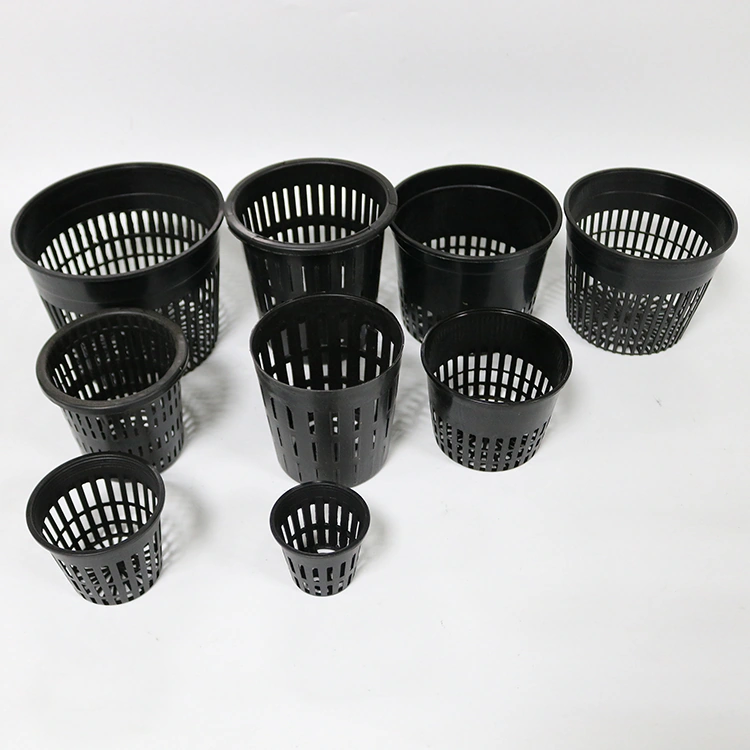
Net pots for hydroponics have to fit the plant kind and greenhouse plan. Pots from 1 to 2 inches suit young plants, herbs, and small greens. They allow tight planting. Pots at 3 inches handle everyday crops that need fair root room. Bigger ones, 5–6 inches, give space and steadiness for fruit plants like tomatoes, peppers, and cucumbers. Picking the right size sets good gaps. It balances water flow. It also boosts yield chances.
Pot Structure, Slot Design, and Root Aeration Performance
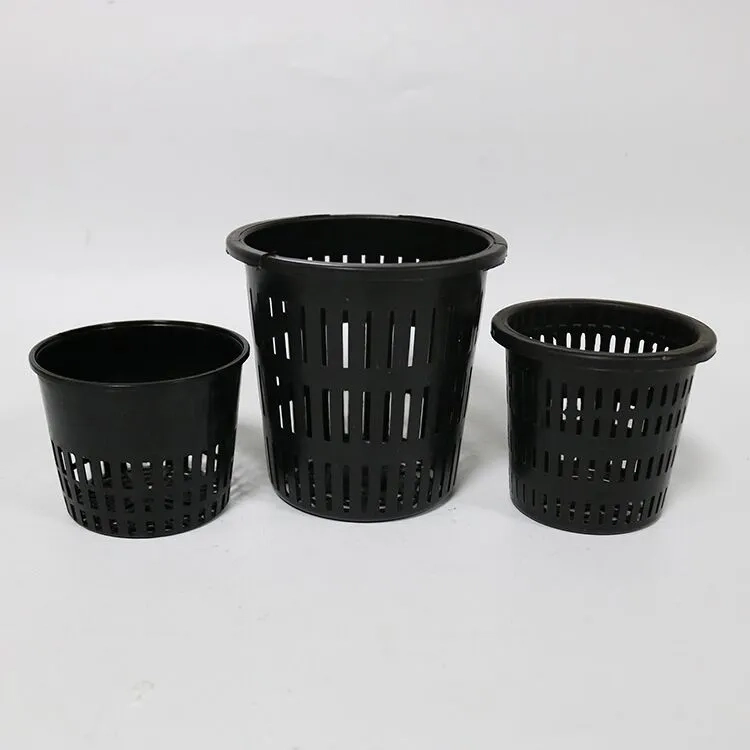
Net pots for hydroponics perform best when designed with balanced slot openings that promote oxygen flow, moisture control, and structural strength. Finer slots protect young roots, while wider openings improve aeration for mature plants. Thick-walled pots resist deformation during repeated handling, an important detail in commercial greenhouses. A strong bottom grid distributes water evenly and prevents nutrient pooling, helping maintain a healthier root zone.
Compatibility With Greenhouse Systems, Lids, and Channels
Net pots for hydroponics should match DWC covers, float boards, NFT paths, and upright towers in greenhouse setups. A good match stops tilts, light leaks, and too much water loss. Matching the system cuts setup mistakes. It speeds up plant moves, too. This makes work smoother over crop rounds.
At TIDESTAR, we team up with greenhouse farmers to build hydroponic parts. We focus on firm build, lasting materials, and ongoing system matches. Our know-how in big operations lets us tweak product traits. These help farmers cut care time. They also smooth out greenhouse tasks.
Net Pots for Hydroponics: Top 2025 Choices by Greenhouse Application
Net Pots for Leafy Greens and Herbs in Greenhouses
Net pots for hydroponics work great for greenhouse greens like lettuce, kale, spinach, and basil. Small pots let farmers pack in more plants. The mesh helps water drain quickly and swap oxygen. These perks back fast crop changes. They keep quality steady for sales-level greens.
In lots of green projects, TIDESTAR aids farmers with hydroponic parts for sure, repeatable runs. We stress strong builds and easy grips. This lets farmers keep roots clean. It helps hit even crop quality in tough spots.
Net Pots for Fruiting Crops: Tomatoes, Peppers, Cucumbers
Net pots for hydroponics provide essential stability and root volume for fruiting crops, which require stronger anchoring and extended growth space. Larger pots help support the biomass of tomatoes, peppers, and cucumbers, while the open design prevents root crowding and promotes continuous nutrient circulation. Adequate aeration supports consistent fruit development throughout long growing cycles.
Net Pots for High-Value Crops and Long Cycles
Net pots for hydroponics benefit high-value crops like basil, microgreens, and specialty herbs, where root health directly influences flavor and market value. Durable net pots that resist cracking and deformation enable repeated cycles without compromising root structure or sanitation. This consistency is important for growers who depend on predictable quality.
Net Pots for Large-Scale Recirculating Greenhouse Systems
Net Pots in Deep Water Culture (DWC) Greenhouse Buckets and Rafts
Net pots play a big role in DWC greenhouse setups. They hold plants safe while roots grow freely in air-filled nutrient water. The mesh boosts oxygen spread. It cuts low-oxygen spots. This backs steady growth over time.
Net Pots in Recirculating Bucket (RDWC) and Barrel Systems
Net pots keep roots in place well in RDWC plans. These move nutrient water fast across greenhouse lines. The build stops blocks. It aids root spread. Farmers can handle nutrient flows better this way.
Net Pots in Vertical and Multi-Layer Greenhouse Towers
Net pots suit tower gardens and stacked greenhouse systems. Their open build stops water pile-up. It boosts drainage and even air in upright stacks.
Net Pots for Hydroponics: Cost, Longevity, and Reusability in Greenhouses
How Plastic Quality and Wall Thickness Affect Net Pot Lifespan
Net pots for hydroponics last longer with thick sides and good plastic. Greenhouse spots hit parts with heat, wet, and handling wear. Stronger makes a keener form. They take repeated use.
Cleaning, Sterilization, and Algae Control for Reusable Net Pots
Net pots for hydroponics reuse well with careful cleaning between plant times. Farmers rinse, rub, and dip pots in clean mixes to clear plant bits and green growth. This care boosts clean levels. It guards plant wellness in the next rounds.
Reducing Replacement Costs in Commercial Greenhouse Operations
Net pots for hydroponics lower run costs when picked for toughness and lasting work. Good materials cut breaks. They slow down new buyers. This keeps plant and pick schedules steady.
TIDESTAR Net Pots for Hydroponics and Greenhouse Systems
TIDESTAR Net Pots: Sizes, Materials, and Greenhouse Fit
At TIDESTAR, we supply net pots and other horticulture products made for greenhouse hydroponics. We use strong PP and builds that take many cleans and steady wet. Our net pots come in sizes that fit common covers, paths, and bucket setups in greenhouses.
Design Advantages: Wide Lips, Strong Mesh, and Healthy Root Growth
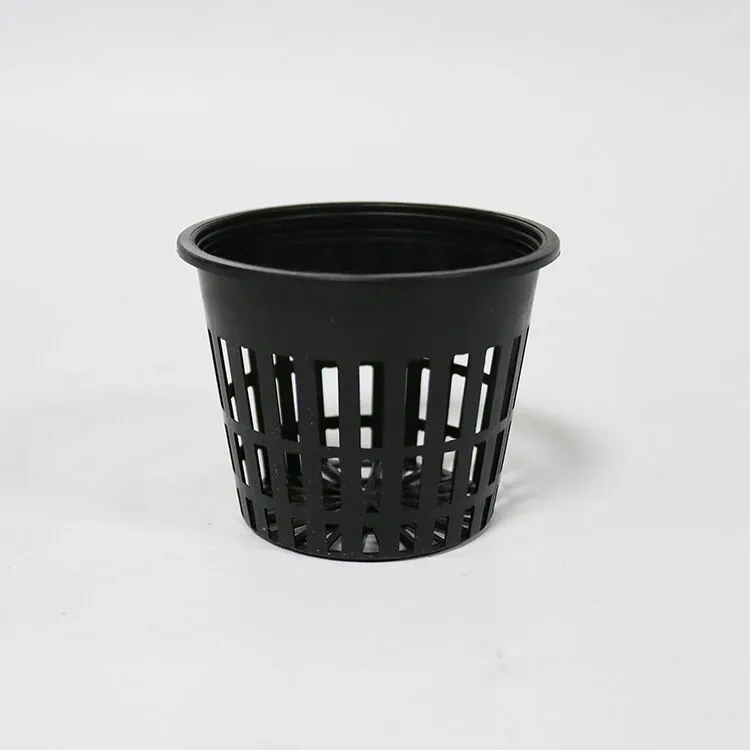
Our Black Mini Round Cups Net Pot has a broad edge for firm spots. It features solid mesh sides for better air. The tough frame fights shape loss in many uses. This pot drains well. It’s even mesh aids strong root growth in packed greenhouse runs.
Integrated Greenhouse Solutions: From Net Pots to Hydroponic Kits
We back greenhouse farmers with matched hydroponic parts. These include bucket plans, DWC add-ons, and custom OEM choices. Our full way helps big farmers keep steady planting times. It cuts down time. It eases care tasks too.
FAQ: Net Pots for Hydroponics in Greenhouses
Q: Which net pots for hydroponics are most suitable for greenhouse environments?
A: Greenhouses benefit from net pots made with strong PP or HDPE materials that resist cracking under humid conditions. At TIDESTAR, we provide reinforced net pots designed for repeated use in commercial greenhouse environments.
Q: How to choose net pots for hydroponics based on different crop types?
A: Smaller pots suit leafy greens and herbs, while larger pots stabilize fruiting crops with expansive root systems. We help growers match pot sizes with greenhouse layout and crop requirements.
Q: What features make one brand of net pots more reliable than another?
A: Reliability depends on material strength, wall thickness, mesh geometry, and UV resistance. TIDESTAR net pots emphasize these features to provide consistent performance for greenhouse operations.
Q: Are net pots for hydroponics reusable, and how should they be maintained?
A: Yes, most net pots are reusable with proper cleaning. We recommend rinsing, soaking, and disinfecting pots between cycles to maintain sanitation and prevent algae buildup.
Q: How do net pots for hydroponics compare with traditional plant containers?
A: Net pots offer superior aeration, drainage, and nutrient access, while traditional containers often retain excess water. These advantages help greenhouse hydroponic crops achieve faster growth and healthier root systems.